
Today’s Current Affairs: 3rd jun 2026 for UPSC IAS exams, State PSC exams, SSC CGL, State SSC, RRB, Railways, Banking Exam & IBPS, etc
Table of Contents
Karnala Fort : In News
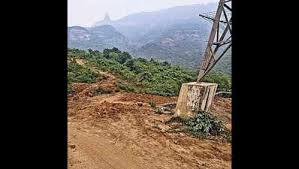
Over 60 hectares has been recently deforested off the Karnala Fort under Bhadbhuvan village, Uran, without prior permission of the Union govt.
- Karnala Fort, also called Funnel Hill, is a historic hill fort located in Raigad District in Maharashtra.
- Standing inside the Karnala Bird Sanctuary, it offers stunning views of the Sahyadris.
- The fort overlooks the historic Bor Pass, a key trade route connecting Konkan to Maharashtra’s interior.
- The fort was likely constructed before 1400, under the Devagiri Yadavs (1248–1318) and the Tughlaq rulers (1318–1347); Karnala was the capital of the north Konkan districts of their respective empires.
- Its strategic location made it a coveted possession for various rulers over the centuries.
- Controlled at various times by the Yadavas, Tughlaqs, Gujarat Sultanate, Nizam Shahis of Ahmednagar, Portuguese, Marathas, Mughals, Peshwas, and finally the British East India Company
- The fort’s significance grew during its role in Maratha history, when it became a crucial outpost for Chhatrapati Shivaji Maharaj in his quest to establish a Maratha empire.
- It actually consists of two forts, one at a higher level and the other lower.
- At the centre of the higher level is a 125-feet-high basalt pillar. It is also called Pandu’s tower.
- This structure was used as a watchtower when the fort was occupied; however now it is in a ruined condition.
- There is a temple dedicated to the goddess Bhavani located at the bottom of the fort.
Halma Tradition:
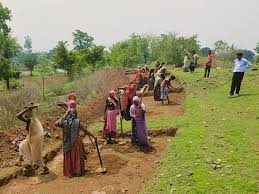
In Borpada village in Madhya Pradesh’s Jhabua district, residents revived the Bhil tradition of Halma to clean and restore a public well.
- Halma is an old collective tradition practiced by the Bhil tribal community of Madhya Pradesh.
- Its direct meaning is: to work together without wages or contract, sustained by mutual obligation and belonging.
- At its heart, Halma represents a profound tradition of voluntary collective labour.
- The roots of this tradition reach back to an era when these communities had neither large resources, nor government support, nor a marketplace.
- When an individual or family faces a significant task, be it constructing a home, repairing agricultural embankments, restoring a water body, or organizing a major communal event, they invoke Halma.
- In response, scores, sometimes hundreds, of community members assemble, bringing their own tools, food, and labour, and work collectively until the task is accomplished.
- There is no formal leader and no grand announcement. There is only work, done side by side.
- No monetary compensation is expected. Participation arises not from obligation enforced by external authority but from ethical commitment, ancestral values, and the assurance that when needed, the favor will be returned.
- In recent years, Halma has been revitalized to address common challenges such as:
- Restoration of traditional water bodies
- Afforestation of barren hills
- Construction of contour trenches for rainwater conservation
- Revitalization of biodiversity and soil health
What is a Bolide?
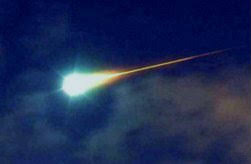
The explosions and the boom sounds heard by the residents of Boston recently could be the result of “a rather significant bolide/meteor entering the atmosphere.”
- A bolide is a type of large, exceptionally bright meteor that often explodes in the upper atmosphere, producing a bright flash of light and occasionally fragmented meteorites reaching the ground.
- Bolides are distinguished from regular meteors by their greater brightness and more dramatic visual effects.
- Bolides can also produce loud booms.
- Bolides are more common than many people realize, with several occurring each year, though most go unnoticed or happen over remote areas.
- Studying bolides can provide valuable information about the composition and structure of meteoroids, as well as insights into the processes that occur during atmospheric entry.
- A space rock that has not entered the Earth’s atmosphere is usually referred to as a meteoroid or asteroid.
- Once in the Earth’s atmosphere, the rock traveling at very high velocities encounters friction from the atmosphere, resulting in a fireball that is then referred to as a meteor.
- Meteors that reach the ground are then called meteorites.
Yellow-Throated Marten:

Kaziranga National Park recently recorded its first sighting of the yellow-throated marten, highlighting Assam’s conservation success
- The yellow-throated marten, also known as the kharza, is a marten species found in forested regions throughout Southern and Eastern Asia.
- A marten is a slender-bodied mammal belonging to the weasel family (Mustelidae), which also includes otters, badgers, ferrets, and wolverines.
- Scientific Name: Martes flavigula
- Their range extends throughout the Himalayas, as far south as Indonesia, and as far north as the Korean Peninsula and the Chinese-Russian border.
- They occupy a variety of habitats. They live in coniferous and broad-leaved forests, montane forests, tropical dry and moist forests.
- They are also found in shrublands, lowland swamps, and treeless mountains.
- Conservation Status:
- IUCN Red List: Least Concern
Isobutanol:
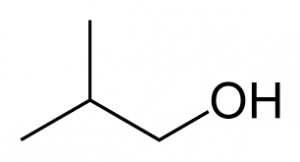
The Indian government is likely to introduce a mandate permitting blending isobutanol with diesel by the end of this year.
- Isobutanol is also called isobutyl alcohol, is an alcohol with the chemical formula C₄H₁₀O and one of the four isomers of butanol.
- Properties of Isobutanol:
- It is a clear, colorless liquid with a characteristic odor.
- It is only moderately soluble in water.
- It is very flammable and has a flash point that is only slightly above normal room temperatures.
- Its vapors are heavier than air and can spread unnoticed along the ground.
- It can be made from ethanol using fermentation processes.
- It is used as a solvent in the flavor, fragrance, pharmaceutical, and pesticide industries and as a chemical manufacturing ingredient for products such as lacquer, paint strippers, paint primer, and craft paints.
- It is an approved food additive and is also naturally occurring in some foods and many alcoholic beverages.
- Isobutanol may also be used as a biofuel because, like ethanol, it can be manufactured from plants.
- It possesses some favorable properties that make it an attractive fuel for internal combustion engines.
- Isobutanol is less corrosive than ethanol and is much less hygroscopic, which enables it to be transported using the existing fuel infrastructure.
Eurozone Inflation:

Eurozone inflation climbs to 3.2 per cent in May, with energy and services prices driving renewed price pressures across the currency bloc.
- The eurozone, officially known as the euro area, is a geographic and economic region that consists of countries in the European Union (EU) that have adopted the euro (€) as their national currency
- As of January 2026, the eurozone consists of 21 countries in the
- These are Austria, Belgium, Bulgaria, Croatia, Cyprus, Estonia, Finland, France, Germany, Greece, Ireland, Italy, Latvia, Lithuania, Luxembourg, Malta, the Netherlands, Portugal, Slovakia, Slovenia, and Spain.
- Latest member: Bulgaria (2026)
- Not all EU nations participate in the eurozone; some opt to use their own currency and maintain their financial independence.
- EU members not using the euro: Czech Republic, Denmark, Hungary, Poland, Romania, Sweden
- The European Central Bank (ECB) exercises the sole power to set the monetary policy for the Eurozone countries.
- The ECB exercises the sole authority to decide the printing and minting of euro notes and coins. It also decides the interest rate for the Eurozone.
- The ECBs is headed by a president and a board, comprising the heads of the central banks of the participating nations.
- The Eurozone has mechanisms for support during periods of economic instability.
- The European Stability Mechanism (ESM) was created to provide financial assistance through rescue loans under specific conditions.
- In order to join the euro area, EU member states are required to fulfil so-called ‘convergence criteria’ which consists of price stability, sound public finances, the durability of convergence, and exchange rate stability.
- These binding economic and legal conditions were agreed upon in the Maastricht Treaty in 1992 and are also known as ‘Maastricht criteria’.
- All EU member states, except Denmark, are required to adopt the euro and join the euro area once they are ready to fulfill them.
- The Treaty does not specify a particular timetable for joining the euro area but leaves it to member states to develop their own strategies for meeting the condition for euro adoption.
- The European Commission and the ECB jointly decide whether the conditions are met for euro area candidate countries to adopt the euro.
Agasthyamalai Biosphere Reserve:
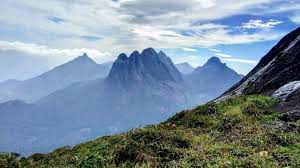
The Supreme Court has ordered the immediate removal of encroachers and demolition of illegal structures across the ecologically sensitive Agasthyamalai Biosphere Reserve landscape in South India.
- It is located in the southern part of the Western Ghats spanning the states of Tamil Nadu and Kerala.
- It was established as Biosphere Reserve in 2001 and added into the UNESCO World Network of Biosphere Reserves list in 2016.
- It includes protected areas namely
- Shendurney Wildlife Sanctuary
- Peppara Wildlife Sanctuary
- Neyyar Wildlife Sanctuary
- Kalakkad MundanthuraiT iger Reserve
- It comprises of tropical wet evergreen forests, moist deciduous forests, montane rain forests and Shola.
- It is home to many species of higher plants including about many that are endemic.
- It includes the Asian elephant, tiger and Nilgiri Tahr and birds like Great Indian hornbill.
- It is home to the Kanikaran—one of the oldest surviving tribes in the world.
Mission Senehjori:
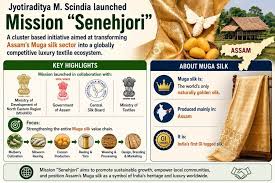
The Union Minister for Development of North Eastern Region (MDoNER) together with the Hon’ble Chief Minister of Assam launched Mission “Senehjori” – Assam Muga Silk USP.
- It is a comprehensive cluster-based initiative aimed at transforming Assam’s unique Muga silk sector into a globally competitive, high-value luxury textile ecosystem.
- It seeks to strengthen the entire Muga silk value chain from host-plant cultivation and silkworm seed production to reeling, weaving, branding, export promotion, digital traceability and tourism.
- It is anchored by the MDoNER in convergence with the Government of Assam, Central Silk Board, Ministry of Textiles and other Central Ministries/ organizations.
- Key Features of Mission Senehjori:
- Cluster Based Approach: It adopts a cluster-based approach covering major Muga silk producing districts of Assam.
- Infrastructure& Institutional Support: It envisages strengthening host plant ecology, establishing modern reeling infrastructure, promoting Farmer Producer Organisations (FPOs), creating Common Facility Centres (CFCs).
- Branding: It enforces GI authentication and building global market access under the unified brand identity “Senehjori”.
- Convergence Model: It has been conceptualised on the principle of “whole-of-government” approach, with convergence across Central Ministries, the Government of Assam, technical institutions and private-sector partners.
Prime Minister Research Chair Scheme:

The Department of Higher Education, Ministry of Education, Government of India, invites applications for the Prime Minister Research Chair (PMRC) Scheme 2026.
- Prime Minister Research Chair Scheme is a flagship national initiative aims to attract accomplished Indian origin researchers and professionals from leading global institutions and industries with outstanding achievements in research, innovation, and technology.
- It seeks to connect global Indian talent with premier government higher education institutions, national laboratories and research centres across the country.
- Features of Prime Minister Research Chair Scheme:
- It will focus on 13 priority sectors namely:
- Artificial intelligence, Quantum computing, Semiconductors, Energy and climate change, cybersecurity, Healthcare and medical technology, Biotechnology, Advanced materials, space and defence, Next-generation communications, Manufacturing, Agriculture and food technologies, Blue economy, and atomic energy.
- It is anchored on three core pillars: Lead Institutions, Host Institutions, and PMRC Fellows to ensure research projects are aligned with national priorities and deliver measurable outcomes.
- Selection Process: Fellows will be selected through a rigorous process overseen by an Empowered Committee chaired by the Principal Scientific Advisor to the Government of India.
- PMRC Fellows will receive fellowship and research grant support, access to laboratories and research infrastructure and opportunities to work with leading government institutions in India.
- It offers three categories of engagement namely Young Research Fellows for early career researchers, Senior Research Fellows for experienced researchers, and Research Chairs for globally accomplished research leaders.
- Eligible Fellows include accomplished Indian origin researchers, scientists, and professionals, including Indian Nationals working abroad, OCI cardholders, and Persons of Indian Origin.
India’s Semiconductor Vision for 2035:
NITI Aayog’s Frontier Tech Hub (FTH) released the report, “Future of India’s Semiconductor Industry”, outlining India’s Semiconductor Vision 2035 and a strategic roadmap to transform the country into a globally indispensable semiconductor nation.
- It arrives at a critical juncture with the Union Budget 2026 announcing ISM 2.0 (India Semiconductor Mission 2.0), signalling a decisive shift from ecosystem initiation to ecosystem deepening.
- India’s Semiconductor Vision 2035 aims to build a USD 120–150 billion semiconductor value chain, achieve greater self-reliance, emerge as a global leader in chip design, OSAT, and advanced packaging, and become a key supplier of SiC and GaN materials.
- To achieve this vision, India will leverage its 5P Strategy (Pioneering, Policy & Investment, Production, People, and Partnership) while addressing challenges related to technology, talent, capital, and infrastructure, and focusing on opportunities such as AI chip design, advanced packaging, compound semiconductors, and quantum technologies.
- India’s Semiconductor Vision for 2035: India aims to build a USD 120–150 billion semiconductor value chain by 2035, anchored in three pillars:
- Strategic Self-sufficiency: Dominate mature and compound semiconductor nodes and selectively pursue advanced nodes.
- Ecosystem Strength: Emerge as a global leader in chip design, Outsourced Semiconductor Assembly and Test (OSAT), and advanced packaging.
Global Indispensability: Become a trusted supplier of wide-bandgap materials (Gallium Nitride (GaN) and Silicon Carbide (SiC) chips) that global supply chains cannot do without. - Key Quantified Targets by 2035: Capture 10–13% of the global semiconductor chip market.
Become a top-3 global destination for OSAT and advanced packaging. - Achieve chip self-sufficiency of 35–50% of domestic demand (up from 15–25% by 2030).
- Retain 55–70% of value in every chip consumed in India (through design, packaging, or materials).
- Create 100+ advanced IPs in AI, quantum, and High-performance computing (HPC) chip design.
- Export chips for affordable 5G/6G phones, edge CPUs, microcontrollers, and sensors to 50+ nations.
- Become the top global supplier of wide-bandgap materials (SiC and GaN).
India’s 1st Blue Bond:
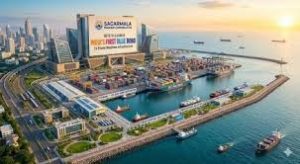
Sagarmala Finance Corporation announced plans to issue India’s first blue bond to diversify its funding sources and finance maritime and coastal infrastructure projects.
- A blue bond is a debt instrument used to raise funds specifically for projects linked to oceans, seas, coasts, rivers and other water-based ecosystems.
- It is generally targeted at investors interested in environmentally focused and sustainable finance instruments.
- The funds will be used for lending towards the development of maritime and coastal infrastructure, including ports, port connectivity, shipbuilding, inland waterways and coastal road networks.
- Blue Bond vs Green Bond: A green bond is generally used to fund broader climate and environmental projects, while a blue bond specifically focuses on ocean, marine and water-related sustainable projects.
- Seychelles issued the world’s first sovereign blue bond in 2018, while Belize used a debt-for-ocean swap in 2021 to support marine conservation.
- India’s long coastline, large fishing communities, port network and climate-vulnerable coastal regions make blue bonds important for financing sustainable blue economy projects.
- India’s blue economy includes fisheries, shipping, offshore energy and coastal tourism, contributing about 4% to GDP and supporting around 4 million livelihoods.
- Blue bonds can help India attract global sustainable finance, reduce pressure on budgetary resources, support coastal communities and balance maritime infrastructure growth with marine conservation.
- Sagarmala Finance Corporation is a state-owned maritime-focused lender established in 2016 under the Ministry of Ports, Shipping and Waterways.
- It received a Non-Banking Financial Company (NBFC) licence in June 2025.



