
Gharials : Hatchlings Released
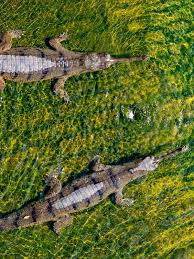
31 Gharials (Gavialis gangeticus) hatchlings have been released in the Bagaha area along the Gandak River in Bihar.
- Gharials is a freshwater crocodile belonging to the Crocodylia Order and Crocodylidae Family.
- The name ‘gharial’ comes from the Hindi word ghara, meaning pot or vessel, referring to the bulbous snout tip of adult males, which resembles an inverted pot.
- Gharials inhabit deep, clear, freshwater rivers with sandy banks, primarily within Himalayan river systems.
- It is mainly found in the rivers of Bangladesh, Bhutan, India, Myanmar, Nepal, and Pakistan.
- Their major population occurs in three tributaries of the Ganga River: the Chambal (Hosts the largest wild population) and Girwa Rivers in India and the Rapti-Naryani River in Nepal.
- The Gharial reserves of India are located in three States: Uttar Pradesh, Madhya Pradesh, and Rajasthan.
- Predominantly piscivorous, gharials play a key role in regulating fish diversity and maintaining riverine ecological balance.
- It is one of the largest crocodilian.
- They have thick skin covered with smooth epidermal scales that do not overlap.
- The snout of the gharial is uniquely the thinnest and most elongated among all the crocodilians.
- In addition, the adult males sport a large bulb at the tip of their snout, called the ‘ghara’.
- It is also the most aquatic of all crocodilians, for it never moves far from the water. Individuals typically only leave the water to bask and nest on sandbanks.
- They mate during November–January and lay eggs March–May.
- Conservation Status:
- IUCN Red List: Critically endangered
- CITES: Appendix I
- Wildlife Protection Act 1972: Schedule I.



