
Today’s Current Affairs: 13th jun 2026 for UPSC IAS exams, State PSC exams, SSC CGL, State SSC, RRB, Railways, Banking Exam & IBPS, etc
Table of Contents
Masroor Rock-Cut Temples:
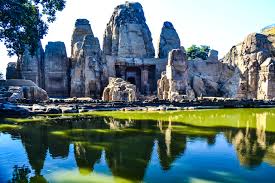
Tucked away in the hills of Himachal Pradesh’s Kangra Valley lies Masroor Rock-Cut Temples, an extraordinary piece of Indian heritage that is mostly ignored.
- Masroor Rock-Cut Temples, also referred to as Masroor Temples, is an early 8th-century complex of rock-cut Hindu temples in the Kangra Valley of the Beas River in Himachal Pradesh.
- They are often referred to as the Ellora of Himachal and the Himalayan pyramid.
- Archaeological surveys say that they have been built around the 8th century, almost 1200 years ago, due to their resemblance to the “Gupta style of architecture” from the same period.
- However, there is no mention of the temple in any of the scriptures or historical records.
- The temple complex was first reported by Henry Shuttleworth in 1913, bringing it to the attention of archaeologists.
- They were independently surveyed by Harold Hargreaves of the Archaeological Survey of India in
- The 15-monument temple complex resembles the North Indian Nagara architecture style and is dedicated to Lord Shiva, Lord Ram, Goddess Sita, and Lord Lakshmana.
- Unlike other Hindu temples in the country that face the east, this one faces northeast towards the Dhauladhar mountains.
- The temples were carved out of monolithic rock with a shikhara and provided with a sacred pool of water.
- The temple complex follows a symmetrically laid-out square grid.
- The main temple, with a square plan, is surrounded by smaller temples arranged in a mandala pattern.
- Three entrances adorn the temple, facing northeast, southeast, and northwest. Interestingly, evidence points towards a planned but unfinished fourth entrance, often overlooked in historical records.
- The Masrur Temples display elaborate reliefs portraying significant Vedic and Puranic deities.
- These reliefs are accompanied by captivating friezes that narrate ancient tales from Hindu texts.
- Much of the Masroor temple’s sculpture and reliefs have been lost. They were also quite damaged, most likely from earthquakes.
Foreign Contribution (Regulation) Amendment (FCRA) Bill, 2026:

The introduction of the Foreign Contribution (Regulation) Amendment (FCRA) Bill, 2026, in the Lok Sabha, has ignited intense constitutional and political debates across India.
- The Foreign Contribution (Regulation) Amendment Bill, 2026, is a legislative measure designed to amend the foundational FCRA Act of 2010.
- While the government presents it as a statutory step to close regulatory gaps and protect national security, civil society groups view it as a structural mechanism that expands executive power.
Key Features of the Foreign Contribution (Regulation) Amendment Bill, 2026:
- Expanded Grounds for Cessation of Registration: Registration will be deemed to have ceased if renewal is not applied for, denied, or not obtained before expiry.
- Creation of aDesignated Authority: A central government-notified Designated Authority will manage foreign contributions and related assets after cancellation, surrender, or cessation of registration.
- Provisional Vesting of Assets: Foreign contributions and assets created wholly or partly from foreign funds will temporarily vest in the Designated Authority for supervision and maintenance.
- Restoration Mechanism: Unutilized foreign contributions and assets may be returned if registration is renewed, restored, or a fresh registration is granted.
- Permanent Vesting of Assets: Assets and foreign contributions may permanently vest in the Designated Authority if registration is not restored within the prescribed period or the entity becomes defunct.
- Use of Assets for Public Purposes: Permanently vested assets may be transferred to government bodies or disposed of, with proceeds credited to the Consolidated Fund of India.
- Expanded Compliance Obligations: Organizations and key functionaries must provide access to records, preserve assets, and operate under the Authority’s supervision.
- Right to Appeal: Aggrieved persons may appeal against orders of the Designated Authority before a District Judge within 90 days.
- Government Exemption Power: The Central Government may exempt certain persons or entities from vesting provisions in public interest.
- Broadened Prohibition onForeign Funding: The ban on accepting foreign contributions is extended to any person engaged in news production, publication, or broadcasting of current affairs.
- Reduced Criminal Penalties: Maximum imprisonment for violations is reduced from five years to one year, while retaining provisions for fines.
- Prior Central Approval for Investigations: Any investigation into offences under the Act will require prior approval from the Central Government.
- Coverage of Partially Foreign-Funded Assets: The vesting provisions now explicitly include assets created partly through foreign contributions.
- Enhanced Central Oversight: The Bill centralizes management, monitoring, investigation, and disposal powers relating to foreign-funded entities and their assets.
China’s Hukou System:
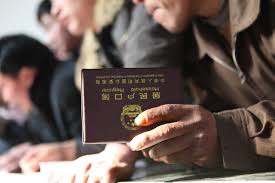
China has issued new guidelines to provide education, housing, social security, and healthcare benefits at the place of residence, irrespective of hukou registration status.
- The Hukou (Household Registration System) is China’s internal residence registration mechanism that classifies citizens as rural or urban residents and links access to public services, welfare benefits, education, healthcare, and housing to their registered place of residence.
- Often described as an internal passport system, it regulates population mobility and state resource allocation.
- Introduced in the 1950s under the Communist government to control internal migration and manage resource distribution.
- Economic reforms after 1978 relaxed migration restrictions to support industrialization, but welfare benefits remained tied to hukou status.
- Since 2014, China has gradually reformed the system to integrate migrant workers and promote people-centered urbanisation.
Key Features:
- Every citizen is registered as either a rural or urban resident, determining eligibility for government welfare and public services.
- Access to schools, healthcare, social insurance, housing subsidies, and welfare benefits is tied to the registered locality.
- Migrants often face difficulties accessing benefits in cities where they work but are not officially registered.
- It helps governments plan infrastructure, employment, and public expenditure based on registered populations.
- Recent reforms emphasize “permanent residents” rather than hukou status, extending basic public services to migrant populations.
- The objective is to support urbanisation, labour mobility, and inclusive economic growth without abolishing the hukou system.
The FIFA World Cup 2026:

The 23rd edition of the FIFA World Cup—the 2026 tournament—officially kicked off on June 11, 2026, marking the start of a historic 39-day international men’s soccer championship.
- The FIFA World Cup is a quadrennial international men’s football championship contested by the senior national teams of the member associations of FIFA.
- The 2026 tournament marks the 23rd edition of the global tournament and represents the largest structural expansion in the history of international football.
- Host Nations: The 2026 tournament is jointly hosted by three nations across sixteen multi-national host cities:
- United States: 11 host cities (previously hosted in 1994).
- Mexico: 3 host cities (making Mexico the first country to host or co-host a World Cup three times, following 1970 and 1986).
- Canada: 2 host cities (marking Canada’s debut as a World Cup host nation).
Flamingos:
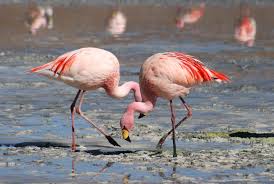
Large flocks of migratory flamingos have turned the coastal salt pans of Thoothukudi, Tamil Nadu, into a vibrant feeding and resting habitat.
- Flamingos are highly gregarious, tall, pink wading birds belonging to the family Phoenicopteridae, which stands as the sole family under the specialized avian order Phoenicopteriformes.
- Renowned for their highly social behavior, these birds gather in massive colonial flocks numbering from hundreds to over a million individuals for flight formations, wading, and breeding.
- They primarily colonize highly alkaline or saline shallow lagoons, coastal salt pans, mangrove creeks, tidal mudflats, and inland soda lakes across tropical and subtropical regions.
- The Indian Migration Route: The two species commonly found in India—the Greater Flamingo (Phoenicopterus roseus) and the Lesser Flamingo (Phoeniconaias minor)—migrate systematically from their major national breeding grounds in the Rann of Kachchh, Gujarat, to wintering coastal havens across southern Tamil Nadu (including Thoothukudi, Tirunelveli, and Kanyakumari).
- The Sanctuary Buffer: To safeguard these routes, the Tamil Nadu government has formally designated Dhanushkodi as a dedicated flamingo sanctuary to buffer the birds against urban noise and cracker disruptions.
- Conservation Status:
- Lesser Flamingo (Phoeniconaias minor): Globally classified as Near Threatened (IUCN Red List).
- Greater Flamingo (Phoeniconaias minor): Classified under Least Concern (IUCN Red List).
Slovakia : PM Of India Visit
Prime Minister of India will undertake a historic state visit to Slovakia from June 14 to 16, 2026.This marks the first-ever visit by an Indian Prime Minister to the Central European nation since it achieved sovereignty following the peaceful dissolution of Czechoslovakia in 1993.Slovakia is a landlocked, sovereign republic in Central Europe with a rich cultural history that was part of the Austro-Hungarian Empire for centuries, and later unified with the Czechs from 1918 to 1992.Following the 1989 Velvet Revolution which collapsed the communist regime, independent Slovakia was established on January 1, 1993. Today, it stands as an increasingly industrialized nation and an important European strategic partner.Capital: Bratislava.Bordering Nations: Poland, Ukraine, Hungary, Austria and The Czech Republic.
IIT Bhubaneswar Develops ArsenSafe Device for Rapid Water Testing:

The Indian Institute of Technology (IIT) Bhubaneswar have developed the “ArsenSafe,” a portable device which is capable of detecting the arsenic contamination in drinking water without requiring any laboratory facilities.
- This innovation offers the rapid, affordable and highly sensitive solution to one of the world’s most serious public health challenges.
- It is developed by the Sensors and Spectroscopy Research Group of IIT Bhubaneswar in collaboration with the startup incubated at the institute, the technology has the potential to improve the access to safe drinking water and specially in rural and resource-constrained regions.
- ArsenSafe is the compact handheld device which is designed to detect the arsenic contamination directly at the source. Unlike the conventional testing methods that require sophisticated laboratories and chemical-based procedures and this device can be used on-site with minimal training.
- The technology has been developed with the support from Nano Semic Pvt Ltd, a startup incubated at the Research and Entrepreneurship Park of IIT Bhubaneswar.
- The startup is led by the faculty members Sayan Dey and Akshay K.
- The portable design of device makes the water testing faster, easier and more accessible for the government agencies, environmental organizations, industries, NGOs and individual users.
JNPA Emerges as India’s Top Container Port in 2025:
The Jawaharlal Nehru Port Authority (JNPA) has emerged as the India’s best-performing container port in the Container Port Performance Index (CPPI) 2025. It is jointly published by the World Bank and S&P Global Market Intelligence. This time JNPA has improved the its global ranking to 22nd position and reaffirmed the leadership in the container handling efficiency.
India and Nepal Launch UPI-NPI Cross-Border Remittance Service:
India and Nepal have launched the cross border peer to peer remittance mechanism which directly linking India’s Unified Payments Interface (UPI) with the Nepal’s National Payments Interface (NPI). It will officially operationalized on 6th of June, 2026. This initiative enables the citizens of both the countries to make instant, secure and seamless money transfers via mobile banking applications and digital walletsThe newly launched payment corridor establishes the direct connection between the India’s UPI ecosystem and Nepal’s National Payments Interface.
With this integration, users can,
Transfer the money instantly across borders.
Use the mobile banking apps and digital wallets.
Also avoid delays generally associated with traditional banking channels.
Make secure and the real-time transactions.
Reduce the dependency on cash-based payments.
The initiative simplifies the financial transactions for individuals, businesses and travelers moving between the two countries.
World Bank Raises India’s FY27 Growth Forecast to 6.6%:
The World Bank has revised the India’s GDP growth forecast upward to around 6.6% for FY2026-27 and it showcases the confidence in the country’s resilient domestic demand and also improving the export prospects. The World Bank has has also increased the its projection for FY2027-28 to 7.2% and indicates the expectations of the stronger recovery in the upcoming years.The World Bank has highlighted the India’s strong economic fundamentals despite global uncertainties.
Key growth drivers includes the,
Strong rural consumption demand.
Recovery in urban spending.
Resilient domestic market.
Improving business environment.
Expansion of trade partnerships.
Expected increase in the foreign investment.



