
Today’s Current Affairs: 15th jun 2026 for UPSC IAS exams, State PSC exams, SSC CGL, State SSC, RRB, Railways, Banking Exam & IBPS, etc
Table of Contents
Zardalu Mangoes:
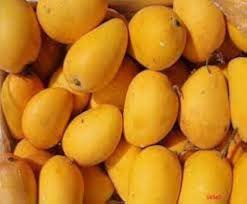
Every summer, more than 125 quintals of Bhagalpur’s famed Zardalu mangoes are carefully selected, packed and dispatched to the President, the Prime Minister, and other top dignitaries, turning a regional fruit into a symbol of Bihar’s agricultural heritage.
- Zardalu mango, also called Jardalu, is a unique mango variety from Bhagalpur, Bihar.
- It is known for its light yellow skin and distinct special aroma.
- Its story dates back to the early 19th century when Maharaja Rahmat Ali Khan Bahadur of Haveli Kharagpur introduced its cultivation in the Bhagalpur region.
- The first sapling, planted between 1810 and 1820, still stands in Tagepur village, serving as a living testament to this mango’s enduring legacy.
- The Jardaloo mangoes are available from mid-April through the end of June.
- The fruits have a rich, creamy, tender texture, and delicate, non-fibrous, juicy pulp.
- As the fruit matures, the skin of the Zardalu mango turns golden-yellow with a tinge of red across the top of the fruit.
- Jardalu mangoes are rich with fibre & enzymes; it’s highly beneficial to the digestive system.
- In 2018, the Jardalu mango received the prestigious Geographical Indication (GI) tag.
Tetanus : In News
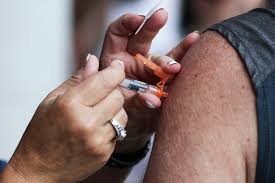
Tetanus, once thought to have been eradicated, is resurging in the US.
- Tetanus, also known as lockjaw, is a serious bacterial infection that affects the body’s nervous system.
- It’s caused by a poison (toxin) made by the bacterium Clostridium tetani (C. tetani).
- The bacterium usually enters the body through an open wound.
- Tetanus bacteria live in soil and manure. They can also be found in the human intestine and other places.
- Tetanus occurs more often in warmer climates or during the warmer months.
- It’s not spread from person to person.
- Anyone can get tetanus, but the disease is particularly common and serious in newborn babies and pregnant women who have not been sufficiently immunized with tetanus-toxoid-containing vaccines.
- There’s no cure for tetanus.
- Treatment focuses on managing symptoms and complications until the effects of the tetanus toxin resolve.
- People who recover from tetanus do not have natural immunity and can be infected again.
- Tetanus is completely preventable by being immunized (vaccinated).
- Immunization usually protects against tetanus infection for 10 years.
- The childhood schedule includes five doses, followed by boosters in adolescence and every 10 years.
- Pregnant women are also advised to receive Tdap to protect their newborns.
Giant’s Causeway:
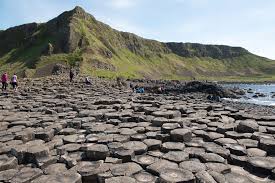
Geochronologists, investigating how the Giant’s Causeway was created, recently discovered it was formed over 5.5m years, 8m years less than previously estimated.
- It is located on the coastal edge of the Antrim Plateau in Northern Ireland.
- The region consists of 6 kilometers (4 miles) of stepping-stone-like black basalt columns.
- Each stone is a curiously distinct polygon or hexagon, with seemingly unnatural straight edges.
- The pillars range in height, and shoot up out of the sea, increasing in height until they reach the cliff top.
- This stepping stone or stair-like appearance of the area is where the Giant’s Causeway name is thought to have originated, as the columns look much like steps for a giant.
- It was declared a UNESCO World Heritage Site in 1986.
- The rock and column formations were first formed some 50 to 60 million years ago, during the Paleogene Period.
- The columns originally formed due to extensive volcanic activity in the area.
- Molten basalt rose up through a layer of chalk beds, creating what is known as a volcanic plateau.
- The lava then began to cool and contract, which caused fractures and edges within the rock.
- As the lava flow continued to cool, it receded, leaving behind tall column shapes.
- Because the lava cooled very quickly, it receded a great deal, leaving behind particularly prominent and large columns.
Indrayani River:
Residents and environmental activists have expressed concern after dozens of dead fish were found floating in the Indrayani River near Dehu recently.
- Indrayani River is located in Maharashtra.
- It is a tributary of the Bhima River (a tributary of the Krishna River).
- It is a rain-fed river that originates from the Western Ghats, near the hill station of Lonavala, located along the Mumbai-Pune Highway.
- It flows eastward, making its way through parts of the Pune and Pimpri-Chinchwad districts before merging into the Bhima River at Tulapur.
- It follows a course mostly north of the city of Pune.
- The river has great religious importance, and the two sacred towns, Alandi and Dehu, are situated on its banks.
- Dehu is known to be a sacred place for being the hometown of the poet Saint Tukaram, who was a popular saint of Maharashtra, and Alandi holds the samadhi of the poet Dnyaneshwar.
- The Indrayani also passes through the industrial town of Pimpri-Chinchwad and plays a role in irrigation and local agriculture.
- Valvan Dam at Kamshet, situated on the Indrayani River, is a hydroelectric generating station.
Arbitrage Funds:

Arbitrage (arb) funds are positioned to take advantage of the mispricing in futures contracts.
- Arbitrage funds are equity-oriented hybrid funds that leverage arbitrage opportunities in the market.
- The basic principle behind arbitrage is to take advantage of temporary price differences to generate profits with minimal risk.
- These can be a pricing mismatch between two exchanges, different pricing in the spot and futures market,
- The fund manager of an arbitrage fund buys and sells the shares at the same time and earns the difference between the selling price and the buying price of the share.
- The underlying principle is to capture the price spread between the buying and selling, often within a short time frame.
- This is fundamentally different from any other form of investing, where you purchase an asset and wait for it to grow in value before selling it.
- In an arbitrage fund, the fund manager invests in equities only when he finds a definite opportunity to earn returns.
- If there are no arbitrage opportunities available, then the fund invests in short-term money market instruments and debt securities to ensure stable returns.
- The important thing to note here is that the price difference is usually very small. Therefore, the fund manager has to make several trades in one day to book a reasonable profit.
- They are classified as hybrid mutual funds where according to the Securities and Exchange Board of India (SEBI), at least 65% of the fund’s assets must be in equities and equity-related securities.
- Since the buying and selling are hedged, the risk is minimal, making it an attractive option for risk-averse investors.
- Gains from arbitrage funds held for more than one year qualify as long-term capital gains (LTCG).
- Arbitrage funds offer high liquidity, allowing investors to redeem their money quickly when needed.
- These funds diversify investments across various sectors and instruments, reducing the risk.
- Returns are linked to market volatility; low volatility means fewer opportunities for arbitrage.
- They may not be ideal for long-term wealth creation.
Atal Innovation Mission:
The Atal Innovation Mission (AIM), NITI Aayog, and La Fondation Dassault Systèmes have launched the India–France ATL Bridge to strengthen innovation-led cooperation between the two countries.
- Atal Innovation Mission is led by the NITI Aayog was established in 2016 as an opportunity to improve the entrepreneurial and innovative culture of Indian administration.
- It aims to promote a culture of innovation and entrepreneurship across India.
- Objectives:
- Encourage creativity as the foundation for strategic planning across various sectors
- Facilitating collaboration by providing a platform for diverse stakeholders
- Serving as a central body to oversee and integrate the nation’s technological infrastructure.
- The NITI Aayog’s Atal Innovation Mission (AIM) has launched several key initiatives to foster innovation and entrepreneurship:
- Atal Tinkering Laboratories (ATL):
- It is designed to spark creativity and innovation among young minds.
- It provides access to advanced technology for students who are 12 years and above.
- It focuses on teaching concepts of science, technology, engineering, and mathematics (STEM) using modern tools and equipments.
- Atal Incubation Centres (AIC):
- It actively supports innovative entrepreneurs to enhance accessibility, sustainability, and scalability.
- It aims to establish world-class startups and long-term businesses in 110 smart cities and the top five institutions in each state.
- It provides infrastructure, mentorship, and access to funding to help innovators thrive in their fields.
- Atal Research and Innovation for Small Businesses (ARISE):
- It aims to enhance the performance of Indian startups and MSMEs by fostering research and technology-driven initiatives.
- It focuses on creating a steady pipeline of innovative products, with initial clients being Central Government Ministries/Departments.
- Atal Tinkering Laboratories (ATL):
Mukundra Hills Tiger Reserve: In News
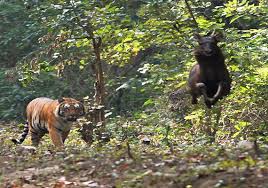
India’s first 8-lane tunnel is all set to open which is built beneath the Mukundra hills tiger reserve.
- Mukundra Hills Tiger Reserve is located in Rajasthan.
- It is also known as the Darrah Wildlife Sanctuary.
- It is situated in a valley formed by two parallel mountains, viz. Mukundra and Gargola.
- It encompasses the area of Mukandra National Park, Darrah Sanctuary, Jawahar Sagar Sanctuary, and part of Chambal Sanctuary (from Garadia Mahadev to Jawahar Sagar Dam), forming its core/critical tiger habitat.
- It is strategically located between Ranthambore and Madhya Pradesh’s Kuno National Park, making it a vital corridor for tiger movement.
- It is located on the eastern bank of the Chambal River and is drained by its tributaries.
- Vegetation: Dry Deciduous Forest
- Kala Dhok, or Kaladhi, is the predominant species, along with Khair, Ber, Kakan, Raunj, etc.
- Leopard, Sloth bear, Nilgai, Chinkara, Spotted Deer, Small Indian Civet, Toddy Cat, Jackal, Hyena, Jungle Cat, Common Langur, etc.
Arbuscular Mycorrhizal Fungi:
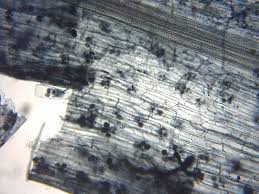
A new study published in Science has reported the first global map of the earth’s vast underground network of Arbuscular Mycorrhizal (AM) Fungi.
- These are groups of root obligate biotrophs belonging to the phylum Glomeromycota.
- These are soil-borne microorganisms form symbiotic associations with approximately with 80% of terrestrial vascular plants.
- These are made up of tiny branching threads called hyphae.
- These hyphal networks form two-way pipes to channel nutrients and carbon to and from plants.
- Grassland ecosystems like those in South Sudan, the Tibetan plateau, and India’s Banni grasslands house 40% of the world’s AM fungal networks.
- It networks also weigh around 300 million tonnes of carbon, which is four- to six-times the weight of the entire human population.
- They are considered natural biofertilizers which provide the host with water, nutrients, and pathogen protection.
- They provide nutrients and water in exchange for the carbon produced by the plants, and helps to regulate the climate by drawing carbon into soils.
- It formed symbiotic relationships with 70% of plant species, trading nutrients for carbon and sequesters an estimated 4 billion tonnes of CO2-equivalent a year.
Armenia:
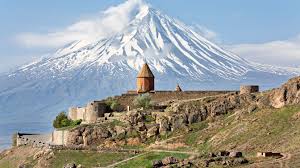
Armenia’s ruling Civil Contract party has won the Parliamentary election.
- Armenia is a landlocked country, located in the south of Caucasus mountain range.
- It is bounded by Georgia in the north, Azerbaijan in the east, Iran in the southeast and Turkey in the west.
- Geographical Features of Armenia is impacted by highland continental, hot summers, cold winter climate.
- Terrain: The Lesser (or Little) Caucasus Mountains dominate much of Armenia’s landscape.
- Much of Armenia’s soil, formed partly by residues of volcanic lava, is rich in nitrogen, potash, and phosphates.
- Highest Peak: Mount Aragats
- Rivers: Aras, Hrazdan, Arpa, and Vorotan, rivers which provide hydropower and irrigation facilities to the country.
- Lakes: Lake Sevan is the largest lake of Armenia.
- Natural resources: It consists of small deposits of gold, copper, molybdenum, zinc, bauxite.
52nd G7 Summit:
The 52nd G7 Summit set to commence today (15th June, 2026) in the French city of Evian and it will bring together the leaders of the world’s leading advanced economies at the time of significant geopolitical developments. This years summit set to kick off against the major breakthrough in West Asia, with the United States and Iran finalizing an agreement to end their 107-day conflict and it reopening the strategically important Strait of Hormuz. This summit hosted under the France’s Presidency and it will focus on the global economic stability, international partnerships, critical supply chains and pressing the geopolitical challenges.
First Approved Radioligand Therapy for Advanced Prostate Cancer:
India has entered the new phase in precision cancer treatment with the launch of Pluvicto which is the country’s first regulatory authority approved radioligand therapy for the advanced prostate cancer. It is introduced by the Novartis and this therapy offers the highly targeted treatment approach that delivers the radiation directly to cancer cells while minimizing damage to healthy tissues.Pluvicto is the radioligand therapy which is developed for eligible patients suffering from PSMA-positive metastatic prostate cancer.It is specifically designed for those patients whose cancer has spread beyond the prostate gland.This treatment combines the targeting molecule with the radioactive isotope Lutetium-177.This enables the therapy to locate and attack the cancer cells with high precision.
Integrated Aqua Park in Bhojpur:
Union Minister Rajiv Ranjan Singh and Respectable Chief Minister Samrat Choudhary will lay the foundation stone of an Integrated Aqua Park in Bhojpur and also inaugurate the NFDB Regional Centre in Patna on 15th June, 2026. These initiative aims to strengthen the inland fisheries infrastructure, also to promote modern aquaculture technologies and will create the employment opportunities across the state.
India Deploys First Tunnel Hoods for Mumbai-Ahmedabad Bullet Train Project:
India’s ambitious Mumbai-Ahmedabad Bullet Train Project has achieved the engineering milestone with the deployment of the India’s first railway tunnel hood technology. This innovative system has been installed at the mountain tunnel portals along the high-speed rail corridor to reduce noise, improve passenger comfort and to enhance the operational safety for trains travelling at speeds exceeding 300 kmph.The adoption of the tunnel hoods reflects country’s commitment to incorporating the global best practices and the advanced engineering solutions in its first high-speed rail project.
UK Announces Social Media Ban for Under-16 Users:
United Kingdom Prime Minister Keir Starmer has announced the landmark proposal to ban social media access for users who are under the age of 16. This move aims to protect the children from online harms, cyberbullying, addictive platform features and the potential mental health risks. If it gets approval from Parliament this legislation is expected to be enacted by the end of the year 2026 and it comes into force in early 2027.



