
Today’s Current Affairs: 24th jun 2026 for UPSC IAS exams, State PSC exams, SSC CGL, State SSC, RRB, Railways, Banking Exam & IBPS, etc
Table of Contents
Anthropological Survey of India:
Human skeletal remains excavated from the archaeological site of Rakhigarhi in Haryana have been formally handed over by the Archaeological Survey of India (ASI) to the Anthropological Survey of India (AnSI) recently.
- It is a government-funded organization that conducts anthropological research and studies on the diverse cultures of India.
- It is the only research organization to pursue anthropological research in the Central Government under the Ministry of Culture.
- Headquarters: Kolkata, West Bengal.
- It was established in 1945 under the leadership of Dr. S.C. Roy, a renowned anthropologist.
- AnSI was initially set up to study the tribes and castes of India and their way of life.
- AnSI’s early research focused on collecting ethnographic data on the different tribes and castes of India, including their social structure, kinship system, religious beliefs, and economic activities.
- Over the years, AnSI has expanded its research ambit to include the study of the entire gamut of Indian society, including the rural and urban population, the marginalized sections, and the diaspora.
- Principle Objectives of AnSI:
- To research the tribes and other groups that make up India’s population from a biological and cultural perspective.
- To examine and conserve human skeletal remains from both contemporary and archaic times.
- To gather examples of Indian tribal arts and crafts.
- To serve as a training ground for management and advanced anthropology students.
- To publish the research’s findings.
- AnSI has several branches located in different parts of India, including Delhi, Lucknow, Shillong, and Pune.
- AnSI has a multidisciplinary team of anthropologists, sociologists, linguists, archaeologists, and other allied professionals who conduct research and studies on various aspects of Indian society.
- AnSI’s research findings are published in its various publications, including the Journal of Anthropological Survey of India, Occasional Papers, and Monographs.
Apristurus drona:
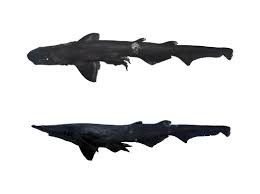
Scientists recently identified a new species of deep-sea catshark from the Arabian Sea off the Sakthikulangara harbour on the Kollam coast and named it Apristurus Drona, or the Arabian slender catshark.
- Apristurus Drona, or the Arabian slender catshark, is a new species of deep-sea catshark.
- It was discovered in the Arabian Sea off the Sakthikulangara harbour on the Kollam coast of Kerala.
- The species forms a distinct evolutionary lineage and is closely related to catshark species found in the Pacific Ocean and New Zealand.
- It appears to be extremely rare, occurring along the continental slope off Kollam and around the Wadge Bank.
- It has no commercial value and is only occasionally encountered in fishery bycatch.
- A catshark is any of more than 150 species of small mottled sharks (order Carcharhiniformes).
- They have slender bodies and eyes that are elongated, giving them a catlike appearance.
- Cat sharks prey on invertebrates and small fishes.
- They have been found in all major marine environments of the tropical and temperate regions, although many bottom-dwelling species are rare and poorly understood.
- No species is known to be aggressive toward humans.
Sarinda:
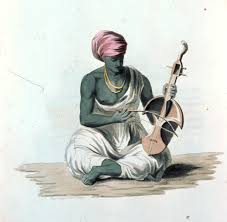
Tripura’s rich cultural heritage has received a major boost with the traditional Tripura Sarinda being granted the Geographical Indication, or GI, tag.
- Sarinda is a bowed string musical instrument which is crafted from a single block of wood with a hollow resonator.
- It is associated with the indigenous communities of Tripura an used during folk performances and other indigenous musical expressions.
- It is also known as Sarinda Uakhrap.
- Features of Sarinda:
- It is specially made of bamboo.
- It also has an oval shaped void wooden vibrating chamber which is covered with a thin skin.
- The middle portion is large and the edges are wide. The cave portion is uncovered.
- In the top portion three pegs are fitted in order to fasten the strings. The strings are either metal or of the thread of Muga or animals gut.
- It is played by a crude “bow” that is made of horse hair.
Vaigai River:

Residents of Nelpettai recently condemned the Madurai corporation administration for converting the stretch of Vaigai River into a garbage dumping zone by placing more than 10 trash bins there.
- Vaigai River is an important river in Tamil Nadu
- It begins its journey in the Varusanadu Hills, which are part of the Western Ghats.
- It flows east across the state, passing by the famous city of Madurai.
- Eventually, the Vaigai River flows into the Palk Strait, near the Ramanathapuram district.
- The river also creates the beautiful Vattaparai Falls.
- Vaigai gets major feed from the Periyar Dam in Kumuli, Kerala.
- Water from the Periyar River in Kerala is diverted into the Vaigai River via a tunnel through the Western Ghats.
- Major Tributaries: Suruli River, Mullaiyaar River, Varaha River, and Manjal River.
- The Vaigai Dam is built across the river near Andipatti, in the Theni district of Tamil Nadu.
- It provides water for irrigation for the Madurai district and the Dindigul district as well as drinking water to Madurai and Andipatti.
Khurasani Imli:
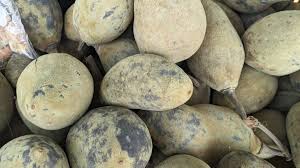
The Khurasani Imli, fruit of Mandu’s iconic Baobab tree, has been awarded Geographical Indication (GI) tag.
- Khurasani Imli or Tamarind is a fruit of Mandu’s (Madhya Pradesh) iconic Baobab tree.
- It was brought to Mandav during the reign of Mahmud Khilji in the 14th century and its name was changed from ‘Baobab’ to “Khurasani Imli.
- It is known by one more name Mandav Imli.
- It has a light green fruit with a tangy sweet-sour flavour, grows across villages in the Mandu region.
- Tribal communities have traditionally used not only the pulp but also the tree’s juice and dried bark for treating ailments such as diabetes.
- It is packed with Vitamin C, antioxidants, and essential minerals.
- Tribal healers have long used it to treat digestive ailments, fever, and fatigue, while seeds and bark also hold medicinal value.
Geographical Indication Tag:
- It is a sign used on products that have a specific geographical origin and possess qualities or a reputation that are due to that origin.
- This is typically used for agricultural products, foodstuffs, wine and spirit drinks, handicrafts and industrial products.
- The Geographical Indications of Goods (Registration and Protection) Act, 1999 seeks to provide for the registration and better protection of geographical indications relating to goods in India.
- This GI tag is valid for 10 years following which it can be renewed.
Ammonia:

An ammonia gas leak at a seafood processing and export unit in Tamil Nadu’s Tiruvallur district impacted many people.
- Ammonia is a colorless, pungent gas composed of nitrogen and hydrogen with the formula NH3.
- Ammonia gas can be dissolved in water. This kind of ammonia is called liquid ammonia or aqueous ammonia. Once exposed to open air, liquid ammonia quickly turns into a gas.
- It exists naturally in humans and in the environment.
- In the environment, ammonia is part of the nitrogen cycle and is produced in soil from bacterial processes.
- Ammonia is also produced naturally from decomposition of organic matter, including plants and animals.
- Manufactured mainly by the Haber–Bosch process (from nitrogen and hydrogen).
- The major use of ammonia is as a fertilizer.
- Ammonia is a basic building block for ammonium nitrate fertilizer, which releases nitrogen, an essential nutrient for growing plants.
- Additional uses include as a refrigerant, stabilizer, neutralizer, and purifier particularly in food transport and water treatment applications.
- It can also be used in the manufacture of plastics, explosives, fabrics, dyes, and pharmaceuticals.
- Exposure to high levels of ammonia in air may be irritating to a person’s skin, eyes, throat, and lungs and cause coughing and burns.
Project Nimbus:

The growing global protests against “Project Nimbus” highlight the ethical and geopolitical controversies surrounding Big Tech companies like Google and Amazon providing advanced cloud infrastructure and Artificial Intelligence (AI) services to the Israeli government and military.
- Project Nimbus Announced in 2021, Project Nimbus is a USD 1.2 billion flagship cloud-computing agreement between the Israeli government and two tech giants: Google (Google Cloud Platform) and Amazon (Amazon Web Services).
- Its primary aim is to digitize Israel’s public sector infrastructure by shifting state data, processing systems, and local applications into commercial, localized cloud ecosystems.
- The project equips Israel with advanced data storage, high-compute machine learning tools, and AI services including facial detection, automated image categorization, object tracking, and sentiment analysis.
- Leaked documents suggest the contract contains a strict clause preventing Google and Amazon from shutting down or restricting services to governmental units, even under external pressure or corporate policy shifts.
- Data processing and server administration remain localized in Israel to ensure data sovereignty.
- Protests against Project Nimbus are driven by concerns that its “dual-use” AI and cloud technologies, while marketed for civil sectors, are allegedly being utilized by the Israeli military for surveillance and the targeting of Palestinians in Gaza.
- Activists and tech employees cite a severe lack of transparency. Ultimately, protestors accuse Big Tech companies of corporate complicity, arguing they are passively enabling and profiting from geopolitical violence by providing the underlying digital architecture.
Three Indigenous Naval Ships Commissioned:
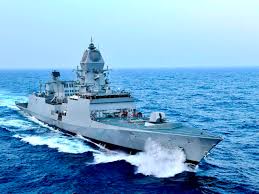
The Prime Minister commissioned three indigenously built naval ships, INS Dunagiri, INS Sanshodhak and INS Agray, in Kolkata.
- The three vessels were built by Garden Reach Shipbuilders & Engineers (GRSE), Kolkata, with more than 75% indigenous content.
- They add distinct operational strengths to the Navy, ranging from frontline combat to seabed mapping and coastal submarine detection.
- INS Dunagiri: INS Dunagiri is a Project 17A stealth guided-missile frigate designed for blue-water operations, meaning it can operate far from the coast.
- It is the largest and most heavily armed among the three vessels.
- It is equipped with advanced weapons and sensors, including BrahMos surface-to-surface missiles, Medium Range Surface-to-Air Missile system, MFSTAR radar, sonar, electronic warfare systems and anti-submarine weapons.
- It strengthens the Navy’s ability to counter conventional and non-conventional threats at sea.
- INS Sanshodhak: It is a Survey Vessel Large (SVL) meant for coastal and deep-water hydrographic surveys. It helps map seabed features, water depths, navigational routes, approach channels to ports and oceanographic data.
- The ship is equipped with systems such as autonomous underwater vehicles, remotely operated vehicles and multi-beam echo sounders.
- Its data supports naval operations, submarine route planning, port development, safe shipping, disaster relief and ocean research.
- INS Agray: It is an Arnala-class Anti-Submarine Warfare Shallow Water Craft designed to detect and engage submarines in littoral or coastal waters.
- It is equipped with lightweight torpedoes, indigenous anti-submarine rocket launchers and shallow-water sonar systems.
- Their commissioning reflects the Navy’s effort to build capability across the full maritime spectrum, from blue-water operations in distant seas to improved maritime domain awareness and stronger littoral defence.
- This is important amid growing strategic competition in the Indian Ocean, including the expanding naval presence of China and Pakistan.
The Chapekar Brothers:
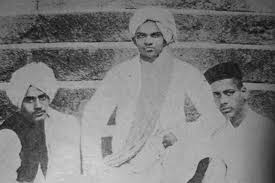
On June 22, 1897, the three Chapekar brothers executed the assassination of British official Walter Charles Rand in Pune to avenge colonial atrocities committed during the bubonic plague.
- The Chapekar brothers—Damodar Hari Chapekar (28), Balkrishna Hari Chapekar (24), and Vasudeo Hari Chapekar (18)—were late 19th-century Indian revolutionaries who pioneered armed resistance against British colonial rule.
- Hailing from the Konkan region, they achieved historic prominence as the only instance where three biological brothers were hanged in the service of India’s independence.
- In October 1896, the bubonic plague spread to Pune. To control the outbreak, Bombay Governor Sandhurst appointed Walter Charles Rand as the Poona Plague Committee Chairman.
- Rand deployed British soldiers who enforced highly insensitive measures. Troops entered private residences with leather boots, violating the sanctity of domestic kitchens and home temples.
- Incensed by these acts, the brothers plotted to assassinate Rand during Queen Victoria’s Diamond Jubilee celebration on June 22, 1897. They even sent a preemptive letter to Rand warning him of the attack.
- Waiting near the Mutha river bridge, the brothers used their secret code Gondya ala re (originally a phrase used to safely change the topic whenever their government-employed uncle entered the room).
- The Fatal Mistake: Due to confusion in the dark, the youngest brother Vasudeo signaled an attack on the wrong coach, causing Balkrishna to shoot and instantly kill Lieutenant Charles Ayerst. Realizing the error, Damodar jumped onto the second carriage and shot Rand, who succumbed to his injuries on July 3.
Kuno National Park: In News
President Droupadi Murmu visited Kuno National Park in Madhya Pradesh, where she toured the Cheetah Management Area and was briefed on the progress of Project Cheetah.Kuno National Park is a highly significant protected area and wildlife oasis that serves as India’s first and primary cheetah reintroduction site. It represents a crucial step in global biodiversity restoration, designed to reestablish cheetah populations in India after the species became locally extinct.Situated in the state of Madhya Pradesh, India.The core national park covers 748 square kilometers of pristine forest, sitting inside the larger 1,235-square-kilometer Kuno Wildlife Division.
Right To Walk Is A Fundamental Right:

The Supreme Court of India delivered a landmark judgment declaring the right to walk on demarcated footpaths a fundamental right under Part III of the Constitution.
- The right to walk is a newly recognized fundamental right that legally guarantees citizens the safe and unhindered use of well-maintained, demarcated footpaths and pedestrian infrastructure alongside motorized roads.
- The ruling establishes that the state has a corresponding, non-negotiable duty to construct and safeguard walkable spaces if a public road exists.
- The Supreme Court integrated the right to walk into Part III of the Constitution by reading multiple articles together:
- Article 19(1)(d): Serves as the primary anchor, which guarantees the fundamental freedom of movement throughout the territory of India.
- Articles 19(1)(a), 19(1)(b), and 19(1)(c): Interlinked to protect the ancillary freedoms of expression, peaceful assembly, and association, all of which require safe public spaces to execute.
- Article 21: Invoked to cement pedestrian safety as an integral component of the fundamental right to life, personal liberty, and dignified public existence.
Features of the Judgment:
- The court held that a citizen’s right to use a demarcated footpath is primary and holds legal priority over motorized vehicles.
- The judgment clearly defines the administrative bodies responsible for constructing, maintaining, and safeguarding pedestrian pathways, explicitly naming urban development authorities, municipal corporations, municipalities, and panchayats.
- Any violation or obstruction of safe footpaths entitles citizens to invoke constitutional and legal remedies against duty bearers for restitution and financial compensation.
- This path is completely independent of standard claims under the Motor Vehicles Act, 1988.
- Noting the total absence of standalone pedestrian legislation, the court stressed a compelling need for a dedicated legal framework to govern pedestrian infrastructure.
- The ruling recommends establishing a full-time, independent regulator tasked specifically with planning, enforcing, and implementing pedestrian safety standards.
IAS e-Civil List 2026:
Union Minister of India launched the IAS e-Civil List 2026, the 71st edition of the Civil List and the sixth edition released in digital format.Union Minister of India launched the IAS e-Civil List 2026, the 71st edition of the Civil List and the sixth edition released in digital format.Ministry: Ministry of Personnel, Public Grievances and Pensions.Department: Department of Personnel and Training (DoPT), the cadre controlling authority of the IAS.Aim is to facilitate talent identification, cadre management, and optimal deployment of IAS officers,to promote transparency, accessibility, and evidence-based administrative planning through digital platforms.
65 Years of Antarctic Treaty:
The Antarctic Treaty, which entered into force on 23rd June 1961, marks its 65th anniversary in 2026. As a landmark agreement dedicated to preserving Antarctica for peaceful purposes and scientific research, the treaty remains a unique example of international cooperation.However, its resilience is increasingly being tested by rising geopolitical competition, climate change, and growing interest in Antarctica’s resource potential.The treaty was signed in Washington on 1st December 1959 and officially entered into force on 23rd June 1961, following the highly successful International Geophysical Year (IGY) of 1957-58, which saw unprecedented scientific cooperation in Antarctica.Antarctica Day (1st December) commemorates the Antarctic Treaty, which designated the entire region south of 60 degrees south latitude (nearly 10% of the Earth) strictly for peace and scientific research.The landmark treaty effectively froze all territorial claims, banned nuclear weapons, and prohibited radioactive waste disposal on the continent.
India Becomes World’s Top Ship Recycling Nation in 2025:
According to the latest report by the United Nations Conference on Trade and Development (UNCTAD), India emerged as the world’s leading ship recycling nation in 2025, capturing a top-ranking 35.4% global market share.It is a major maritime milestone driven by policy reforms and ease-of-doing-business initiatives that transitioned India into a global hub for responsible, sustainable, and high-volume ship breaking and recycling.India recycled 99 million gross tons (GT) of shipping volume in 2025, marking a sharp 60% surge from the 1.86 million GT recorded in 2024.The country’s global market share jumped from 30.1% in 2024 to 4% in 2025, outperforming all international competitors. Financial backing successfully helped 115 domestic facilities achieve strict, eco-friendly HKC compliance.



