
Today’s Current Affairs: 26th jun 2026 for UPSC IAS exams, State PSC exams, SSC CGL, State SSC, RRB, Railways, Banking Exam & IBPS, etc
Table of Contents
Maharishi Sushruta:
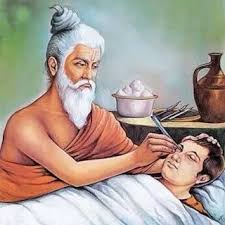
A bronze statue of Maharishi Sushruta, revered as the Father of Surgery, has been recently unveiled at the prestigious Royal College of Surgeons of Edinburgh in the United Kingdom.
- Sushruta, known as the “father of Indian medicine” and the “father of surgery”, was a pioneering figure in ancient Indian medicine.
- For Sushruta, the concept of shalya tantra (surgical science) was all-encompassing.
- His contributions have influenced the field of surgery, especially cosmetic surgery and medical practices within the global community.
- According to medical scholars, Sushruta lived and practiced medicine from 600 BC to 1000 BC.
- Sushruta was believed to be the disciple of the God of Ayurveda, Lord Dhanvanthri.
- He taught and practiced medicine in the city of Varanasi.
- He is known for his pioneering operations and techniques and for his influential treatise Sushruta-samhita, the main source of knowledge about surgery in ancient India.
- Though composed over 2500 years ago, it contains detailed instructions on surgery and medicine.
- The Sushruta Samhita comprises 184 chapters. This extensive work lists more than 300 surgical procedures.
- It describes over 120 surgical instruments and provides details on various types of wounds, fractures, dislocations, conditions, and their treatments.
- The Sushruta-samhita also provides details on toxicology, pediatrics, pharmacology, and other branches of the traditional system of Indian medicine known as Ayurveda.
- Furthermore, the text includes descriptions of over 100 medicinal plants, detailing their taste, usage, and effects.
- It remains one of the most important contributions to both Ayurveda and the early history of medical science.
- Examples of some of his groundbreaking operations include rhinoplasty (the repairing or remaking of a nose), removal of a dead fetus, and lithotomy (surgical incision into hollow organs such as the urinary bladder to remove stones, or calculi).
- He also developed many unique and practical techniques to dissect the human body and study its structure.
- His systematized approach to surgery, with the use of herbal anaesthetics and postoperative care, laid the foundation for surgical practices.
- Sushruta’s emphasis on practical experience, dissection of cadavers, and detailed documentation established standards that continue to underpin surgical education today.
- The influence of his detailing surgical techniques and surgical instruments extended beyond ancient India, spreading to other parts of the world and shaping the development of reconstructive surgery, orthopaedics, ophthalmology, and many more fields.
HELINA Missile:
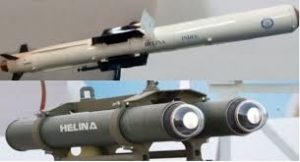
State-owned Bharat Dynamics Limited recently secured an order worth Rs 1,109.37 crore from Hindustan Aeronautics Limited to supply launchers for helicopter-launched anti-tank Nag (Helina) missiles.
- HELINA (Helicopter-launched NAG) is an indigenous, third-generation “fire-and-forget” anti-tank guided missile (ATGM).
- It is the helicopter-based version of the Nag Anti-Tank Guided Missile (ATGM).
- The Air Force version of the missile is called Dhruvastra, along with an ATGM version, which can be fired by soldiers.
- It has been developed indigenously by the Defence Research and Development Organisation (DRDO).
- Helina missile systems are outfitted with two twin launchers, one on each side, capable of carrying a total of eight missiles.
- It can cover distances ranging between 500 m and 7,000 m and is guided by an imaging infrared (IIR) seeker with lock-on before launch
- It means the crew locks on to the target before the launch, and the missile then guides itself to the target without any further control from the helicopter.
- The missile climbs sharply after the launch and then plunges directly onto the top of the tank.
- The system is equipped for day and night operations in all weather conditions, capable of neutralising battle tanks equipped with both conventional armour and explosive reactive armour.
Kiru Hydroelectric Power Project:
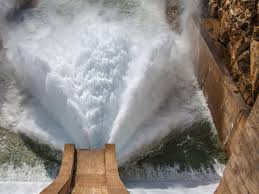
The Kiru Hydroelectric Power Project in Kishtwar district of Chenab Valley has entered the final phase of construction, with the latest monitoring report of the Centre showing that more than 83 percent of the work has been completed.
- Kiru Hydroelectric Power Project is a 624 MW run-of-the-river scheme being developed over the Chenab River in Kishtwar District of Jammu and Kashmir (J&K).
- It is located between the Kirthai II hydroelectric project upstream and the Kwar hydroelectric project downstream.
- The project will include the construction of a concrete gravity dam with a height of 135 m and an underground powerhouse located on the left bank of the river that will comprise four vertical Francis turbines with a capacity of 156 MW each.
- The project is being developed by Chenab Valley Power Projects (CVPP), a joint venture between National Hydroelectric Power Corporation (NHPC, 49%), Jammu & Kashmir State Power Development Corporation (JKSPDC, 49%), and Power Trading Corporation (PTC, 2%).
- The project shall provide much-needed power in the northern grid and shall accelerate the process of development of remote areas of J&K.
ASPIRE Scheme:
India’s ASPIRE scheme is helping transform rural livelihoods by supporting aspiring entrepreneurs with training, incubation and business development assistance.
- ASPIRE (A Scheme for Promotion of Innovation, Rural Industries and Entrepreneurship) scheme was launched in 2015.
- It promotes entrepreneurship and employment generation, particularly in rural and agro-based sectors.
- It provides financial, technical and mentoring support to entrepreneurs through incubation centres and cluster-based development.
- Nodal Ministry: Ministry of Micro, Small & Medium Enterprises
- ASPIRE Scheme Features:
- It promotes rural entrepreneurship and innovation through incubation support.
- It focuses on establishing Livelihood Business Incubators (LBIs) in rural and underserved areas.
- It encourages the development of agro-based and rural enterprises with high employment potential.
- It supports Technology Business Incubators (TBIs) to promote innovation and technology-driven start-ups.
- It provides financial assistance for setting up incubators through capital grants.
- It offers seed capital and risk funding support for early-stage innovators and start-ups.
- Eligibility for ASPIRE Scheme:
- It is open to Government institutions, Public Sector Undertakings (PSUs), and private or PPP organizations for establishing incubators.
- It is available to MSMEs with valid Entrepreneurs Memorandum (EM) registration.
- It supports individual innovators and entrepreneurs through incubation and mentoring services.
- It gives priority to start-ups working in agro-based, rural, and technology-driven sectors.
- It requires institutions to have adequate infrastructure and technical capability for incubation activities.
Nongkhyllem Wildlife Sanctuary:
A rescued Chinese pangolin (Manis pentadactyla) and an Asian palm civet have been released into Nongkhyllem Wildlife Sanctuary.
- It is located in Meghalaya, within the Eastern Himalayan Global Biodiversity Hotspot.
- It was established in 1981as a protected sanctuary under the Wildlife Protection Act, 1972.
- Features undulating plains, low hills, and rugged terrain shaped by the Umtrew River and its tributaries (Umran, Umling, Umtasor).
- The major part of the habitat is Tropical Moist Deciduous forest with patches of Tropical Semi-evergreen forest.
- Umtrew River, forming the western boundary of the sanctuary.
- Dominant species include Shorea robusta, Tectona grandis, Terminalia myriocarpa, and Gmelina arborea.
- It is home to bird species including the endangered Rufous-necked Hornbill, and mammals like the Clouded Leopard, Elephant, and Himalayan Black Bear.
- Four species of hornbills occur in the area, including the Great Pied, Indian Pied, and Wreathed Hornbills.
Senna Spectabilis: Invasive Plant
Uprooting of the highly invasive plant Senna Spectabilis has been going on in Male Mahadeshwara Hills Wildlife Sanctuary, and soon after its uprooting, the area cleared will be replaced by grass cover, among other forest plant species, to increase fodder availability.It is a versatile, flowering tree belonging to the family Fabaceae native to the tropical Americas.Common names: Popcorn Bush Cedar, Archibald’s Cassia, Calceolaria Cassia, Golden Shower, Golden Wonder, Scented Shower, Fetid Cassia.It is admired for its vivid yellow blossoms and its capacity to grow in a variety of climates, making it a popular choice as an ornamental tree in gardens and parks worldwide.
However, this adaptability has led to it becoming invasive in some regions of the world.This tree prefers sunny areas and welldrained, loamy soils but is adaptable to various soil types.It is classified as Least Concern under the IUCN Red List.
Lake Laach:
More than 1,000 tiny earthquakes have exposed a deeper, slanted reservoir beneath Germany’s Lake Laach volcano, not the vertical body scientists expected.Lake Laach, also known as Laacher See, is a volcanic caldera lake located in Rhineland-Palatinate, Germany.It is the largest lake in Rhineland-Palatinate.It is part of the East Eifel volcanic field within the larger volcanic Eifel region.The lake is oval in shape and surrounded by high banks.It was formed by a massive volcanic eruption.Traces of volcanic activity can still be found in the form of volcanic outgassing, the so-called mofettes, on the eastern shore of the lake.Small bubbles rise up in the water – these so-called mofettes are rising carbon dioxide and illustrate the volcanic history of the lake.The lake has no natural outlet but is drained by a tunnel dug before 1170 and rebuilt several times since.
Banganapalle Mango:
The Agricultural and Processed Food Products Export Development Authority (APEDA), under the Ministry of Commerce and Industry, has facilitated the first commercial sea shipment of premium Banganapalle mangoes from India to Singapore.It is one of most popular mango varieties cultivated in the town of Banganapalle in Andhra Pradesh, India.It also known as Beneshan, Baneshan, Benishan, Chappatai and Safeda.It is known for its golden-yellow colour, fibreless pulp, rich sweetness and pleasant aroma.The variety enjoys strong demand in international markets and offers significant scope for expanding India’s mango exports.It has received a Geographical Indication (GI) tag in 2017.
Narco-Coordination Centre:
The Union Home Minister is scheduled to chair the 10th Apex-Level Meeting of the Narco-Coordination Centre (NCORD) in New Delhi.The Narco-Coordination Centre (NCORD) mechanism was established in 2016 for better coordination between states and the Ministry of Home Affairs.It has been further strengthened through a four-tier system in 2019.Purpose is to enhance coordination between the States, the Ministry of Home Affairs and concerned stakeholders in addressing the challenge of the drug menace in a holistic manner.
Initiatives of Narco-Coordination Centre (NCORD):
Mission SPANDAN – Partnership with spiritual institutions for awareness have emerged out of NCORD mechanism.
MANAS Helpline: A toll-free helpline called MANAS (Madak Padarth Nishedh Asuchna Kendra) with the number 1933 has been launched.
Golden Langur : Rescued
Seven endangered golden langurs (Trachypithecus geei), rescued from wildlife traffickers were released in the Sikhna Jwhwlao National Park.It is an Old World monkey which is also known as Gee’s golden langur.It can be most easily recognized by the color of their fur, after which they are named.It is found only in a narrow geographic corridor comprising western Assam and the foothills of southern Bhutan.
Conservation status:
IUCN: Endangered
CITES: Appendix I
Wildlife Protection Act, 1972: Schedule I