
Anemia Mukt Bharat Abhiyaan Operational Guidelines:
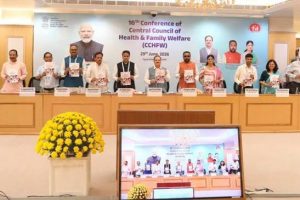
The Union Ministry of Health and Family Welfare has released the Anemia Mukt Bharat Abhiyaan Operational Guidelines, marking eight years of the Anemia Mukt Bharat initiative and outlining a strengthened strategy to accelerate India’s fight against anemia.
Key Highlights of the Anemia Mukt Bharat Abhiyaan Operational Guidelines:
- The revised framework transitions India’s anemia management from prophylactic care (preventive) to therapeutic care (treatment and active management) through intensified testing, tracking, and case-based protocols.
- The legacy 6x6x6 strategy has been upgraded by adding critical structural layers:
- 7th Beneficiary Group: Low Birth Weight (LBW) babies (0–6 months) to disrupt the intergenerational cycle of anemia at the earliest stage.
- 7th Intervention: The “Eating Right” approach, promoting daily conscious consumption of diversified, iron-rich diets.
- 7th Institutional Mechanism: A digitally integrated Monitoring and Evaluation framework to ensure end-to-end accountability.
- The core operational anchor shifts from T3 (Test, Treat, Talk) to T4 (Test, Treat, Talk, and Track), which enforces a strict continuum of care, including systematic referral and follow-up.
- For severe cases and non-responders among pregnant and lactating women, Intravenous Iron Therapy using Ferric Carboxymaltose (FCM) and Iron Sucrose is institutionalized as a vital clinical standard.
- A centralized Anemia Mukt Bharat Abhiyaan Portal will achieve intra-departmental data convergence by integrating real-time records from:
- JANANI Portal (maternal screening)
- RBSK Portal (Rashtriya Bal Swasthya Karyakram – child screening)
- U-WIN Portal (universal immunization tracking)
- The mission adopts a ‘Whole of Government’ approach for inter-ministerial convergence, alongside ‘Jan Bhagidari’ (community mobilization) and ‘Jan Chetna’ campaigns to de-normalize anemia across civil society.
- The interventions are explicitly mapped to drive down the Infant Mortality Rate (IMR) and Maternal Mortality Ratio (MMR) while improving holistic maternal and child health lifecycle outcomes.



