
Today’s Current Affairs: 8th jul 2026 for UPSC IAS exams, State PSC exams, SSC CGL, State SSC, RRB, Railways, Banking Exam & IBPS, etc
Table of Contents
SpudCell: Lab-made Synthetic Cell
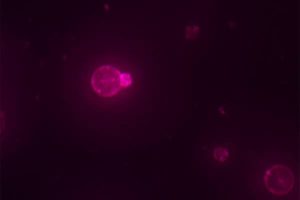
Researchers in the US have achieved a major milestone in synthetic biology by developing SpudCell, a lab-made synthetic cell built entirely from non-living chemical components that can grow, replicate its DNA, divide, and undergo evolutionary selection.
- Unlike traditional genetic engineering that modifies existing living organisms, this artificial cell was built entirely from scratch using lifeless chemicals, starting with a basic artificial fat bubble (liposome) acting as the cell membrane.
- The synthetic cell houses a specialized, cell-free chemical mixture (PURE system) that successfully translates a minimal, custom-made genetic code (90,000 base-pair DNA genome) into working proteins.
- The cell’s DNA instructs it to create a molecular “hook” (alpha-hemolysin protein) on its surface, allowing it to capture and fuse with smaller nutrient bubbles to absorb the lipids and materials it needs to expand.
- As the cell grows in size, it utilizes a specific copying enzyme to accurately duplicate its entire genetic blueprint.
- Instead of relying on a complex internal structural network (cytoskeleton) like natural cells, scientists engineered the cell to divide into two daughter cells using simple physical pressure and mechanical stress created by proteins crowding its outer surface.
- SpudCell shows life-like behaviour, but it is not a fully living or autonomous organism. It needs external supply of food and ribosomes and cannot sustain itself like a natural cell.
- The experiment successfully proved that artificial systems can undergo natural selection; when researchers introduced a genetic mutation that allowed some cells to feed faster, these efficient variants reproduced quicker and eventually outcompeted the original population.
Significance: This is a landmark achievement in Synthetic Biology. It proves that basic life processes can be chemically engineered from non-living matter.
This technology holds immense future applications for precision medicine (like programmable drug delivery systems), sustainable industrial biomanufacturing, and creating artificial organisms for environmental cleanup.
PM Pays Tribute to Swami Vivekananda:
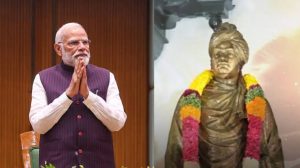
The Prime Minister paid tributes to Swami Vivekananda on his Nirvana Day. He highlighted Swami Vivekananda’s contribution to bringing global recognition to India’s cultural heritage, spiritual traditions and national consciousness.
- Swami Vivekananda, born as Narendra Nath Datta on 12th January 1863, was a monk and the chief disciple of Ramakrishna Paramhansa.
In 1893, upon the request of Maharaja Ajit Singh of the Khetri State, he took the name ‘Vivekananda’, changing from ‘Sachidananda’ that he used before. - In 1892, Swami Vivekananda was said to have swum to a rock (later named Vivekananda Rock Memorial) in the Indian Ocean from the shores of Kanyakumari for meditation.
- He spent three days and nights there, resulting in his enlightenment.
- He introduced the world to the Indian philosophies of Vedanta and Yoga.
- He preached ‘neo-Vedanta’, an interpretation of Hinduism through a Western lens, and believed in combining spirituality with material progress.
- Vivekananda’s message on human values draws from the Upanishads, the Gita, and the examples of Buddha and Jesus, emphasizing self-realization, compassion, and selfless service.
- He advocated the doctrine of service. Serving jiva (living beings) is considered worship of Shiva.
- He gave the four pathways of attaining moksha (liberation) from the worldly pleasure and attachment in his books- Raja-yoga, Karma-yoga, Jnana-yoga and Bhakti-yoga.
- He laid emphasis on education for the regeneration of our motherland. He advocated a man-making character-building education.
- His nationalism is based on Humanism and Universalism, the two cardinal features of Indian spiritual culture.
- His nationalism is based on concern for the masses, freedom, equality, and Karma Yoga — a path to political and spiritual freedom through selfless service.
- He founded the Ramakrishna Mission in 1897 to propagate the ideals of service, education, and spiritual upliftment.
- In 1899, he established the Belur Math, which became his permanent abode.
- He addressed the Parliament of Religions held in Chicago in 1893, at which he represented Hinduism.
- In July, 1896, he addressed a conference of the London Hindu Association in London.
- He passed away on 4th July 1902, while meditating at Belur Math. His death anniversary is observed as Nirvana Day.
AI Governance and the Global South Voice:

International stakeholders met in Geneva during the first UN Global Dialogue on AI to discuss global AI governance. Experts urged India to reclaim its leadership role for the Global South instead of ceding influence to advanced economies.
- AI governance for the Global South represents an international diplomatic and regulatory effort to place equity, inclusivity, and real-world domestic harms at the center of the global technology discourse.
- Global AI summits hosted by Western nations have focused on far-off, existential, and catastrophic risks.
Key Data and Strategic Facts on the AI Ecosystem: - The Silicon Supply Chain Alignment:India joined the Pax Silica initiative, aligning with the US-led semiconductor ecosystem and supporting open, innovation-friendly chip manufacturing and technology standards.
- The Global Openness Score:India’s lower Visa Openness Index reflects restrictive access systems, highlighting how closed digital ecosystems can similarly limit innovation, collaboration, and developer participation.
- Severe StructuralR&D Spending Gaps: India spends only 65% of GDP on R&D, far below major economies, limiting indigenous innovation, advanced technology development, and global competitiveness.
- The Bulk Compute Packaging Target:India’s semiconductor sector currently focuses mainly on chip assembly and testing (OSAT), with facilities like Sanand assembling about 20 crore chips annually using imported technology.
The NCW Women Helpline – 14490:
The National Commission for Women (NCW) has highlighted its 24×7 Women Helpline – 14490, a dedicated digital grievance platform providing immediate assistance, counselling, and complaint registration for women in distress across India.NCW Women Helpline – 14490 is a 24×7 toll-free national helpline operated by the National Commission for Women (NCW) to provide digital complaint registration, psychological counselling, referral support, and grievance redressal for women facing violence, harassment, or discrimination.Aim: is to provide immediate, accessible, and confidential support to women facing violence or other forms of distress.
INS Mahendragiri (F38):

The Indian Navy is set to formally commission INS Mahendragiri (F38), its sixth Project 17A indigenous guided-missile stealth frigate, at Visakhapatnam.
- INS Mahendragiri is a state-of-the-art, multi-role stealth frigate belonging to the Nilgiri-class (Project 17A).
- It is designed to operate as a highly automated, heavy combat platform capable of simultaneously engaging threats across air, surface, and sub-surface warfare dimensions.
- Designed completely in-house by the Indian Navy’s Warship Design Bureau (WDB).
- Constructed by Mazagon Dock Shipbuilders Limited (MDL) in Mumbai using advanced modular build techniques.
- The objective of INS Mahendragiri is to protect India’s sprawling maritime boundaries and sea lines of communication across the Indian Ocean Region (IOR).
Key Technical Features:
- Advanced Stealth Engineering: Built with an optimized hull geometry that reduces its Radar Cross Section (RCS).
- It uses infra-red suppression and flush structural designs to mask its acoustic and thermal signatures, allowing it to slip past enemy surveillance grids undetected.
- Built using over 75% indigenous content under the Aatmanirbhar Bharat initiative, sourcing steel, components, and electronics from a vast network of domestic heavy industries and MSMEs.
- Powered by a modern Combined Diesel or Gas (CODOG) propulsion plant. It uses highly efficient diesel engines for long-range, low-speed cruising endurance, and switches to high-power gas turbines for rapid, high-speed tactical intercepts.
- Outfitted with an array of state-of-the-art offensive and defensive weapons systems:
- BrahMos supersonic anti-ship and land-attack cruise missiles.
- Barak-8 Long-Range Surface-to-Air Missiles (L-SAM) for multi-tiered fleet air defense.
- Indigenous heavy-weight torpedo launchers and anti-submarine rocket arrays.
- An advanced main deck gun for surface intercepts.
- Managed by an indigenous Combat Management System (CMS) that fuses data from a powerful multi-function active phased array radar system, electronic warfare (EW) suites, and advanced hull-mounted and towed sonar networks.
- Project 17A Frigates: INS Nilgiri (F34), INS Himgiri (F35), INS Udaygiri (F36), INS Dunagiri (F37), INS Mahendragiri (F38), INS Taragiri (F41), and INS Vindhyagiri (F42).
Vepdegestrant:
The U.S. Food and Drug Administration (FDA) has approved vepdegestrant, marking a historic milestone as the world’s first-ever approved therapy based on PROTAC (Proteolysis-Targeting Chimera) technology.Vepdegestrant is a first-in-class, orally administered therapeutic molecule designed using PROTAC technology. Instead of merely blocking a malfunctioning protein like traditional inhibitors, this drug physically hijacks the cell’s internal disposal system to completely destroy the disease-causing protein.The drug was co-developed through a strategic pharmaceutical partnership between the biotechnology firm Arvinas, Inc. (the pioneer of clinical PROTAC development) and Pfizer.It is specifically indicated for the treatment of patients with ESR1-mutated, ER-positive (estrogen receptor-positive), and HER2-negative advanced or metastatic breast cancer. It targets the estrogen receptor, which frequently mutates (ESR1 gene) during standard hormone therapy, causing the cancer to become resistant to conventional treatments.
The Himalayan Pangolin:
International researchers have revalidated the Himalayan pangolin (Manis aurita) as a distinct extant species, rather than a subspecies of the Chinese pangolin (Manis pentadactyla).The Himalayan pangolin (Manis aurita) is a newly revalidated, unique species of scaly mammal belonging to the family Manidae. Like all pangolins, it is a highly specialized, nocturnal, and olfactory-reliant insectivore that plays a critical ecological role in regulating forest insect populations. Strictly restricted to the southern Himalayan foothills. Confirmed populations exist across Nepal (particularly around the Kathmandu Valley), South Tibet, and Northeast India (including the state of Assam).
Major geographic features like the Brahmaputra River drainage basin and the Arakan Mountains acted as natural barriers, enforcing millions of years of evolutionary isolation from other Asian pangolins.
The Teesta River:
During an official state visit to China, Bangladesh Prime Minister Tarique Rahman signed a strategic agreement with Beijing to accelerate a comprehensive feasibility study for the Teesta River Comprehensive Management and Restoration Project (TRCMRP).The Teesta River is a major, high-velocity, glacier-fed transboundary river in South Asia. It serves as the primary hydrological lifeline for the Indian state of Sikkim and the northern plains of West Bengal, before functioning as a critical agricultural anchor for northwestern Bangladesh.It originates at an elevation of over 5,000 meters in the Eastern Himalayas from the Tso Lhamo (Cho Lhamo) Lake and is fed by glaciers including the Teesta Khangse glacier in North Sikkim.
National and State Boundaries Crossed:
India: Flows through the mountainous terrain of Sikkim and the plains of West Bengal (Darjeeling, Kalimpong, and Jalpaiguri districts).
Bangladesh: Crosses into northwestern Bangladesh through the Rangpur Division (Nilphamari and Rangpur districts).



