
Ladakh to Extend Autonomous Hill Councils to All 7 Districts:
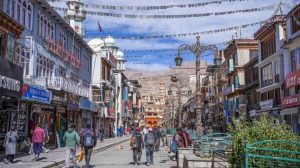
The Ladakh administration has announced the extension of the Ladakh Autonomous Hill Development Council (LAHDC) framework to all seven districts, alongside the creation of 17 new tehsils, to strengthen democratic decentralisation, grassroots governance and protection of Ladakh’s land, culture and identity.
- Ladakh earlier had only the Leh and Kargil districts. Following the creation of five new districts (Sham, Nubra, Changthang, Zanskar, and Drass) in April 2026, the administration has added 17 new tehsils (bringing the total to 32).
- The Ladakh Autonomous Hill Development Council Act, 1995, permits the establishment of an Autonomous Hill Development Council in every district, although necessary amendments and delimitation of constituencies will be required.
- Each of the seven districts will now possess its own elected Autonomous Hill Development Council (AHDC).
- Under the existing LAHDC framework, these councils exercise important executive, financial and administrative functions relating to district-level development, land use and allotment, infrastructure, health, education and tourism.
- However, the precise powers of the five new councils, including their role in recruitment and service matters, will depend on the amended legal framework, official notifications and delimitation process.
- To ensure seamless public service delivery in high-altitude zones, the administration has set up four new divisions under the Public Health Engineering (PHE) and Flood Control Department and five new divisions under the Public Works Department (PWD) and Pradhan Mantri Gram Sadak Yojana (PMGSY).
- Customised Article 371 Model: To address long-standing local demands for demographic and tribal safeguards (previously advocated through mass protests by activists like Sonam Wangchuk), the Ministry of Home Affairs (MHA) is considering a customised sui generis model under Article 371 of the Constitution, rather than direct inclusion under the Sixth Schedule.
- Constitutional Framework of Article 371: Contained within Part XXI of the Constitution (Articles 371 to 371J), these special provisions grant asymmetrical autonomy to specific states and regions to preserve their cultural identity, land rights, employment quotas, and indigenous administrative arrangements based on unique historical or geographical vulnerabilities.



