
Today’s Current Affairs: 14th jul 2026 for UPSC IAS exams, State PSC exams, SSC CGL, State SSC, RRB, Railways, Banking Exam & IBPS, etc
Table of Contents
Pygoluciola mawsynram:
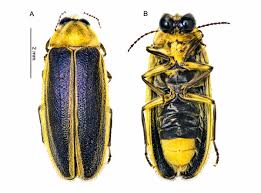
Scientists from Assam and Meghalaya recently identified a new firefly species in Mawsynram and named it Pygoluciola mawsynram.
- Pygoluciola mawsynram is a new species of firefly.
- It was discovered from Mawsynram in Meghalaya’s East Khasi Hills district, the world’s wettest place.
- It was named Pygoluciola mawsynram in recognition of the region’s unique biodiversity and the Khasi community that has long protected it through traditional conservation practices.
- Adults of the newly discovered firefly were observed flying close to water bodies surrounded by dense vegetation, ferns, and semi-evergreen forests.
- The researchers believe such habitats, along with the area’s high humidity and extensive leaf litter, may be crucial for the species’ life cycle and survival.
- Pygoluciola mawsynram has distinct body characteristics and unique flashing patterns that differentiate it from other members of the genus.
- The discovery raises the number of known species in the rare Pygoluciola genus to 29
- It also raises the number of Pygoluciola species recorded from India to five.
Indian Giant Flying Squirrel:
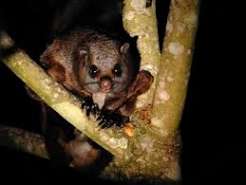
A rare Indian giant flying squirrel has been recently spotted in Uttarakhand’s Ramnagar forests for the first time in nearly 12 years.
- The Indian giant flying squirrel (Petaurista philippensis), also known as the large brown flying squirrel or the common giant flying squirrel, is a type of rodent in the Sciuridae family, which includes squirrels.
- It is capable of gliding flight using a skin membrane, the patagium, stretched between front and hind legs.
- Scientific Name: Petaurista philippensis
- It can be found only in Southeast and South Asia and southern and central China.
- In South Asia they have a patchy distribution in Sri Lanka and India, primarily concentrated in the Himalayan Mountains and northeast regions north of Bombay and Rajasthan.
- They live in dry deciduous and evergreen forests, usually at higher elevations.
- They can also be found in plantations.
- It is one of the largest flying squirrels.
- It is nocturnal
- It is arboreal and spends most of the life in the canopy.
- Conservation Status:
- IUCN Red List: Least Concern
Begonia quadricornualata:
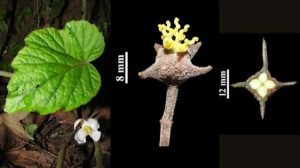
Botanists recently discovered a new plant species named Begonia quadricornualata in the remote forests of northeast India.
- Begonia quadricornualata is a new plant species.
- It was discovered in the Papum Pare district of Arunachal Pradesh, a region nestled at the intersection of the Himalaya and Indo-Burma biodiversity hotspots.
- The discovery occurred during a routine botanical documentation project in Senki View, located on the eastern fringe of the Itanagar Wildlife Sanctuary.
- It is characterised by its four-horned fruit, upright stems and delicate white-to-pink flowers.
- Derived from the Latin words quattuor (four), cornu (horn), and alatus (winged), the name quadricornualata refers to the way four horns on the plant’s ovary transform into four fully developed wings as the fruit matures.
- This unique fruit structure, which is densely covered in reddish-brown wool, helps distinguish it from other hornless or ridged species in the region.
- What sets it apart from its closest relatives is its distinctively rugged appearance.
- The female plants are covered in dense, long, red-to-brown “hispid” hairs, stiff bristles that give the leaves a woolly texture.
- It also boasts exceptionally long leaf stalks, or petioles, which can reach up to 50 centimetres in length, nearly double the size of its nearest cousins, Begonia handelii and Begonia tessaricarpa.
- While its relatives often grow flowers in clusters, the female version of this new species produces only a single flower at a time.
- The species has been categorised as Data Deficient.
Gulf of Mannar:
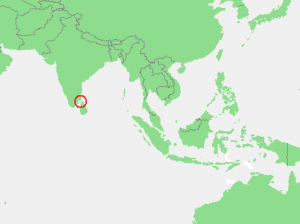
The Gulf of Mannar has witnessed a steep decline in bird numbers over the last four decades, with overall shorebird abundance dropping by nearly 57%, according to a peer-reviewed study published recently.
- Gulf of Mannar is a vast shallow bay that forms part of the Laccadive Sea in the Indian Ocean.
- It is located between southeastern India and western Sri Lanka.
- It is bounded to the northeast by Rameswaram (island), Adam’s (Rama’s) Bridge (a chain of shoals), and Mannar Island.
- It is connected to the Palk Bay in the north through the Palk Strait.
- It receives several rivers, including the Tambraparni (India) and the Aruvi (Sri Lanka).
- The port of Tuticorin is on the Indian coast.
- The gulf is noted for its pearl banks and sacred chank (a gastropod mollusk).
- Endowed with three distinct coastal ecosystems (coral reefs, seagrass beds, and mangroves), it is considered one of the world’s richest regions from a marine biodiversity perspective.
- Sea Turtles, sharks, dugongs, and dolphins are regular visitors to the Gulf, and species of hard coral have been recorded here.
- The Gulf became a protected national park in 1986, earning the name Gulf of Mannar National Park.
- It was designated as a Biosphere Reserve in 1989, the first such marine conservation area in India and the South Asian region.
United Nations Population Fund:
A new United Nations Population Fund survey of young adults finds that most Indians still want children, but economic pressure and gender inequality are pushing the decision further and further away.
- United Nations Population Fund is an international development agency created in 1967 to support the execution of projects and programmes in the area of population and sexual and reproductive health.
- It was originally called the United Nations Fund for Population Activities.
- In 1987, it was officially renamed as the United Nations Population Fund but the original abbreviation UNFPA (United Nations Fund for Population Activities) was retained.
- It is entirely supported by voluntary contributions of donor governments, intergovernmental organizations, the private sector and foundations and individuals, not by the United Nations regular budget.
- It is not directly responsible for the collection of primary statistics; it plays an important role in the technical and financial support of statistical activities in countries, such as population censuses and thematic surveys etc.
- It funds assistance, research, and advocacy programs in three major areas:
- Reproductive health, including family planning, safe motherhood, and the prevention and treatment of sexually transmitted diseases,
- The population problems of developed and developing countries and possible strategies for addressing them.
- Issues related to the status of women, including the gender gap in education.
- UNFPA receives overall policy guidance from the General Assembly and Economic and Social Council (ECOSOC).
- Headquarters: New York.
SwaYaan Initiative: The News
The Ministry of Electronics and Information Technology (MeitY) and Drone Federation India launched National Innovation Challenge for Drone Research (NIDAR) under SwaYaan initiative.
- SwaYaan Initiative was launched in 2022.
- It is a National Initiative by the Ministry of Electronics and Information Technology (MeitY) to develop and strengthen the UAS/Drone ecosystem in India.
- The vision is in line with the Government of India’s initiative to make India a global Drone hub by the year 2030.
- Aim: To empower participants from all walks of life, ranging from undergraduates to faculties and open learners across five identified technical areas, through more than 1500 academic, non-formal, research, and knowledge-sharing activities.
- The project is implemented through a network of 30 premier Academic and R&D institutions, including IIT, IISc, IIIT, NITs, IIITDM, C-DAC, and NIELIT Centres.
- In addition, Skill councils and Industrial bodies like FICCI, ESSCI, TSSC, DFI, HAL, etc., are integral parts of Project mentoring and supervision teams.
- Five key work themes guide the project: Drone Electronics, GNC Algorithms Simulation, Aeromechanics, Drone Applications, and Allied UAS Technologies—ensuring specialized focus areas.
UMANG Portal:

Researchers revealed significant vulnerabilities in the UMANG portal.
- UMANG (Unified Mobile Application for New-age Governance) is a single unified platform to access government services offered by Central, State, and Local bodies—anytime, anywhere.
- It is part of Digital India initiative of the Ministry of Electronics and Information Technology (MeitY).
- UMANG aims to make it easier for the people to access important services from Government departments, Local bodies.
- It provides a unified approach where you can install one application to avail multiple government services on multiple channels like mobile application, web, and authorized partners centers, which can be accessed through smartphones, tablets and desktops.
- UMANG web and app supports 23 Indian languages, including English and Hindi in 21 other regional languages
Jodhpuri Mojari:

The Centre has granted a Geographical Indication (GI) tag to Jodhpur’s nearly 200-year-old Mojari craft, giving the traditional footwear official recognition and a boost in global branding.
- Jodhpuri Mojari is handcrafted traditional footwear from Jodhpur, Rajasthan.
- It is crafted primarily by the members of a Jinagar community.
- The community adopted shoemaking some 250 years ago. They made jeen (saddle) and myaan (leather sheaths for swords and daggers) for the armies.
- Once patronised by the royals, the Mojari gradually evolved into a distinctive craft.
- The mojaris are entirely handmade, using only leather from camel, goat, cow and buffalo.
- It is airy, easy to walk on long distances, tough and flexible, and easy to take off at homes and temples.
- Mojari, worn by both men and women, suited the hot climate of Rajasthan.
Geographical Indication Tag:
- It is a sign used on products that have a specific geographical origin and possess qualities or a reputation that are due to that origin.
- This is typically used for agricultural products, foodstuffs, wine and spirit drinks, handicrafts and industrial products.
- The Geographical Indications of Goods (Registration and Protection) Act, 1999 seeks to provide for the registration and better protection of geographical indications relating to goods in India.
- This GI tag is valid for 10 years following which it can be renewed.
1st UN Global Dialogue on AI Governance:
The inaugural UN Global Dialogue on AI Governance was held in Geneva, bringing together governments, industry, academia and civil society to develop a common approach to governing artificial intelligence. A second session will be held in New York in May 2027.The Dialogue was established under UN General Assembly Resolution 79/325 following the Global Digital Compact adopted in 2024. It aims to strengthen international cooperation, scientific understanding, accountability and capacity-building in AI governance.India called for a human-centric, inclusive, safe, secure and trustworthy global AI framework in which technological development remains subject to meaningful human oversight.India argued that responsible AI governance must protect human rights, prevent misuse and discrimination, maintain accountability and ensure that humans retain final authority in critical areas such as healthcare, policing and justice.India stressed that developing countries must receive technological, financial and institutional support to participate meaningfully in global AI rule-making and benefit equitably from AI-led development.India’s National Strategy for AI and National AI Governance Guidelines follow the philosophy of “AI for All,” seeking to promote inclusive growth and innovation without imposing restrictions that unnecessarily hinder technological progress.The Dialogue highlighted risks including deepfakes, sexual abuse, threats to children, autonomous weapons, deceptive AI systems, environmental costs, unequal access and the possibility that AI could deepen existing economic, security and sovereignty gaps.India and the UN called for consensus-based multilateral governance, harmonised safety testing, clear legal responsibility, transparent environmental reporting, renewable-powered data centres and stronger protection for children and human rights so that AI becomes an instrument of equitable progress rather than a multiplier of inequality.
Hyperkeratosis:

Experts say feeding sweets to monkeys at Jaipur’s Galtaji temple is causing hyperkeratosis among them.
- Hyperkeratosis is a condition that causes skin to thicken in certain places.
- The thickening occurs when body produces too much keratin, a protein found in your skin’s outer layer.
- Keratin helps to protect the body against infiltration by water and other chemical and biological agents with which it comes in contact every day.
- Hyperkeratosis can affect any area of body. Anyone can get hyperkeratosis. Some people have it at birth. Other people develop this condition as children or adults.
- There are two main types of hyperkeratosis:
- Non-pressure-related hyperkeratosis: Thickening of your skin due to genetics.
- Pressure-related hyperkeratosis: Thickening of your skin due to inflammation, irritation, or pressure.
- Several factors may cause hyperkeratosis, including:
- Allergies.
- Autoimmune diseases.
- Chronic inflammation of the skin (dermatitis).
- Infections of the skin, including HPV (human papillomavirus).
- Genetics.
- Medications, including chemotherapy.
- Pressure or rubbing of your skin.
- Psoriatic arthritis.
- Reactions to chemicals, including tattoo ink.
- Skin infections.
- Sun exposure.
- Vitamin A deficiency.
- Forms of hyperkeratosis include:
- actinic keratosis, which causes rough, sandpaper-like patches of skin to develop as a result of excess skin exposure
- calluses
- corns
- eczema
- epidermolytic hyperkeratosis, an inherited skin disorder present at birth
- lichen planus, a condition that causes white patches to grow on the inside of the mouth
- plantar warts
- psoriasis
- Warts
India Joins NeoSep1 Trial to Combat Neonatal Sepsis:
The Jawaharlal Institute of Postgraduate Medical Education and Research (JIPMER), Puducherry, has become the first centre in India to enrol a newborn in the NeoSep1 international clinical trial, which aims to identify safe and effective antibiotic combinations for treating antimicrobial-resistant neonatal sepsis.NeoSep1 Clinical Trial is a multicentre, international clinical trial sponsored by the Global Antibiotic Research and Development Partnership (GARDP), a not-for-profit organization dedicated to treating drug-resistant infections.The trial aims to enroll 3,000 newborns across Asia and Africa by the end of 2028.The study has enrolled newborns in Ghana, Kenya, and South Africa and is currently underway in India, Vietnam, and Pakistan.It is also expected to expand to Malaysia, Bangladesh, and Uganda.Core Objectiveis To identify the most effective antibiotic combinations for newborns suffering from sepsis and to generate evidence-based treatment strategies specifically tailored for Low- and Middle-Income Countries (LMICs).The trial utilizes the PRACTical (Personalised Randomised Controlled Trial) design.This allows treating physicians to identify clinically appropriate antibiotic regimens for each newborn before random assignment, ensuring real-world applicability and promoting responsible antimicrobial stewardship.India’s inclusion is critical because the pathogen profile causing neonatal sepsis in Indian hospitals differs vastly from that in high-income countries, requiring localized, evidence-based data.
Rising Secondary Infertility in India:
Secondary infertility is emerging as a growing reproductive health concern in India. Analysis of National Family Health Survey (NFHS) data shows that its prevalence increased from about 19.5% in the early 1990s to 28.6% by 2015–16.Delayed parenthood, age-related fertility decline, lifestyle disorders, reproductive health complications, and male infertility are among the major factors contributing to the rise.Infertility is a disease of the male or female reproductive system, defined as the failure to achieve pregnancy after 12 months or more of regular unprotected sexual intercourse.According to the World Health Organization (WHO), around one in six people of reproductive age globally experience infertility during their lifetime.Infertility may result from male factors, female factors, a combination of both, or unexplained causes.A pregnancy has never been achieved by an individual or couple.At least one previous pregnancy has been achieved, but the individual or couple is subsequently unable to conceive again.



