
Today’s Current Affairs: 17th jul 2026 for UPSC IAS exams, State PSC exams, SSC CGL, State SSC, RRB, Railways, Banking Exam & IBPS, etc
Table of Contents
Korku Tribe:
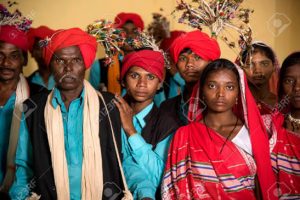
The indigenous Korku community of Madhya Pradesh has demanded the forest department and district administration to remove encroachments from forest lands.
- The Korkus belong to the Munda or Kolarian group.
- They are mostly found in Madhya Pradesh, Chhattisgarh, and adjoining Melghat region of Maharashtra.
- A few groups have been more successful in preserving their language, especially the Potharia Korku (from the Vindhya mountains).
- Korku is one of the languages termed endangered by UNESCO.
- The traditional healing methods are still widely practiced by this tribe and they regard their dead as Gods.
- To commemorate the dead, they install a memorial pillar, which is called Munda.
- They perform traditional Korku dance called Gadli.
- In this dance Men wear white costumes and pagdis, while womenfolk wear red, yellow, green and blue kinari sarees with minimal jewellery.
- The women also have an instrument called Chitkola that they use while performing.
- The Korku are primarily cultivators.
- The Korku tribe has a long-standing system of self-governance.
- This traditional form of self-governance in the community solves problems. ‘Chavadi Swashasan’ is the term for Korku’s traditional form of self-governance.
Greater Sand Plover:
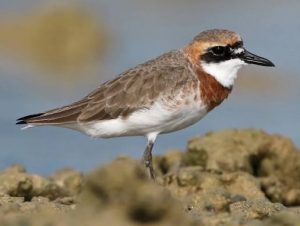
A Greater Sand Plover (Anarhynchus leschenaultii), a migratory shorebird typically found along coastal mudflats and estuaries, was recently spotted at Chandu village, marking the fifth documented record of the species in the region.
- Greater Sand Plover is a small wader in the plover family of birds.
- Scientific Name: Charadrius leschenaultii
- Found from Turkey to Jordon, Central Asia, Siberia, Mongolia, and northern China, wintering along the coasts of Africa, the Middle East, the Indian subcontinent, southern China, Japan, Southeast Asia, and Australasia.
- It breeds in high-elevation areas, where it favors arid, open habitats, sometimes near water.
- Winters on coastal mudflats and estuaries.
- Conservation Status:
- IUCN Red List: Least Concern
Valmiki Tiger Reserve:
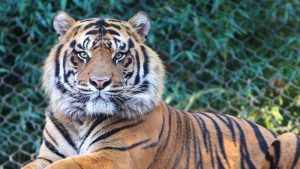
The Valmiki Tiger Reserve (VTR) in West Champaran is also emerging as one of the state’s richest reptile habitats with more than 45 species of snakes recorded in its forests.
- Valmiki Tiger Reserve is located at the India-Nepal border in the northern part of the West Champaran District of Bihar.
- It forms the easternmost limit of the Himalayan Terai forests in India and is the only tiger reserve of Bihar.
- It comprises the Valmiki National Park and the Valmiki Wild Sanctuary.
- Situated in the Gangetic Plains bio-geographic zone of the country, the forest has a combination of Bhabar and Terai tracts.
- It is surrounded by the Royal Chitwan National Park of Nepal in the north and the river Gandak on the western side.
- The Rivers Gandak, Pandai, Manor, Harha, Masan, and Bhapsa flow through various parts of the reserve.
- The reserve boasts a variety of vegetation types, including tropical wet deciduous forests, grasslands, savannas, and riverine forests.
- Sal trees dominate the forests, but the region also features species like teak, bamboo, semal, and khair.
- Tiger, leopard, fishing cat, leopard cat, sambar, hog deer, spotted deer, black buck, gaur, sloth bear, langur, rhesus monkey, etc.
First Round Of Negotiations For The India-Maldives Free Trade Agreement:
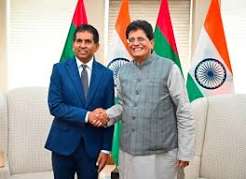
The first round of negotiations for the India-Maldives Free Trade Agreement (FTA) concluded successfully.
- Maldives is an island country of South Asia located in the Arabian Sea region of the Indian Ocean.
- It is located to the southwest of India.
- Capital City: Male
- The topography of each of the islands vary from mostly sand to marshy wetlands.
- It is separated from Lakshadweep by the Eight Degree Channel, a crucial sea route for India’s maritime movement.
- It is home to the 7th largest coral reef system in the world.
- Gan is the country’s largest island and is located in the Laamu Atoll.
Codex Alimentarius Commission: 49th Session
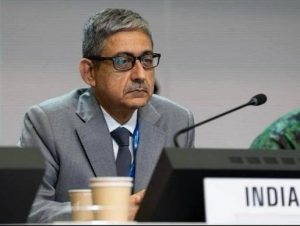
India achieved significant milestones at the 49th Session of the Codex Alimentarius Commission (CAC49) held in Geneva, Switzerland.
- Codex Alimentarius Commission is the international food standards-setting body.
- It was established jointly by the Food and Agriculture Organization (FAO) and the World Health Organization (WHO) in 1963.
- Objective is to Protecting consumer’s health and ensuring fair practices in the food trade.
- It has its headquarters in Rome.
- Membership of the Commission is open to all Member Nations and Associate Members of FAO and WHO which are interested in international food standards.
- Currently the CAC has 189 Codex Members made up of 188 Member Countries and 1 Member Organization (The European Union).
- India became a member of CAC in 1964.
- The CAC consists of the following main organizational elements: Commission; Executive Committee; Codex Secretariat and Codex subsidiary bodies.
- The Commission meets in regular session once a year, alternating between Geneva and Rome.
- The programme of work of the Commission is funded through the regular budgets of WHO and FAO, with all work subject to approval of the two governing bodies of the parent organisations.
Weaving Sustainability into India’s Textile Future:
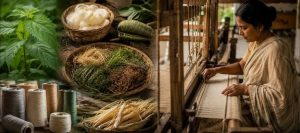
India’s textile sector is moving towards circular and sustainable production through policy support for organic fibres, safer chemicals, textile-waste recovery, recycling, eco-labelling, traceability, green manufacturing and market-based sustainability standards.
- Cleaner technologies, responsible sourcing and waste reduction are being promoted to improve resource efficiency and keep Indian textiles competitive in global markets.
- India’s textile and apparel sector is a major pillar of the manufacturing economy, contributing about 2% of Gross Domestic Product (GDP) and nearly 11% of manufacturing Gross Value Added (GVA).
- India is the world’s sixth-largest exporter of textiles and apparel, with around 4% of global exports, while the sector directly employs more than 45 million people, including many women and rural workers.
- Given its large economic footprint, export dependence and employment intensity, the sector must adopt environmentally responsible production to remain competitive in changing global markets.
- Circular production is gaining importance by building on India’s tradition of resource-conscious textile practices and responding to rising global demand for products with a lower environmental footprint.
- Sustainability can be understood across different stages of the production cycle, influencing choices related to raw materials, manufacturing processes, quality standards and market access throughout the textile value chain.
NIPUN Bharat Mission and Foundational Learning:
Five years after the launch of NIPUN Bharat in July 2021, its progress and future expansion are being discussed to consolidate learning gains, extend support beyond Grade 3 and strengthen India’s foundation for achieving the goal of Viksit Bharat.
- The National Education Policy (NEP) 2020 identified foundational literacy and numeracy (FLN) as the highest priority in school education, as more than five crore elementary-level students lacked basic reading and numeracy skills.
- NIPUN Bharat stands for National Initiative for Proficiency in Reading with Understanding and Numeracy. It was launched by the Ministry of Education under Samagra Shiksha to achieve universal foundational literacy and numeracy.It was launched by the Ministry of Education under Samagra Shiksha to achieve universal foundational literacy and numeracy.
- It was launched in July 2021 under the framework of the National Education Policy 2020.
- The Mission seeks to ensure that every child acquires the required competencies in reading, writing and numeracy by the end of Grade 3, and not later than Grade 5, by 2026-27.
- It primarily covers children aged 3–9 years, from Balvatika to Grade 3, with grade-wise learning targets known as Lakshyas.
- It promotes child-centred, play-based, activity-based, experiential, toy-based, storytelling, art-integrated and sports-integrated pedagogy suited to children’s linguistic and social backgrounds.
- Foundational literacy includes oral language, decoding, reading fluency, comprehension and writing, while foundational numeracy covers number concepts, mathematical operations, measurement, shapes, spatial understanding and data handling.
- Teachers and school heads are trained through FLN-specific NISHTHA modules, with emphasis on mother tongue instruction, peer learning, classroom support and effective use of teaching-learning materials.
- DIKSHA provides digital reading materials, worksheets, assessment banks, videos, children’s literature, teacher handbooks and other resources for both student learning and teacher development.
- The Mission uses continuous, competency-based and stress-free assessments to identify learning gaps, while IT-enabled systems support child-wise tracking, annual surveys and concurrent monitoring.
- NIPUN Bharat is implemented in mission mode by the Department of School Education and Literacy, Ministry of Education, under the centrally sponsored Samagra Shiksha scheme.
- Samagra Shiksha was launched by subsuming the Sarva Shiksha Abhiyan, Rashtriya Madhyamik Shiksha Abhiyan and Teacher Education schemes. It aims to treat school education holistically, from pre-school to Class XII.
- NIPUN Bharat follows a five-tier implementation structure at the national, State, district, block or cluster and school levels, with participation from School Management Committees, parents, local bodies and communities.
- The Mission aims to improve learning outcomes, reduce dropouts, strengthen transition to higher classes, promote inclusive education and create a strong foundation for higher-order learning and future employability.
India Bans Import of Goods Made Using Forced Labour:
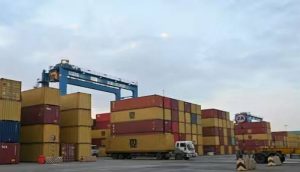
The Directorate General of Foreign Trade (DGFT) under the Ministry of Commerce and Industry amended the Foreign Trade Policy (FTP) 2023 to prohibit the import of goods produced or manufactured using forced labour.
- The decision comes as the U.S. Trade Representative (USTR) has initiated a Section 301 investigation under the Trade Act of 1974 against 60 economies, including India, alleging inadequate prohibition and enforcement against the import of goods produced using forced labour, thereby burdening US commerce.
- A new paragraph (2.20B) has been inserted into the FTP 2023, explicitly stating that “the import of goods produced or manufactured, wholly or in part, through the use of forced labour is prohibited”.
- The amendment creates an enabling framework, empowering the DGFT to investigate complaints, seek information, and recommend restrictions, following which the government may prohibit the import of specific goods through separate notifications.
- While India already prohibits forced labour domestically, it previously lacked an explicit foreign trade provision to restrict imports of goods produced using forced labour abroad.
- The amendment addresses this gap.
- The Central Government is empowered to identify and ban specific goods following an enquiry by the DGFT. The procedural framework for these inquiries will be detailed in the Handbook of Procedures, 2023.
- India has adopted the definition provided by the International Labour Organization’s (ILO) Forced Labour Convention, 1930 (No. 29).
- Forced labour is defined as “all work or service which is exacted from any person under the menace of any penalty and for which the said person has not offered himself voluntarily”.
- This policy shift transitions India from relying solely on domestic penal and labour codes to deploying active trade compliance measures, strengthening its bargaining power for a comparative advantage in the upcoming India-US trade deal.
SC Stays Madras HC’s Blanket Ban on Cow Slaughter in Tamil Nadu:
The Supreme Court of India has issued an interim stay on a Madras High Court directive that mandated a blanket ban on the slaughter of cows and calves in Tamil Nadu.The State Government’s Argument: The Tamil Nadu government challenged the High Court’s order, arguing it amounted to “judicial lawmaking” and directly contradicted the Tamil Nadu Animal Preservation Act, 1958, which legally permits the slaughter of cows over 10 years of age if a competent authority declares them unfit for work and breeding.The State emphasized that central statutes like the Prevention of Cruelty to Animals Act, 1960, along with local municipal rules, do not impose a total prohibition but rather heavily regulate slaughter strictly within designated slaughterhouses.The Madras High Court had grounded its sweeping ban on Article 48 of the Constitution (Directive Principles of State Policy), which directs the State to take steps for preserving breeds and prohibiting the slaughter of cows, calves, and other milch and draught cattle.The Supreme Court’s stay reinforces the doctrine of the Separation of Powers, indicating that judicial mandates should not override active statutory mechanisms, especially concerning animal preservation—a subject falling under Entry 15 of the State List (List II) in the Seventh Schedule.
Centre Notifies Ban on Paraquat Dichloride:
The Central Government has issued a draft notification proposing a nationwide prohibition on the import, manufacture, sale, transport, distribution and use of Paraquat Dichloride.The proposed ban has been initiated under Section 27 of the Insecticides Act, 1968, after the government concluded that its continued use poses serious risks to humans and animals.Paraquat Dichloride is a non-selective, fast-acting herbicide (weedicide) widely used for weed control and crop desiccation before harvest in crops such as tea, cotton, coffee, rubber, paddy, wheat, maize, potato, grapes and apple.A government-appointed Expert Committee and the Registration Committee found documented adverse health effects, repeated poisoning incidents with high fatalities, absence of a specific antidote, and noted that the chemical has already been banned or severely restricted in over 70 countries.Paraquat is among the world’s most toxic herbicides. Poisoning can occur through ingestion, inhalation or skin contact, causing severe lung fibrosis, kidney and liver failure, heart damage, Parkinson’s disease, and often death due to the absence of an antidote.The decision follows growing concerns over occupational exposure, intentional self-harm, accidental poisoning, misuse beyond approved crops, and pressure from States such as Telangana, Andhra Pradesh, Odisha and Kerala, which had sought stricter controls.The ban may increase weed-management costs and require farmers to shift to safer alternatives, but is expected to reduce health risks and prevent hazardous residues from entering the food chain.India joins the growing list of countries restricting Paraquat, marking a major step towards strengthening pesticide regulation, protecting public health, and promoting safer and more sustainable agricultural practices.
Greater Tunb Island:
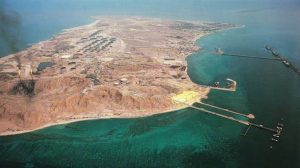
The U.S. military’s Central Command recently said that it had launched airstrikes on Greater Tunb Island in the Strait of Hormuz, targeting Iranian defence installations and missile sites.
- Greater Tunb Island is a small island in the Persian Gulf near the entrance to the Strait of Hormuz.
- The island, under Iranian control since 1971, is regarded as a strategically important location in the strait.
- Iran has established military facilities, including naval installations and an airstrip, on the island.
- Along with Lesser Tunb and Abu Musa, Greater Tunb overlooks the approach to the Strait of Hormuz, a vital waterway through which about one-fifth of the world’s oil supply passes.
- It plays an important role in monitoring and influencing traffic through one of the world’s busiest maritime trade routes.
Mahananda Wildlife Sanctuary:

The Bengal government recently decided to shrink the eco-sensitive zone (ESZ) around the Mahananda Wildlife Sanctuary from 5 km to 1 km.
- Mahananda Wildlife Sanctuary is situated in the Darjeeling district of West Bengal.
- It is located on the foothills of the Himalayas and in between the Teesta and the Mahananda rivers.
- It was started as a game sanctuary for children in 1955. In 1959 it got the status of a sanctuary mainly to protect the Indian Bison and Royal Bengal Tiger, which were facing the threat of extinction.
- It varies mainly from riverine forests to dense mixed-wet forests due to the difference in altitude.
- It is the home to different kinds of plantations, but the prominent ones are Sal, Simul, Sisco, and Khair.
- Some of the other trees include Lali, Jamur, Gamar, Bamboos, Fern, Orchids, Fern, Teak, Udal, and more.
- The important mammalian species include Royal Bengal Tiger, Indian elephants, Indian bison, spotted deer, barking deer, many species of lesser cat, Himalayan black bear, leopard including clouded leopard and many other smaller animals like rare mountain goat (Serow), porcupines, snakes, etc.
- In the plain areas of the lower region, you will get to see several elephants migrated from Nepal, Assam, or other forests of West Bengal.
- There are many avian species found here, including the Himalayan pied hornbill, peacock, peafowl, fouls, king fisher, drongo, robin, fly catchers, woodpeckers and others .
- It is also a haven for the migratory birds, which arrive here from Central Asia.
Thukkachi Abatsahayesvar Temple:
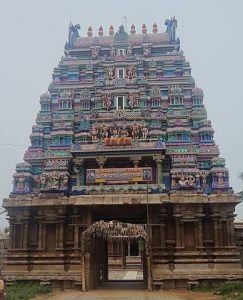
The oft-used phrase “rising like a phoenix from the ashes” finds its perfect expression in the story of the Abathsahayeswarar Temple at Thukkachi, near Kumbakonam in Thanjavur district.
- The Thukkachi Abatsahayesvar Temple, also known as Abathsahayeswarar Temple, is a Hindu temple dedicated to Lord Shiva.
- It is situated on the banks of the Arasalar River in Thukkachi village, Thanjavur district, Tamil Nadu.
- The temple’s origins date back to the Chola dynasty period, around the 10th to 11th centuries AD.
- During this time, the Chola rulers played a key role in the promotion of Shaivism across southern India.
- The inscriptions portray that Kulothunga Cholan and Vikkirama Cholan maintained the temple in the past.
- The architecture of the Thukkachi Abatsahayesvar Temple reflects the typical features of Chola architecture.
- The temple consists of a sanctum (garbhagriha) where the main deity, Shiva, is enshrined.
- The main entrance features a gopuram, now conserved through recent restoration, marking the eastern orientation of the entire layout, which aligns with solar symbolism prevalent in South Indian temple design.
- The outer walls are adorned with detailed carvings that depict various scenes from Hindu mythology.
- The temple’s pillars are also known for their fine craftsmanship, and many of them bear inscriptions that provide insight into the cultural and religious practices of the period.
- These inscriptions are valuable sources for historians studying the Chola period and the development of religious traditions in South India.
- After years of neglect leading to dilapidation, the temple underwent comprehensive restoration.
- In 2024, it received the UNESCO Asia-Pacific Award of Distinction for Cultural Heritage Conservation for exemplary revival of a living Hindu temple while preserving its heritage integrity.
Colobus congoensis:
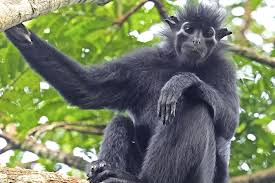
A team of researchers recently confirmed the discovery of a previously unknown species of African monkey named Colobus congoensis in the rainforests of the Democratic Republic of Congo (DRC), marking one of the most significant primate discoveries in decades.
- Colobus congoensis is a new species of monkey.
- It was discovered in the rainforest between the Lomami and Congo (Lualaba) rivers in the east-central region of the Democratic Republic of Congo (DRC).
- Locally known as the Likweli, it is only the fifth new monkey species identified in Africa in the past 75 years.
- The monkey is immediately recognizable by its glossy black coat, long cape-like fur, sweeping tail, and striking orange-cream facial markings.
- It is smaller than its closest relatives and possesses distinctive cranial, dental, and skeletal characteristics that separate it from every other known African colobus monkey.
- It also has a distinctive “roaring” call. “
- Given their restricted range, small population size, and the pressures of hunting and habitat loss, the researchers recommend that Colobus congoensis be classified as Endangered on the IUCN Red List.
Gandak River : In News
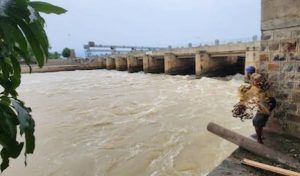
Due to heavy rainfall in Nepal’s catchment area, the water levels of the Gandak River in Bihar have been rising continuously.
- Gandak River is one of the major rivers of North India and a significant left-bank tributary of the Ganga River.
- It is mentioned in the ancient Sanskrit epic Mahabharata.
- It originates to the north of Dhaulagiri Mountain in Tibet near the Nepal border.
- It is formed by the union of the Kali and Trisuli Rivers, which rise in the Great Himalayas of Nepal.
- From their meeting point till the Indian border, the river is known as the ‘Kali Gandaki’ and ‘Narayani’ in Nepal.
- It enters India near Valmikinagar in Bihar and briefly touches Uttar Pradesh, forming a small stretch of boundary.
- The entry point of the river is at the Indo–Nepal border and is known as Triveni.
- After this, the river flows mainly through Bihar, covering districts like West Champaran, East Champaran, Gopalganj, and Saran.
- The Gandak finally joins the Ganga River opposite Patna, near Hajipur in Vaishali district, Bihar.
- The basin is bounded by the Himalayas to the north and the Ganga River to the south.
- On the sides, it lies between the Kosi basin in the east and the Karnali (Ghaghara) basin in the west.
- The basin includes: Dhaulagiri, Manaslu, and Annapurna Massif.
- Due to the steep slope and loose soil in the upper catchment, Gandak carries a lot of silt and other deposits to the Indian side, resulting in a continuous shifting course of the river.
- While flowing through the Nepal Himalayas, it forms the Kali Gandaki Gorge, one of the deepest river gorges in the world.
- Two important protected areas, Chitwan National Park in Nepal and the adjacent Valmiki Tiger reserve in India, have been established in the basin.
- Major Tributaries: Daraudi, Seti, Madi, Marsyandi, and Budhi Gandaki.
Ravidassias:
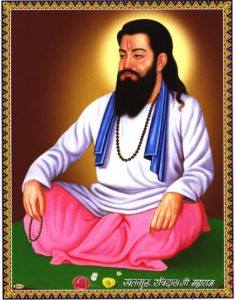
Members of the Ravidassia community gathered in Punjab to renew calls for a longstanding demand of the creation of a separate “Ravidassia religion” category in the Census.
- The Ravidassias are a Dalit community which follows spiritual path based on the teachings of Shri Guru Ravidas.
- They live in the Doab region of Punjab, which includes districts such as Kapurthala, Hoshiarpur, Nawanshar and Jalandhar.
- The Ravidassia community adopted the Amrit Bani of Guru Ravidas as its holy book which contains 200 hymns of Guru Ravidas.
- It is an ideal concept given by Guru Ravidas which explains a city without sorrow, fear, or inequality.
- Seer Goverdhanpur in Varanasi (Uttar Pradesh) is one of the most important pilgrimage locations of the Ravidassia tradition.
Guru Ravidas:
- Guru Ravidas (1377-1527 C.E.) was a renowned saint known for his contributions to the Bhakti movement.
- Guru Ravidas is also known as Raidas, Rohidas, and Ruhidas.
- Ravidas is traditionally seen as a student of the bhakti-poet Ramananda.
- He is also thought to have lived around the same time as poet Kabir
- The core of Guru Ravidas’s philosophy was the rejection of the caste system and the promotion of human rights and dignity.
- He envisioned a society called ‘Beghumpura’ (a city without sorrow), where there is no suffering, no fear, and no discrimination.
- He emphasised the philosophy of spiritual freedom.
- He abandoned the saguna (with attributes, image) forms of supreme beings and focussed on the nirguna (without attributes, abstract) form of supreme beings.
Greenland:
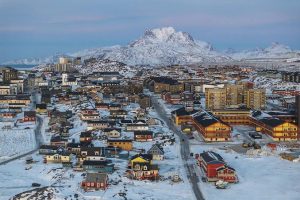
An international team of scientists is set to sail for Greenland to investigate whether the island’s rapidly melting glaciers could disrupt a major Atlantic Ocean current system.
- Greenland is the world’s largest (non-continent) island located between the continents of North America and Europe in the North Atlantic Ocean.
- It is geographically considered a part of the North American continent.
- It was once a Danish colony and is now an autonomous province of Denmark.
- It is surrounded by the Arctic Ocean to the north; by the Greenland Sea to the east; by the North Atlantic Ocean to the southeast; Davis Strait to the southwest and Baffin Bay to the west.
- Capital City: Nuuk
- Greenland is in the polar zone, where winter temperatures reach as low as -50°C and summer temperatures rarely exceed 10–15°C.
- Highest Point: Gunnbjorn’s Fjeld
- It mainly consists of Coal, iron ore, lead, zinc, molybdenum, diamonds, gold, platinum, niobium.
CapaCITIES Programme:
An event ‘Scaling Urban Climate Resilience: The CapaCITIES Legacy and Way Forward’, celebrated the progress made over a decade of the CapaCITIES programme.
- CapaCITIES Programme was launched in 2016.
- The Capacity Building Project on Low Carbon and Climate Resilient City Development in India (CapaCITIES) programme strengthens the capacities of Indian cities to promote low-carbon, climate-resilient urban development.
- It is funded by the Embassy of Switzerland to India and Bhutan.
- The initiative was implemented through a collaborative partnership involving ICLEI South Asia, South Pole and econcept.
- First phase (2016-19) AND second phase (2019-23)
- Key Features:
- It has equipped Indian cities with the knowledge, tools, and institutional capacities to mainstream low-carbon, climate-resilient development into urban governance
- It has supported cities like Coimbatore, Thiruchirappalli, Tirunelveli in Tamil Nadu, Ahmedabad, Rajkot, Vadodara, Udaipur and Siliguri and the state governments of Gujarat, Tamil Nadu.
- Established permanent Net-Zero and Climate Action Cells in six project cities to enable long-term implementation, monitoring, and climate budgeting.



