
Microporellus kolhapurensis:
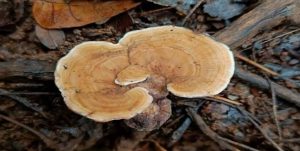
A new fungus species of polypore (bracket) named Microporellus kolhapurensis, was discovered in Bhudargad taluka in Kolhapur district.
- Microporellus kolhapurensis is a new fungus species of polypore (bracket).
- It was discovered in Bhudargad taluka in Kolhapur District, Maharashtra.
- The fungus was found on rotting wood.
- This particular Microporellus fungus species fruits from July to September, and mainly grows singly.
- The characteristics of the yellowish-orange to grayish-brown species are distinct from other closely related species due to its
- umbrella-shaped structure
- lateral stalk
- ground-growing nature
- large pores
- teardrop-shaped spores, and
- distinctive thick-walled cystidia (large cells found on the spore-bearing surfaces of certain fungi that do not make spores themselves).
- Polypores:
- Polypores, also called bracket or shelf fungi, are a group of fungi so named because of the pores present on the underside of their fruiting body.
- The pores of a polypore fungi are used to house their spores, which are microscopic particles that allow fungi to be reproduced, much like seeds are to a plant.
- The function of pores is to increase the surface area that spores can attach to.
- These pores look different on the underside of different polypores, but are generally circular and regularly spaced along the surface.
- Polypores are also called bracket fungi due to their shelf-like appearance.
- They can often be seen on living trees or fallen logs. Some polypores have a short stalk to attach them to their substrate.
- They damage healthy trees but also help to break down dead trees.
- Their mycelium is embedded inside the trunks of their host trees, with only their fruiting bodies being visible.



