
Today’s Current Affairs: 29th jul 2026 for UPSC IAS exams, State PSC exams, SSC CGL, State SSC, RRB, Railways, Banking Exam & IBPS, etc
Table of Contents
Caridina sharmai:
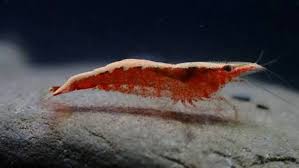
Researchers recently identified a new species of freshwater shrimp named Caridina sharmai living in the Gomti River, marking the first time this type of crustacean has been recorded in the Lucknow region.
- Caridina sharmai is a new species of freshwater shrimp.
- It was discovered in the upper reaches of the River Gomti (tributary of the Ganges) in the Lucknow region of Uttar Pradesh.
- It is distinguished by several unique physical characteristics that set it apart from its closest relatives, such as Caridina jalihali and Caridina mathiassi.
- Unlike many of its cousins, this new shrimp lacks a median spine on its tail (the telson) and possesses a deep, distinctive hollow or excavation on the joints of its front legs.
- These legs are also equipped with long, brush-like hairs that the shrimp uses to scrape algae from aquatic plants and filter food from the water.
- In the wild, these shrimps appear dark brown or black with yellowish-grey stripes, allowing them to blend into the shadows of the riverbed.
- The researchers observed that when kept in aquariums, the shrimp’s colour gradually fades until the creature becomes almost entirely transparent.
- They are described as calm, social animals that prefer to live in groups, clinging to underwater vegetation.
National Film Development Corporation of India:
The National Film Development Corporation has officially opened entries for the 57th International Film Festival of India (IFFI) scheduled to take place in Goa from November 20 to 28, 2026.
- It is a specialised organization set up by the Government of India to promote the growth and development of the Indian film industry.
- Founded in 1975, NFDC operates under the Ministry of Information and Broadcasting, Government of India.
- Headquarters: Mumbai,
- Its primary goal is to plan, promote, and organize an integrated and efficient development of the Indian film industry, fostering excellence in cinema.
- In 1980, Film Finance Corporation and Indian Motion Picture Export Corporation were merged with NFDC.
- In 2022, the Government merged four film media units with the NFDC:
- Films Division
- Directorate of Film Festivals (DFF)
- National Film Archive of India (NFAI)
- Children’s Film Society, India (CFSI)
- NFDC’s contributions span various aspects of the film industry, including financing, production, and distribution.
- The corporation has funded and produced over 300 films in multiple Indian languages, many of which have received national and international acclaim.
- These films often address socially relevant themes and showcase the artistic talents of Indian filmmakers.
- In addition to its production and financing activities, NFDC is committed to promoting skill development in the media and entertainment sector.
- The corporation offers training programs for aspiring filmmakers, technicians, and other industry professionals, ensuring that the Indian film industry remains competitive on a global scale.
- Furthermore, NFDC is dedicated to preserving and promoting India’s cinematic heritage.
- The corporation manages the National Museum of Indian Cinema, which showcases the history and evolution of Indian cinema through various exhibits and interactive displays.
- NFDC organizes Film Bazaar India, a co-production and distribution market for the South Asian region alongside the International Film Festival of India (IFFI), Goa.
International Film Festival of India (IFFI):
- The IFFI, founded in 1952, is Asia’s oldest international film festival.
- Its goal is to provide a single platform for ambitious filmmakers, cineastes, and industry professionals to have access to excellent cinema from across the world.
- The first edition of the event was held in Mumbai, which in the subsequent years moved to Calcutta, Delhi, Madras, and Trivandrum.
- Since its third edition, the event has become competitive.
- Since 2004, IFFI has moved to its permanent venue in Goa.
- It is jointly organized each year by the NFDC, in collaboration with the State Government of Goa and the Indian Film Industry.
- It is the only film festival in South Asia that is accredited by the International Federation of Film Producers and Associations (FIAPF) as a competitive feature film festival.
Gobind Sagar Lake:
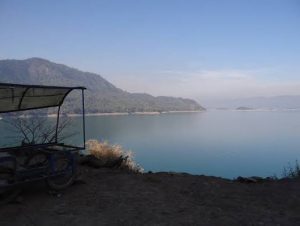
Himachal Pradesh is diversifying its tourism sector with the first-ever island tourism project at the Gobind Sagar Lake in Bilaspur district, which is likely to be operational soon.
- Gobind Sagar Lake is a manmade reservoir located in the Bilaspur district of Himachal Pradesh.
- The lake is named after Guru Gobind Singh, the tenth and last Sikh guru, who spent some time in the region during his military campaigns.
- It was created by the construction of the Bhakra Dam on the Sutlej River in the 1950s and 1960s.
- It is one of the deepest man-made lakes in the world.
- It is surrounded by lush green hills and the snow-capped peaks of the Himalayas.
- It is also the third-largest in the country concerning the storage of water.
- To maintain the level of water, the flow of river Beas was channelized to Gobind Sagar by the Beas-Sutlej link, which was accomplished in 1976.
- It helps in supplying water for irrigation to the states of Himachal Pradesh, Punjab, Haryana, and Rajasthan, significantly benefiting agriculture in the region.
- In 1962, the lake was recognized as the ‘waterfowl refuge.’
- Even today, the lake is home to many species of birds and animals like Panther, Wolf, Chausinga, Sambar, Hyena, Sloth bear, Nilgai, Chinkara, and wild boar.
- It is home to fifty species and sub-species of fishes, namely Tor Putitora (Mahasheer), Labeo Dero (Gid), Mystus Seenghala (Singhara), and mirror carp.
Dark Eagle Hypersonic Missile: In News

The United States recently deployed the Dark Eagle hypersonic missile in Guam for the first time.
- The Dark Eagle, also known as the Long Range Hypersonic Weapon (LRHW), is a non-nuclear, ground-launched hypersonic missile system of the United States Army.
- It is the United States Army’s first operational hypersonic missile
- The missile component of the LRHW is being developed by Lockheed Martin and Northrop Grumman.
- The weapon is designed to strike heavily defended, time-sensitive targets, including command centres, air defence networks, missile launchers, naval facilities, and logistics hubs deep inside contested territory.
- It comprises a mobile ground-based battery equipped with four Transporter Erector Launchers (TEL), supported by command and control elements, with each TEL capable of launching two missiles for a total of eight.
- At the core of the Dark Eagle system is the Common Hypersonic Glide Body (C-HGB)—a boost-glide vehicle capable of exceeding Mach 5 while performing high-G maneuvers to evade enemy missile defenses.
- The missile is launched via a two-stage solid-fuel booster that propels the glide vehicle into the upper atmosphere before it descends toward its target on an unpredictable trajectory.
- The glide body is equipped with a conventional high-explosive warhead, optimized for kinetic strike effects and capable of neutralizing hardened or deeply buried targets.
- The guidance system incorporates a precision inertial navigation system (INS), likely augmented by GPS-based corrections during the boost and glide phases.
Asiatic Wild Dog: In News
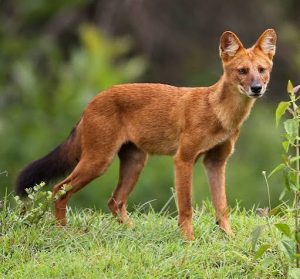
A recent study showed that Asiatic wild dogs are ‘hypercarnivore’ (over 70 per cent of their diet consists of meat) canids that mostly eat sambar and chital and very little livestock at least in Central India.
- The Asiatic wild dog, also called Dhole, is a wild Asian carnivore of the dog family (Canidae).
- Other Names: Indian wild dog, whistling dog, red wolf, red dog, and mountain wolf.
- They are found throughout Central, Eastern and Southeastern Asia.
- In India, they are found in three clusters across India, namely the Western and Eastern Ghats, the central Indian landscape, and Northeast India.
- The Western and Eastern Ghats are stronghold regions for dholes.
- They inhabit dense jungles, steppes, mountains, scrub forests, and pine forests.
- Features:
- It is a sleek, reddish-brown, medium-sized dog.
- Males are generally more muscular than females.
- This species tends to live in groups with numbers ranging from 2-25 individuals.
- They are fast runners, excellent swimmers, and impressive jumpers.
- They are great communicators and use an eerie whistle to communicate with each other.
- Conservation Status:
- IUCN Red List: Endangered
Nalabana Wildlife Sanctuary:

Altogether 24 fishermen were arrested by wildlife officials on Friday for illegally fishing inside Nalabana wildlife sanctuary.
- Nalabana Wildlife Sanctuary, or the Nalbana Bird Sanctuary, is the core area of the Ramsar-designated wetlands of Chilika Lake, located in the state of Odisha.
- The Island of Nalabana was declared a bird sanctuary in the year 1987 after observing the sheer number of diverse bird species found there.
- It supports a congregation of about 60% of the total migratory birds visiting Chilika Lagoon each year.
- Rare or threatened species such as the Asian dowitcher (Limnodromus semipalmatus), the critically endangered spoon-billed sandpiper (Calidris pygmaea), and Pallas’ fish eagle (Haliaeetus leucoryphus) are often recorded as part of this crowd.
- During monsoons, the entire sanctuary is submerged under water with only a few treetops and watchtower above water level.
Chilika Lake:
- It is a brackish water lake and a shallow lagoon with estuarine character located in the state of Odisha.
- It is Asia’s largest brackish water lake.
- It is the second-largest brackish water lagoon in the world, after the New Caledonian barrier reef in New Caledonia.
- It is connected to the Bay of Bengal.
- The Daya and Bhargavi rivers feed the lake except during the dry months from December to June, when saline ocean water enters through a small passage.
- In 1981, Chilika Lake was designated the first Indian wetland of international importance under the Ramsar
- Chilika supports some of the largest congregation of migratory birds in the country, particularly during the winter.
- Flocks of migratory waterfowl arrive from as far as the Caspian Sea, Lake Baikal, the Aral Sea, remote parts of Russia, Kirghiz steppes of Mongolia, Central and Southeast Asia, Ladakh, and the Himalayas.
Central Reserve Police Force:
The Lok Sabha Speaker extended greetings to all the soldiers, officers, and their families on the Foundation Day of the Central Reserve Police Force (CRPF).
- It is a premier central police force of the Union of India, entrusted with the critical task of maintaining internal security.
- It functions under the authority of the Ministry of Home Affairs (MHA) of the Government of India.
- It was initially established as the Crown Representative’s Police on July 27, 1939, in response to escalating political turmoil and unrest within the princely states.
- Post-independence, it became the Central Reserve Police Force on enactment of the CRPF Act on 28th December 1949.
- The force is headed by a Director General and is further divided into four zones located in Jammu, Kolkata, Hyderabad, and Guwahati, each under the command of Special Directors General (DGs).
Central Reserve Police Force:
- Crowd Control and Riot Control: CRPF personnel are trained in crowd management techniques to handle large gatherings, protests, and demonstrations.
- Critical Infrastructure Protection: CRPF personnel are dedicated to protecting critical Central and State Government facilities, especially in insurgency-affected regions.
- UN Peacekeeping Missions: CRPF personnel have a commendable record of contributing to international peacekeeping efforts under the UN flag.
- Disaster Management: The force actively participates in rescue and relief operations during natural disasters like floods, earthquakes, and cyclones.
- Special Units of Central Reserve Police Force:
- Rapid Action Force (RAF):The Rapid Action Force (RAF) is a specialized unit of the CRPF established in October 1992 to handle riots and public disturbances.
- Commando Battalion for Resolute Action (CoBRA): The Commando Battalion for Resolute Action (CoBRA) is a specialized unit created to conduct guerrilla and jungle warfare operations.
- Mahila Battalions: The CRPF is the only paramilitary force in India with six all-women battalions.
PRAXIS Mission:
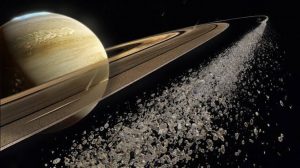
NASA has just selected a mission concept called ‘PRAXIS’ for its Innovative Advanced Concepts (NIAC) 2026 phase I funding.
- PRAXIS is an acronym of ‘Planetary Rings Autonomous EXploration with In-situ Sampling’ is designed to collect and study ring particles directly.
- It is conceptualized by the NASA.
- It will transform understanding of ring structure and origins for Saturn (dense), Uranus and Neptune (tenuous), rings of other objects such as Centaurs Chariklo and Chiron.
- It will consist of a bio-inspired robotic explorer driven by an AI model, and will be capable of directly sampling particles from planetary ring systems.
- It combines robotic autonomy for collision avoidance, precision sampling, and on-site analysis.
- It also uses technology inspired by sport casting to capture free-floating particles and miniaturised instruments for real-time scientific analysis.
- It currently plans to just graze the ring plane.
- Once it has picked a target particle, the spacecraft will perform a touch-and-go sample of the particle’s surface using a long deployable boom, staying at a safe distance from the moving ring particles.
- Once it has a sample, the craft will move on to another region or gap in the rings to sample from another area.
- When it has a sample, small instruments will snag free-floating particles and the AI model will help measure particle size, porosity, and composition.
- PRAXIS addresses a key Decadal priority by delivering the first direct observations of mm- to cm-scale ring particles.
South China Sea:
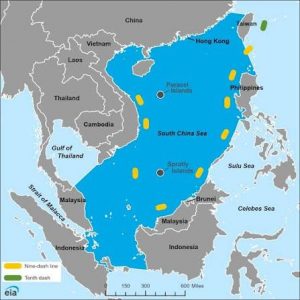
A Vietnamese cargo ship carrying 62 sank during stormy weather in the contested South China Sea.
- South China Sea is an arm of the western Pacific Ocean that borders the Southeast Asian mainland.
- It is bordered by China, Taiwan, the Philippines, Malaysia, Indonesia, Brunei, and Vietnam.
- It is connected by the Taiwan Strait with the East China Sea and by the Luzon Strait with the Philippine Sea (both marginal seas of the Pacific Ocean).
- The South China Sea and the East China Sea together form the China Sea.
- The two major archipelagos are known as the Paracel Islands, controlled by China, and the Spratly Islands.
- Weather in the sea is tropical and largely controlled by monsoons.
- It is a significant trade route for crude oil from the Persian Gulf and Africa through the Strait of Malacca to Singapore, Thailand, Hong Kong, Taiwan, South Korea, and Japan.
- Major Ports: Hong Kong, Singapore, and Kaohsiung in southern Taiwan.
Electronic Gold Receipt:

India’s Electronic Gold Receipt (EGR) ecosystem has come into focus as the country’s Gold Exchange promotes transparent, standardized, and exchange-based trading of physical gold.
- By digitising ownership while retaining the option of physical delivery, EGRs are modernising India’s bullion market and strengthening investor confidence.
- The Securities and Exchange Board of India (SEBI)-regulated Gold Exchange creates a national platform for trading physical gold in a standardised manner.
- It formalises India’s fragmented physical gold trade, generating a transparent, real-time domestic spot price for gold.
- An EGR is a SEBI-regulated electronic security that represents ownership of physical gold stored in SEBI-accredited vaults.
- Introduced under India’s Gold Exchange framework, EGRs enable investors to trade standardised physical gold electronically on recognised stock exchanges while retaining the option to convert it into physical gold whenever required.
- Unlike physical gold, an EGR is held in demat form, making ownership secure, transparent, and easily transferable.
- Every EGR is fully backed by an equivalent quantity and purity of physical gold (typically 995 or 999 fineness) stored with a SEBI-registered Vault Manager.
- The term “Receipt” signifies that every EGR is 100% backed by actual physical gold, unlike derivative or synthetic products.
- An investor holding an EGR becomes the beneficial owner of the corresponding quantity of physical gold without needing to store or transport it.
- SEBI introduced the Gold Exchange Framework (2022) to address the longstanding challenges of India’s fragmented bullion market, including inconsistent purity standards, opaque pricing, high transaction costs, and the dominance of unorganised trade.
- The framework aims to establish a transparent and regulated national market for physical gold, enable efficient price discovery, standardise quality, promote investor protection, and provide a fungible, dematerialised instrument that can be seamlessly converted into physical gold.
Public Examinations (Prevention of Unfair Means) Amendment Bill, 2026:
The Union Government launched a major reform drive in July 2026, including the termination of 47 National Testing Agency (NTA) officials, the introduction of the Public Examinations (Prevention of Unfair Means) Amendment Bill, 2026, and the constitution of a high–powered task force chaired by former UIDAI chief Nandan Nilekani to overhaul the country’s public examination system and strengthen institutional integrity, following allegations over the integrity of high-stakes examinations such as NEET and the month-long ‘Cockroach Janta Party’ (CJP) protests.
Public Examinations (Prevention of Unfair Means) Amendment Bill, 2026:
- Harsher Imprisonment Terms: For individuals found guilty of offenses (like leaking papers or tampering with OMR sheets), the minimum jail term has been increased from 3 years to 5 years, with a maximum sentence of 10 years.
- For organized examination fraud (involving syndicates or institutions), the minimum jail term has been raised from 5 years to 7 years.
- Steep Financial Penalties: The maximum fine for general offenses has been hiked five-fold, from Rs 10 lakh to Rs 50 lakh.
- For organized crime networks, the minimum fine has been increased from ₹1 crore to a massive ₹10 crore.
- Accountability of Service Providers (Private IT Vendors/Printers): If private agencies hired for conducting exams are found complicit, their maximum penalty jumps from Rs 1 crore to Rs 5 crore.
- The debarment period, during which they cannot participate in public exams, has been doubled from 4 years to 8 years.
- Time-Bound Investigations: All investigations—whether conducted by local police, central agencies, or the newly proposed Special Task Forces (STFs) must be completed within two months (60 days).
- Special Fast-Track Courts: State and UT governments must designate Courts of Session as Special Fast-Track Courts to hear these cases exclusively on a day-to-day basis.
- All ongoing cases under the 2024 Act (including the recent NEET controversies) will automatically transfer to these new Fast-Track Courts.
- Trial Deadline: Trials must be concluded within three months of the chargesheet being filed.
- Appeals: Any appeals against judgments or bail orders must be filed within 30 days and heard by a two-judge High Court bench, which is expected to resolve the appeal within three months.
- High-powered Task Force
- The Government has constituted a high-powered task force chaired by Nandan Nilekani, co-founder of Infosys and founding Chairman of the Unique Identification Authority of India (UIDAI) (2009–14).
- Mandate: To recommend next-generation reforms for India’s public examination system by making examinations leak-proof, technology-driven, secure, transparent, and tamper-resistant through the adoption of advanced digital technologies and stronger institutional safeguards.
2026 Commonwealth Games:

The Indian weightlifting and para-powerlifting contingent brought laurels to the nation at the 2026 Commonwealth Games (CWG) in Glasgow, Scotland, with Gyaneshwari Yadav winning silver and Jhandu Kumar securing a historic bronze medal.
- India’s Anahat Singh created history by becoming the first Indian to win the girls’ singles title at the World Junior Squash Championships.
- Gyaneshwari Yadav (Weightlifting): Won the silver medal in the women’s 53 kg event at the 2026 Commonwealth Games in Glasgow.
- Nigeria’s Onome Omolola Didih claimed the gold medal with a 206 kg total lift, setting a new Commonwealth Games record.
- Jhandu Kumar (Para-Powerlifting): A para-powerlifter from Bihar, secured the bronze medal in the men’s heavyweight para-powerlifting event with a best lift of 190 kg, earning India’s first medal at the 2026 Commonwealth Games.
- He was trained at the Sports Authority of India (SAI) National Centre of Excellence (NCOE), Gandhinagar, and is a Khelo India athlete, having won silver at the 2024 Khelo India Para Games and gold in 2025, reflecting the success of the government’s sports development initiatives.
- Bindyarani Devi Sorokhaibam (Weightlifting): Won the bronze medal in the women’s 58 kg weightlifting event at the 2026 Commonwealth Games.
- This marked her second consecutive Commonwealth Games medal, following her silver in the 55 kg category at the 2022 Birmingham Games.
- Mirabai Chanu Wins India’s 1st Gold at Commonwealth Games 2026 in Weightlifting
Soil Management for Sustainable Agriculture:

The Government has highlighted India’s efforts to conserve soil and promote scientific soil management through initiatives such as the Soil Health Card Scheme, National Mission on Natural Farming, Khet Bachao Abhiyan, geospatial soil mapping and digital agriculture platforms.
- Soil supports crop production, sustains ecosystems, and secures rural livelihoods. With more than 46% of India’s workforce engaged in agriculture and allied activities, soil health directly affects farm incomes, food security, and economic stability.
- According to Land Use Statistics 2022–23, India’s total reported area is 306.65 million hectares, of which nearly 59% is under agriculture, highlighting the importance of soil for sustaining productivity and meeting the nutritional needs of a growing population.
- Healthy soil improves crop yields, enhances water and nutrient retention, and reduces dependence on external inputs. Soil conservation is therefore essential for achieving the Sustainable Development Goals, particularly Zero Hunger under SDG 2 and Climate Action under SDG 13.
- India has expanded its focus on climate-resilient agriculture, natural farming, soil mapping, land restoration, and digital agricultural technologies to promote the sustainable use of soil resources.
- The National Mission for Sustainable Agriculture and the National Mission on Natural Farming encourage resilient, resource-efficient, and environmentally sustainable agricultural practices.
- The scheme provides farmers with soil-testing results and crop-specific nutrient recommendations, enabling balanced fertiliser use and informed soil management.
- Campaigns such as the Khet Bachao Abhiyan are strengthening community participation in soil conservation, balanced fertiliser application, and sustainable farming practices.
The Large Hadron Collider (LHC):
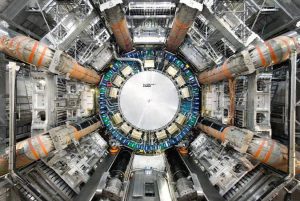
CERN officially switched off the Large Hadron Collider (LHC) to begin its 4-year Long Shutdown 3 (LS3).
- The temporary pause allows engineers to perform a major $1.5 billion hardware upgrade, transforming the machine into the High-Luminosity LHC (HL-LHC).
- The Large Hadron Collider (LHC) is the world’s largest, highest-energy, and most powerful particle accelerator. Built by the European Organization for Nuclear Research (CERN), it accelerates subatomic particles (protons or heavy lead ions) to near the speed of light and smashes them together to study fundamental physics and the origin of the universe.
- Built in a circular underground tunnel situated approximately 100 meters (328 feet) beneath the France–Switzerland border near Geneva.
- Facility: Governed and operated by CERN (European Organization for Nuclear Research).
- Protons are separated from hydrogen gas, fed into a chain of pre-accelerators, and injected into two ultra-high vacuum beam pipes traveling in opposite directions.
- Over 1,200 dipole magnets—chilled to -271.3°C (-456°F) using liquid helium—generate powerful magnetic fields to bend and focus particle beams as they approach 99.9999991% of the speed of light.
- Quadrupole magnets squeeze the beams together at four designated collision points, where massive particle detectors (ATLAS, CMS, ALICE, and LHCb) record subatomic debris from millions of collisions per second.
India & Panama Held Bilateral Talks:
India & Panama held bilateral talks to deepen maritime security, logistics, skilling and digital transformation. It is a country of Central America located on the Isthmus of Panama.It is bordered by Costa Rica and Colombia.It is bounded by the Caribbean Sea to the north and by the Pacific Ocean to the south.
Capital City: Panama City.Panama has a moist tropical and subtropical climate.Lake Gatun which also plays a vital role in the operation of the Panama Canal.Tuira River is the longest river of Panama.The Cordillera Central, or Central Mountain Range, runs down the middle of Panama.It mainly consists of gold, copper, manganese, and iron.
The DWEEPTI Yojana:

Chhattisgarh has launched the DWEEPTI Yojana (Decentralised Women Empowerment on Energy and Policy for Transformative Inclusion), making it the first Indian state to adopt a women-led distributed renewable energy policy.
- DWEEPTI Yojana (Decentralised Women Empowerment on Energy and Policy for Transformative Inclusion) is an initiative of the Chhattisgarh Panchayat and Rural Development Department, developed in collaboration with Transform Rural India (TRI) under the Green Economy Transition Mission.
- It integrates women-led Self-Help Groups (SHGs) into the distributed solar energy ecosystem by enabling them to install, manage, and promote rooftop solar systems.
- Aim is to promote women-led clean energy entrepreneurship, expand decentralized renewable energy adoption, and create sustainable livelihood opportunities while supporting rural energy self-reliance.
Key Features:
- Women-Centric Solar Ecosystem: Trains SHG members as Solar Didis, enabling them to work as solar vendors, technicians, installers, managers, and entrepreneurs.
- Integration with PM Surya Ghar Yojana: Cluster Level Federations (CLFs) are registered as authorized vendors under the PM Surya Ghar Muft Bijli Yojana in partnership with the Chhattisgarh State Power Distribution Company Limited (CSPDCL).
- Affordable Financing: Provides flexible loans to SHG members for rooftop solar installations, promoting clean energy adoption and income generation.
- Statewide Expansion: Successfully piloted in Kabirdham district, with plans to expand the model across all districts of Chhattisgarh.



