
Tackling Non-Revenue Water for a Water-Secure Viksit Bharat:
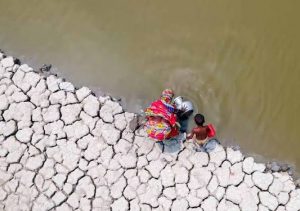
India’s ambition to build a ‘Viksit Bharat’ relies heavily on its urban centres, which are increasingly facing acute water stress due to groundwater over-exploitation, rapid urbanization, and climate change, bringing urban water governance into sharp policy focus.
- A major policy concern is that urban utilities lose more than 30% of the water they supply as Non-Revenue Water (NRW), undermining municipal finances, reducing service efficiency, and threatening long-term urban water security.
- India’s urban water crisis is driven by high Non-Revenue Water (NRW), groundwater depletion, rapid urbanisation, climate change, and fragmented governance, threatening water security and the vision of Viksit Bharat.
- Achieving sustainable urban water governance requires reducing NRW, promoting wastewater reuse, strengthening Urban Local Bodies (ULBs), adopting smart water technologies, conserving groundwater, and implementing integrated, climate-resilient water management aligned with SDG 6.
- Non-Revenue Water (NRW) refers to water that has been treated and pumped into the municipal distribution system but is “lost” before it reaches the consumer or is billed. It primarily consists of:
- Water lost due to leakages from aging pipelines, broken valves, and overflowing reservoirs.
- Water lost due to inaccurate metering, unauthorized connections (theft), and unbilled public consumption (such as free public standposts).
- In advanced global cities, NRW is maintained strictly under 10%. Conversely, in most Indian metropolitan areas, it ranges between 40% to 50%.
- This means nearly half the water treated at a high cost yields zero municipal revenue and never reaches the tap.



