
Helicase:
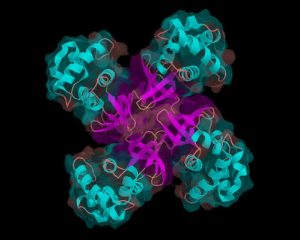
In a recent study scientists from the U.K. found that proteins Sld3-Sld7 detect “switched-on” MCM2-7 helicase and recruit Cdc45 to start DNA replication.
- Helicase is a crucial enzyme in molecular biology, playing an essential role in DNA replication, repair, and transcription.
- It is a motor protein and unwinds the double-stranded DNA (dsDNA) into single strands, so that the cell can copy the genetic information stored in them.
- First, the enzyme attaches to a particular region of DNA and moves along the molecule.
- It uses energy from ATP (the cell’s main chemical energy source) to change its shape and force apart the two DNA strands.
- The result is a Y-shaped region called the replication fork, where the two strands are exposed.
- However, DNA tends to become increasingly twisted ahead of the replication fork as helicase moves along it.
- Other enzymes called topoisomerases relieve this twisting and prevent the DNA from becoming tangled or breaking.
- Once helicase has separated the strands, other replication machinery can use each exposed strand as a template to make a new complementary strand.



