
SC Directs Nationwide Protection of Elephant Corridors:
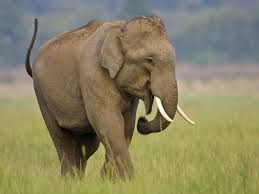
The Supreme Court ruled that no State can block elephant corridors, directing the Central Government to conduct a nationwide survey and ensure the right of passage for elephant herds through traditional elephant corridors across State borders.
- SC held that elephant corridors are not State-specific as elephant herds naturally move across multiple States. Conservation therefore requires inter-State coordination.
- The SC highlighted the inter-state and trans-national nature of elephant movement, citing examples of herds traveling from Nepal through West Bengal to Jharkhand, and from Yamuna Nagar in Haryana to Uttarakhand and Himachal Pradesh.
- Ban on Barbaric Practices: The Court ordered strict implementation of its 2018 directions to remove spikes and desist from using fireballs to drive elephants.
- The Court reiterated that elephants are classified as Schedule I animals under the Wildlife (Protection) Act, 1972, granting them the highest level of statutory protection.
- Asian Elephant (Elephas maximus) classified as Endangered on the IUCN Red List. Protecting its natural habitats and migratory corridors is crucial for its long-term survival.
- Elephant Corridors: Elephant corridors are critical strips of habitat connecting fragmented forest areas, enabling safe movement, maintaining genetic diversity and reducing human-elephant conflict by providing elephants with routes away from human settlements.
- The Elephant Corridors of India, 2023 report, supported by the Wildlife Institute of India (WII), identified 150 validated elephant corridors across 15 States.
West Bengal has the highest number with 26 corridors. - The network includes 19 inter-State corridors and 6 international transboundary corridors connecting India and Nepal.
- Elephant Population: The Synchronous All India Population Estimation of Elephants (SAIEE) 2021–25 estimates India’s wild elephant population at 22,446.
- These elephants are protected through 33 Elephant Reserves covering 80,777 sq. km across 14 major elephant-range States, along with the 150 identified corridors.
- The 2010 Elephant Task Force recommended declaring the entire ER area Ecologically Sensitive under the Environment (Protection) Act, 1986 potentially restricting mining and development across 46,000 sq km, and proposed 10 elephant landscapes covering 1.1 lakh sq km to promote sustainable land-use planning.



