
Today’s Current Affairs: 20th Aug 2026 for UPSC IAS exams, State PSC exams, SSC CGL, State SSC, RRB, Railways, Banking Exam & IBPS, etc
Table of Contents
Regional Rural Banks:

The Ministry of Finance recently said that Regional Rural Banks (RRBs) have recorded strong growth in credit delivery during the financial year 2025-26.
- RRBs are financial institutions established to provide financial services to rural areas.
- They are formed in collaboration by the Central Government, State Governments, and Sponsoring Commercial Banks to give loans to rural areas.
- The main objectives of setting up the RRB is to provide credit and other facilities, especially to the small and marginal farmers, agricultural labourers, artisans, and small entrepreneurs in rural areas.
- RRBs were set up on the basis of the recommendations of the Narasimham Working Group (1975) and after the legislation of the Regional Rural Banks Act, 1976
- The equity of an RRB is held by the Central Government, concerned State Government and the Sponsor Bank in the proportion of 50:15:35.
- The RRBs combine the characteristics of a cooperative in terms of the familiarity of the rural problems and a commercial bank in terms of its professionalism and ability to mobilise financial resources.
- The area of operation of RRBs is limited to the area as notified by the Government of India, covering one or more districts in the State.
- The RBI has set a Priority Sector Lending (PSL) target of 75% of total outstanding advances for RRBs as against 40% for Scheduled Commercial Banks
- It comprises owned funds, deposits, borrowings from NABARD, sponsor banks and other sources, including SIDBI and the National Housing Bank.
- RRBs are regulated by the RBI and supervised by the National Bank for Agriculture and Rural Development (NABARD
- The Board of Directors manages these banks, overall affairs, which consists of one Chairman, three Directors as nominated by the Central Government, a maximum of two Directors as nominated by the concerned State Government, and a maximum of three Directors as nominated by the sponsor bank.
Giloy : In News

Giloy, the climbing herb found in gardens and forests across India, has found an unusual patient in Madhya Pradesh, a young tigress battling canine distemper, one of the most dangerous viral diseases affecting wild carnivores.
- Giloy is a climbing shrub that grows on other trees, from the botanical family Menispermaceae.
- Scientific Name: Tinospora cordifolia
- Giloy is also called giloe, guduchi, and amrita, among other names.
- It is native to India but also found in China and tropical areas of Australia and Africa.
- It grows well in almost all types of soils and under varying climatic conditions.
- The plant is cultivated by stem cutting in the months of May-June.
- It’s considered an essential herbal plant in Ayurvedic and folk medicine, where people use it as a treatment for a wide range of health conditions.
- All parts of the plant are used in Ayurvedic medicine. However, the stem is thought to have the most beneficial compounds.
- Giloy contains several essential nutrients such as copper, iron, manganese, zinc, calcium, and phosphorus.
- It also has alkaloids, steroids, glycosides, sesquiterpenoids, essential oils, fatty acids, and aliphatic compounds.
- Traditionally, giloy is used to treat fever,urinary problems,asthma,dysentery,diarrhea,skin infections,Hansen’s disease (formerly called leprosy),diabetes,gout,jaundice,anorexia,eye conditions
Kikuchi-Fujimoto Disease:

A 32-year-old man from Visakhapatnam, who had recurrent lymph node swelling for nearly six years and was repeatedly treated for suspected tuberculosis, has finally been diagnosed with rare Kikuchi–Fujimoto disease recently.
- Kikuchi-Fujimoto disease (KFD), also known as histiocytic necrotizing lymphadenopathy, is a rare inflammatory disorder of the lymph nodes.
- It causes swollen, painful lymph nodes that most often develop in neck (cervical lymphadenopathy), along with fever and fatigue.
- It most often affects people aged 30 and under.
- It can closely mimic tuberculosis and lymphoma.
- The cause of KFD remains unclear, but both viral infections and autoimmune mechanisms have been suggested as potential triggers.
- Usually, this disease does not cause severe problems and gets better on its own.
- However, in some people, it can be associated with autoimmune disorders, conditions where the immune system mistakenly attacks the body’s cells and tissues.]
- There isn’t a specific cure, but certain medication can help to relieve symptoms, including:
- NSAIDs (nonsteroidal anti-inflammatory drugs), for fever, pain, and headache.
- Corticosteroids may be used in severe cases to reduce swelling in lymph nodes.
Thames River:

A traditional Ganga Aarti, a ritual associated with the ghats of Varanasi, Haridwar, and Rishikesh, will be held on the banks of the River Thames in London in September.
- Thames River flows through southern England.
- It is the longest river in England and the second longest in the United Kingdom, after the River Severn.
- Its source is at Thames Head, near Kemble in the Cotswold Hills, Gloucestershire County.
- It flows into the North Sea via the Thames Estuary.
- The Nore is the sandbank that marks the mouth of the Thames Estuary and the confluence point of the Thames and the North Sea.
- Main Tributaries: Lea, Leach, Churn, Coln, Windrush, Kennet, Evenlode, Ock, and Loddon.
Mushk Budji:
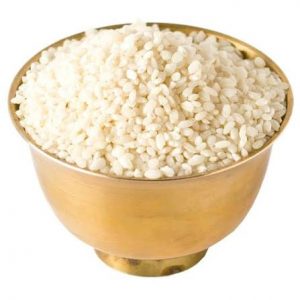
Kashmir’s indigenous aromatic rice variety, ‘Mushk Budji’, which was granted the GI tag three years ago, is facing the problem of plenty with the government’s crop expansion to “unsuitable” areas hitting prices, farmers said recently.
- Mushk Budji is a highly aromatic short-grain rice variety native to Kashmir.
- It is usually grown at an altitude ranging from 5000 to 7000 ft above mean sea level in the Highland Himalayas in the higher reaches of the Kashmir Valley.
- It received a Geographical Indication (GI) tag in 2023.
- It is rich in carbohydrates.
- It’s light on fat and easy to digest, making it suitable even for fasting or digestive-sensitive meals.
Escherichia coli:
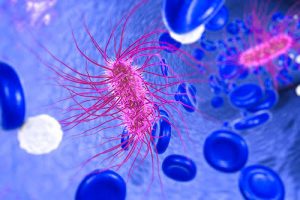
A recent report by the Comptroller & Auditor General (CAG) on facilities at railway stations has revealed that E. coli bacteria were found in samples of drinking water.
- Escherichia coli is commonly known as E. coli, is a type of bacteria that can be found in the intestines of humans and animals.
- It is a rod-shaped bacterium of the Enterobacteriaceae family.
- While most strains of E. coli are harmless and even beneficial, some strains can cause illness and infections.
- It can be transmitted to humans through contaminated food, water, or contact with fecal matter from infected individuals or animals.
- Some kinds of coli can cause diarrhea, while others cause urinary tract infections, respiratory illness and pneumonia, and other illnesses.
- The most familiar strains of E. coli that make sick by producing a toxin called Shiga.
- This toxin damages the lining of small intestine and causes diarrhea.
- These strains of E. coli are also called Shiga toxin-producing E. coli (STEC).
- The most common symptoms of E.coli infection include fever, persistent diarrhoea, bloody diarrhoea, and vomiting.
- Most E. coli infections are self-limiting and resolve on their own without treatment. However, it’s essential to stay hydrated during the course of the illness.
Helicase:
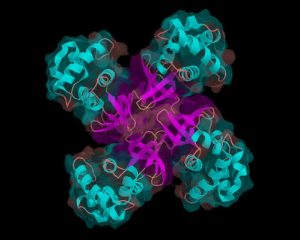
In a recent study scientists from the U.K. found that proteins Sld3-Sld7 detect “switched-on” MCM2-7 helicase and recruit Cdc45 to start DNA replication.
- Helicase is a crucial enzyme in molecular biology, playing an essential role in DNA replication, repair, and transcription.
- It is a motor protein and unwinds the double-stranded DNA (dsDNA) into single strands, so that the cell can copy the genetic information stored in them.
- First, the enzyme attaches to a particular region of DNA and moves along the molecule.
- It uses energy from ATP (the cell’s main chemical energy source) to change its shape and force apart the two DNA strands.
- The result is a Y-shaped region called the replication fork, where the two strands are exposed.
- However, DNA tends to become increasingly twisted ahead of the replication fork as helicase moves along it.
- Other enzymes called topoisomerases relieve this twisting and prevent the DNA from becoming tangled or breaking.
- Once helicase has separated the strands, other replication machinery can use each exposed strand as a template to make a new complementary strand.
Central African Republic:

A gold mining site collapsed in the western part of the Central African Republic and killed at least 30 miners and left others trapped.
- It is a landlocked nation located in the Central Africa region.
- It is bordered by six countries namely Chad (North), Sudan (Northeast), and South Sudan (Southeast), DRC (South), Republic of the Congo (Southwest), and Cameroon (West).
- Capital City: Bangui
- Geographical Features of Central African Republic:
- It is largely a plateau, covered with savannah (grassland).
- The climate of the Central African Republic is tropical.
- The major rivers include the Oubangui (or Ubangi) River, which is a tributary of the Congo River and other is the Chari River which drains into Lake Chad.
- The highest point in the country Mount Ngaoui, is located in Karre Mountains range.
- It mainly consists of mineral resource which includes diamonds, gold, uranium, iron ore, copper, and manganese are mined in smaller quantities.
- The Dzanga-Sangha National Park is located in the southwest corner of the country which is designated as UNESCO-World Heritage site.
Tamirabharani River:

The Madurai Bench of the Madras High Court has declared Tamil Nadu’s Tamirabharani (Porunai) river a deity and granted it legal personhood to curb pollution.
- It is a perennial river of southern India flowing entirely within Tamil Nadu.
- It originates from the Agastyarkoodam peak of Pothigai hills of the Western Ghats.
- It flows initially northward and later turns eastward, passing through Tirunelveli and Thoothukudi districts of the Tamil Nadu state.
- It drains into the Gulf of Mannar.
- It is fed by both southwest and northeast monsoons.
- Major tributaries include Servalar, Manimuthar, Gadananathi, Pachaiyar, Chittar, Ramanathi and Koraiyar, all originating from forested Western Ghats.
- The river forms Paanatheertham waterfalls near Karaiyar reservoir and Kalyanatheertham and Agasthiar falls near Papanasam
- Key dams on this river include Karaiyar Dam, Manimuthar Dam, Gadananathi Dam and Ramanathi Dam.
National Sports Awards:

The Ministry of Youth Affairs & Sports announced the National Sports Awards 2025.
- The National Sports Awards are given every year to recognize and reward excellence in sports.
- Ministry: Ministry of Youth Affairs and Sports
- Arjuna Award is given for good performance over a period of the previous four years and for showing qualities of leadership, sportsmanship and a sense of discipline.
- Arjuna Awards (Lifetime) is given to honour and motivate those sportspersons who have contributed to sports by their performance and continue to contribute to promotion of sports even after their retirement from active sporting careers.
- Dronacharya Award is given to coaches for doing outstanding and meritorious work on a consistent basis and for enabling sportspersons to excel in International events.
- Rashtriya Khel Protsahan Puraskar is given to corporate entity (Public/Private), non-governmental organizations (NGOs), who have played a visible role in the area of sports promotion and development.
SHANTI Act, 2025 and Nuclear Liability Concerns:

The Supreme Court of India has initiated a review to determine whether the statutory liability caps prescribed under the Sustainable Harnessing and Advancement of Nuclear Energy for Transforming India (SHANTI) Act, 2025, can legally restrict constitutional courts from awarding fair and suitable compensation to victims of a nuclear disaster.
- The Court has also sought clarification on whether Section 17(4), which governs appointments to the Atomic Energy Regulatory Board (AERB), creates a potential conflict of interest.
- A three-judge Bench headed by the Chief Justice of India issued notices to the Union government and the AERB, responding to petitions arguing that these statutory caps leave victims inadequately compensated.
- The SHANTI Act, 2025 replaced the Civil Liability for Nuclear Damage (CLND) Act, 2010, aiming to facilitate private-sector participation in India’s civil nuclear sector by easing stringent liability norms and establishing a predictable civil liability framework.
- Under the Act, a “company” has the meaning assigned under Section 2(20) of the Companies Act, 2013, but excludes companies incorporated outside India.
- It gives the AERB statutory status to strengthen regulatory authority and nuclear safety oversight.
- SHANTI Act, 2025 reserves sensitive activities such as uranium enrichment, spent-fuel reprocessing, high-level waste management and heavy-water production for the Central Government or its wholly owned institutions.
- Dispute Redressal: Establishes an Atomic Energy Redressal Advisory Council, with the Appellate Tribunal for Electricity serving as the appellate authority.
- Nuclear Liability under Previous Framework (CLND Act, 2010): Established a “no-fault regime” where victims only had to prove damage, not negligence.
- Capped operator liability for large reactors at Rs 1,500 crores, while 300 million Special Drawing Rights (SDR) was the overall maximum liability for a nuclear incident.
- It granted operators a statutory “right of recourse” against suppliers if an accident was caused by defective equipment, patent or latent defects, keeping manufacturers legally accountable.
- Nuclear Liability under SHANTI Act: Instead of a uniform cap, financial liability for the operator is tiered based on the thermal capacity and risk profile of the nuclear installation:
India’s 1st Guide to Grasslands and Other Open Natural Ecosystems:
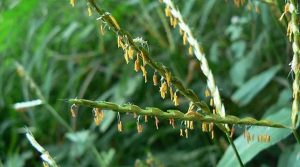
India launched its first-ever Guide to Grasslands and Other Open Natural Ecosystems (ONEs) of India at the 17th Conference of the Parties (COP17) to the United Nations Convention to Combat Desertification (UNCCD) in Ulaanbaatar, Mongolia.
- The guide documents India’s grasslands, savannas, deserts, scrublands, ravines, rocky plateaus and other open natural ecosystems, covering their geographical settings, ecological features, biodiversity and associated communities.
- It includes landscapes such as the Himalayan and Terai grasslands, Thar and Banni landscapes, Deccan savannas, Aravalli scrublands, Yamuna-Chambal ravines,
- Western Ghats rocky plateaus, central Nicobar grasslands and Tamil Nadu’s Theri Kaadu .
- Correcting the ‘Wasteland’ Perception: The guide stresses that grasslands, scrublands and ravines should not be judged merely by their lack of tree cover, as they are distinct, naturally occurring ecosystems with high ecological and socio-economic value.
- It calls for stronger scientific knowledge, improved land-degradation assessment and landscape-level planning to conserve and restore ONEs and support India’s Land Degradation Neutrality (LDN) targets.
- The guide was developed under the Ministry of Environment, Forest and Climate Change (MoEFCC) with major partners including the Ashoka Trust for Research in Ecology and the Environment (ATREE) and International Union for Conservation of Nature (IUCN), among others.
- Ecological Importance: ONEs support rich biodiversity, contribute to soil and water processes, carbon sequestration and climate resilience, and provide habitats for species such as the Great Indian Bustard, Lesser Florican, Bengal Florican, Indian wolf and blackbuck.
- These ecosystems sustain pastoral, livestock-based and agricultural communities, including traditional landscapes such as Orans and gauchars, which reflect long-standing community-based management of grazing lands.
- Launching the Guide at UNCCD COP17 provides India with a platform to showcase its open ecosystems and strengthen their representation in the global discourse on land restoration, rangelands and Land Degradation Neutrality.
Positive Indigenisation List:

The Department of Defence Production (DDP), Ministry of Defence, has notified the 6th Positive Indigenisation List (PIL) containing 405 strategically important defence items with an estimated business potential of ₹3,070 crore.
- A Positive Indigenisation List (PIL) is an official negative import list/procurement embargo list notified by the Ministry of Defence.
- Nodal Ministry & Department: Department of Defence Production (DDP) and the Department of Military Affairs (DMA), Ministry of Defence (MoD).
- Policy Framework: Defence Acquisition Procedure (DAP) and the Aatmanirbhar Bharat Abhiyan (Make in India in Defence).
- Hosted and operationalized through the SRIJAN Portal, launched in August 2020 to display items available for domestic development.
- Aim is to systematically eliminate import dependence in defence procurement, foster domestic manufacturing capabilities across MSMEs and private startups, encourage indigenisation of critical sub-systems and raw materials, and establish India as a global defence manufacturing hub.
Key Features of the Positive Indigenisation Lists:
- Phased Import Embargo Timelines: Every notified item carries a progressive, legally binding cut-off year beyond which foreign imports are prohibited, providing private industry sufficient lead time to develop and test prototypes.
- Dual-Track Classification:
- DMA Lists: Cover major end-user weapon platforms (e.g., artillery guns, corvettes, radars, transport aircraft).
- DDP Lists: Focus on sub-assemblies, Line Replaceable Units (LRUs), high-precision sensors, ammunition types, and specialized raw materials for DPSUs and Coast Guard assets.
- Execution Through the‘Make’ Category: Indigenisation is executed through mechanisms such as Make-I (government-funded), Make-II (industry-funded prototype development), and Make-III (substitute procurement), alongside in-house DPSU initiatives
- Digital Integration via SRIJAN Portal: DPSUs and Service Headquarters upload specifications, technical drawings, and demand volumes of imported items onto the SRIJAN portal, enabling Indian private vendors and startups to express development interest.
- Quality Assurance & Guaranteed Procurement: Domestic vendors that successfully develop, test, and qualify the items according to military standards receive guaranteed procurement orders from the armed forces and DPSUs.
SC Directs Nationwide Protection of Elephant Corridors:
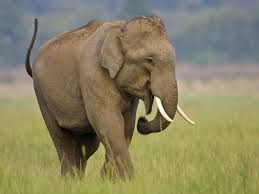
The Supreme Court ruled that no State can block elephant corridors, directing the Central Government to conduct a nationwide survey and ensure the right of passage for elephant herds through traditional elephant corridors across State borders.
- SC held that elephant corridors are not State-specific as elephant herds naturally move across multiple States. Conservation therefore requires inter-State coordination.
- The SC highlighted the inter-state and trans-national nature of elephant movement, citing examples of herds traveling from Nepal through West Bengal to Jharkhand, and from Yamuna Nagar in Haryana to Uttarakhand and Himachal Pradesh.
- Ban on Barbaric Practices: The Court ordered strict implementation of its 2018 directions to remove spikes and desist from using fireballs to drive elephants.
- The Court reiterated that elephants are classified as Schedule I animals under the Wildlife (Protection) Act, 1972, granting them the highest level of statutory protection.
- Asian Elephant (Elephas maximus) classified as Endangered on the IUCN Red List. Protecting its natural habitats and migratory corridors is crucial for its long-term survival.
- Elephant Corridors: Elephant corridors are critical strips of habitat connecting fragmented forest areas, enabling safe movement, maintaining genetic diversity and reducing human-elephant conflict by providing elephants with routes away from human settlements.
- The Elephant Corridors of India, 2023 report, supported by the Wildlife Institute of India (WII), identified 150 validated elephant corridors across 15 States.
West Bengal has the highest number with 26 corridors. - The network includes 19 inter-State corridors and 6 international transboundary corridors connecting India and Nepal.
- Elephant Population: The Synchronous All India Population Estimation of Elephants (SAIEE) 2021–25 estimates India’s wild elephant population at 22,446.
- These elephants are protected through 33 Elephant Reserves covering 80,777 sq. km across 14 major elephant-range States, along with the 150 identified corridors.
- The 2010 Elephant Task Force recommended declaring the entire ER area Ecologically Sensitive under the Environment (Protection) Act, 1986 potentially restricting mining and development across 46,000 sq km, and proposed 10 elephant landscapes covering 1.1 lakh sq km to promote sustainable land-use planning.



