
Endoscopic Camera:
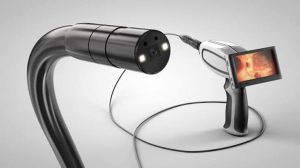
A Chhattisgarh professor and five students were recently arrested for allegedly leaking an entomology exam using an endoscopic camera.
- It is a device used to view, capture, and record videos in small, hard-to-reach places of the human body with limited to no visibility.
- It allows doctors to visualize the surgery or diagnostic procedure on a larger medical-grade screen, like a TV display, a computer monitor, or a stereoscopic viewing console.
- Most modern endoscope camera modules utilize “chip-on-tip” technology, where the lens and imaging electronics are combined into a miniature package located at the end of the device.
- Endoscopic cameras illuminate the anatomical area through fiber optics or LEDs on the tip, and the image signal is transferred out from the camera on an electrical cable.
- The light source must provide sufficient brightness and illumination angle to ensure true-color properties and brilliant image presentation to aid medical professionals in their diagnoses and procedures.
- There are many types of endoscopes used for diagnostic, preventative, and surgical applications:
- Cystoscope: This is used to study the inside of the bladder, urethra, urinary tract, and prostate (in men) and is often inserted through the urethra.
- Laryngoscope: This is an endoscope used to view the larynx or the voice box and is inserted through the mouth.
- Otoscope: The otoscope is designed for visual examination of the eardrum and the passage of the outer ear.
- Gastroscope: This is used to check the upper part of the digestive system, which includes the inside of your throat, food pipe (esophagus), and stomach.
- Laparoscope: A laparoscope is inserted through the abdomen to study the stomach, liver, abdominal organs, and female reproductive organs such as the fallopian tubes, uterus, and ovaries.
- Arthroscope: An arthroscope is an endoscope that’s inserted into the joint through a small incision near the site.
- Duodenoscope: This is a long flexible endoscope inserted through the mouth to the top of the small intestine (duodenum).
- It has revolutionized numerous fields due to its ability to inspect internal or hard-to-reach areas without requiring invasive procedures.
- Its use has expanded across various sectors such as industry, research, and even security.



