
Autonomous Hill Development Councils:
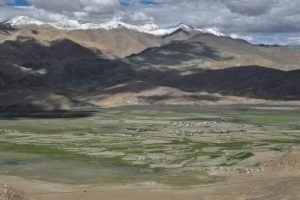
Ladakh Lieutenant Governor Vinai Kumar Saxena approved a notification extending Autonomous Hill Development Councils to all seven districts of the Union Territory.
- This move expands elected local self-governance from Leh and Kargil into the five newly carved districts: Sham, Nubra, Changthang, Zanskar, and Drass.
- Autonomous Hill Development Councils (LAHDCs) is decentralized, elected statutory district-level governance bodies established to provide local self-rule, plan socioeconomic development, and manage land and resources in Ladakh’s mountainous terrain.
- Conceived on the pattern of West Bengal’s Darjeeling Gorkha Hill Council following prolonged agitations by the people of Ladakh for regional autonomy.
- Formally enabled by the Ladakh Autonomous Hill Development Council Act, 1995 (later consolidated under the LAHDC Act, 1997).
- LAHDC Leh was established in 1995, followed by LAHDC Kargil in July 2003 under the J&K coalition government headed by Mufti Mohammad Sayeed.
- With the reorganization of Ladakh into a Union Territory in 2019 and the creation of five new districts in 2026, the governance framework was expanded to cover all seven districts.
Governance Structure:
- Typically consists of 30 members serving a five-year term: 26 directly elected through universal adult suffrage and 4 nominated by the Lieutenant Governor/administration to represent women and principal religious minorities.
- Led by a Chairman designated as the Chief Executive Councillor (CEC), holding the rank and status of a Cabinet Minister, assisted by four Executive Councillors with the rank of Deputy Ministers.
- The Deputy Commissioner of the district acts ex-officio as the Chief Executive Officer (CEO) of the council to direct administration, enforce law and order, and oversee the execution of development works.
Key Functions:
- Exercises executive control over the allotment, occupation, and use of land vested in the council, as well as the management of un-demarcated forests.
- Formulates annual budgets, prioritizes centrally sponsored schemes, and oversees local rural development programs tailored to high-altitude terrain.
- Administers primary and secondary education, vocational institutes, public health centers, sanitation, and local road networks (excluding national highways).
- Oversees agriculture, water canals, fisheries, pasture management, and veterinary care for regional livestock, such as pashmina goats and yaks.
- Designs regulations and initiatives to promote eco-tourism, safeguard indigenous languages, and preserve local traditions and monastic heritage.



