
Today’s Current Affairs: 7th Sep 2026 for UPSC IAS exams, State PSC exams, SSC CGL, State SSC, RRB, Railways, Banking Exam & IBPS, etc
Table of Contents
What is Article 142 of the Constitution?
The Supreme Court of India invoked its extraordinary powers under Article 142 of the Constitution to quash multiple First Information Reports (FIRs) filed across various states against participants of the nationwide examination protests led by the Cockroach Janta Party (CJP).
- The Court’s order gave legal force to a negotiated settlement between the Union government and the protest group over the NEET-UG 2026 exam leak.
- By clubbing and scrapping these cases directly, the Supreme Court bypassed the conventional statutory route for quashing FIRs, sparking a fresh debate on the scope, application, and boundaries of Article 142.
- Article 142 empowers the Supreme Court to ensure “complete justice”, but its broad and undefined scope raises concerns about judicial overreach, excessive discretion and separation of powers.
- The way forward lies in judicial restraint, adherence to precedent, reasoned orders and stronger institutional safeguards to ensure Article 142 supplements rather than bypasses statutory law.
- Article Article 142(1) empowers the Supreme Court to pass any “decree or order as it is necessary for doing complete justice in any cause or matter pending before it.”
- The Constitution notably does not define what constitutes “complete justice” or the specific circumstances for its use.
- Article 142(2) empowers the Court to secure the attendance of persons, discovery or production of documents, investigation, and punishment for contempt, subject to laws made by Parliament.
- The provision traces its roots to Section 210 of the Government of India Act, 1935, and earlier colonial-era practices of resolving disputes based on “justice, equity and good conscience” when written law was absent.
- Originally drafted as Article 118, it was adopted by the Constituent Assembly in 1949, without any formal debate. Two proposed amendments were moved but subsequently withdrawn.
- Because it was passed without debate, the Constituent Assembly left the definition of this expansive power open, allowing the Supreme Court to interpret and shape its boundaries on a case-by-case basis over the past seven decades.
EOS-05 Mission : Successfully Launched
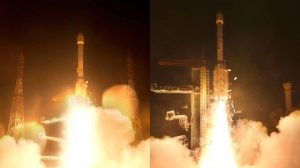
The Indian Space Research Organisation (ISRO) successfully launched the Earth Observation Satellite-05 (EOS-05) aboard the GSLV-F17 launch vehicle from the Satish Dhawan Space Centre, Sriharikota. This marks a major milestone as it is India’s first dedicated imaging satellite designed to operate from a geosynchronous orbit.
- EOS-05 Mission dubbed the “Eye in the Sky,” EOS-05 is a state-of-the-art Earth observation spacecraft equipped with advanced optical and infrared imaging payloads to provide continuous, real-time imagery.
- Weighing 2,367 kg, it represents the heaviest payload successfully injected into orbit by a standard GSLV configuration.
- The mission was executed by GSLV-F17, marking the 19th operational flight of India’s Geosynchronous Satellite Launch Vehicle.
- The GSLV is a three-stage launch vehicle. The first stage uses a solid core with four liquid strap-on boosters, followed by a liquid second stage and an indigenous cryogenic upper stage (CUS) for launching heavier payloads into deep transfer trajectories.
- Unlike conventional Earth observation satellites that circle close to the planet in Low Earth Orbit (LEO) with limited revisit windows, EOS-05 is India’s first dedicated imaging satellite designed to operate from a Geosynchronous Orbit (GEO), roughly 36,000 km above the Earth.
- GSLV-F17 precisely injected the spacecraft into a Sub-Geosynchronous Transfer Orbit (Sub-GTO).
- The satellite will progressively fire its onboard liquid apogee motor (LAM) over multiple orbit-raising maneuvers to reach its designated geostationary orbital slot over the Indian subcontinent.
- LEO imaging platforms pass over a specific area in minutes, leaving blind spots of hours or days before the next satellite passes. GEO provides continuous persistence and an unblinking, wide-area view.
- GEO imaging enables persistent, high-frequency tracking of rapidly evolving meteorological hazards, such as cloudbursts, cyclones, flash floods, and forest fires, where hourly updates are vital for disaster relief.
Poompuhar:
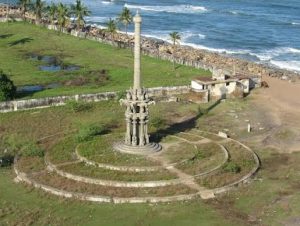
The Tamil Nadu State Department of Archaeology (TNSDA) commenced the third phase of underwater archaeological exploration off the coast of Poompuhar, the ancient port city once known as Kaveripoompattinam, in Mayiladuthurai district recently.
- Poompuhar, or Puhar, is a town in the Mayiladuthurai district in the state of Tamil Nadu.
- ‘Puhar’ in Tamil means the ‘estuary’ of a river in the sea.
- It is located close to the spot where the Cauveri River flows out into the Bay of Bengal.
- It was once a flourishing ancient port city known as Kaveri Poompattinam, which for a while served as the capital of the Early Chola kings in Tamilakam.
- As per archaeological evidence found during excavation, this age-old city is said to have been established thousands of years ago.
- Ancient pottery dating back to the 4th century BCE has been discovered offshore by marine archaeologists east of this town.
- Silappathikaram and Manimekalai, the Tamil epics, bring out the greatness of the city in some of the poems in Sangam literature.
- It has been destroyed several times by huge tsunami waves in the past.
Asian-Pacific Postal Union:
Vinaya Prakash Singh, a 1988 batch officer of the Indian Postal Service, has been recently reelected as Secretary-General of the Asian-Pacific Postal Union (APPU) for a second consecutive four-year term.
- Asian-Pacific Postal Union (APPU) is an intergovernmental organization of 32 member countries of the Asian-Pacific region.
- Headquarters: Bangkok, Thailand.
- It is the only Restricted Union of the Universal Postal Union (UPU) in the region, which is a specialized agency of the United Nations dealing with postal services.
- Goal: To extend, facilitate, and improve postal relations between member countries and to promote cooperation in the field of postal services.
- It decides and pursues the regional stance in response to global postal issues and strategy.
- Since its creation in 1961, the APPU has taken the lead in projects for improving quality of services in express, parcels, e-commerce, logistics, letter post, and financial services.
- It has guided members in developing new services and products.
- As the regional centre for various UPU projects, it also takes the lead in ensuring that all technical and operational projects of the UPU are fulfilled in the region so that the region is integrated into the global postal network in the best possible way.
- The APPU is made up of the three bodies:
- Congress: It is the supreme organ of the Union and meets not later than 2 years after the UPU congress.
- Executive Council: It comprises all members and meets every year to ensure the work of the union.
- APPU Bureau: It serves as a body for liaison, information, inquiry, and training for members.
- The Secretary General leads the activities of the Union and is also the Director of the Asian Pacific Postal College (APPC) based in Bangkok.
- APPC is the largest intergovernmental postal training institute in the region.
Hall Effect : New Study
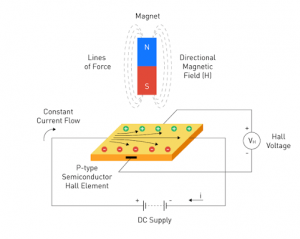
Scientists recently discovered an unexpected form of the Hall effect, overturning the long-held assumption that this electrical response only appears when a magnetic field points perpendicular to a material.
Recent Findings:
- For a long time, people thought the Hall effect only worked when the magnetic field was applied perpendicular to the plane of the film.
- The recent findings show that a Hall response tied to magnetization can occur in more than one direction.
- That gives physicists a new way to investigate multidimensional magnetic and topological structures in condensed matter systems.
- Hall Effect is named after American physicist Edwin H. Hall, who first introduced the theory to the world in 1879.
- Hall discovered that when a conductor or semiconductor with current flowing in one direction was introduced to a perpendicular magnetic field, a voltage could be measured at right angles to the current path; this measurable voltage is the Hall Effect.
- It takes place when current flowing through a conductor, which is a material such as copper or silver permits electrons to flow freely across the entire surface area.
- The electrons begin to flow in a straight line from one side of the conductor to the other.
- If a magnetic field near the conductor is introduced, it would disturb the flow of the electrons due to the force applied.
- This is called Lorentz force, which is the force on a charged particle due to electric and magnetic fields.
- The magnet’s north pole pulls the negative electrons to one side of the conductor and deflects the positive electrons to the other side of the conductor.
- If a voltage tester is put between the two sides, a voltage reading will be given because there is current between the positive and negative electrons; by retrieving this measurable voltage, the Hall Effect principle is put into practice.
- In a semiconductor such as silicon or germanium, the drift velocity of electrons is a lot quicker due to the material used.
- This results in a stronger Hall effect which corresponds to a larger voltage reading being detected and therefore a more precise reading being taken.
- The Hall effect is used in several different products, such as sensors, joysticks, and switches.
- A Hall effect sensor is a device to measure the magnitude of a magnetic field.
- Its output voltage is directly proportional to the magnetic field strength through it.
- Hall effect sensors are used for proximity sensing, positioning, speed detection, and current sensing applications.
Sasthamcotta Lake : In News
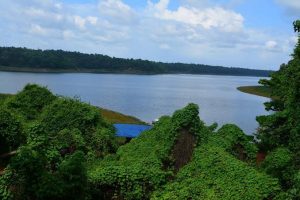
A young newly-wed couple was recently found dead in Sasthamcotta Lake near the Ambalakkadavu area.
- Sasthamcotta Lake, also known as Sasthamkotta Lake, is the largest freshwater lake in Kerala.
- The lake is named after the ancient Sastha temple (a pilgrimage center) located on its bank.
- It is surrounded by hills on all sides except south, where a bund has been constructed separating the lake from the neighboring rice fields.
- The lake is a designated wetland of international importance under the Ramsar Convention since 2002.
Corded Ware Culture:
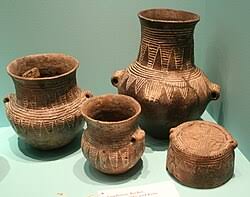
Archaeologists near Wrocław, Poland, recently discovered a 42-tooth necklace with an adult male skeleton, stone weapons and human skull remains, offering new insights into the Corded Ware culture.
- The Corded Ware culture was a large group of ancient people who lived across Europe between about 3000 BC and 2350 BC.
- This time period covers the end of the Stone Age, the Copper Age, and the beginning of the Bronze Age.
- These people lived in a huge area, stretching from the Rhine River in the west to the Volga River in the east. This included parts of Northern, Central, and Eastern Europe.
- Archaeologists have noticed that the Corded Ware culture wasn’t just one single group.
- People in different parts of this huge area had different ways of living and getting food.
- Scientists believe that the Corded Ware culture might have started when people from the Yamnaya culture, who lived in the steppes (large grasslands) of Eastern Europe, moved west. They mixed with the local groups already living there.
- Many experts think the Corded Ware culture played a big role in spreading the Indo-European languages across Europe and Asia. These are the languages that most people in Europe and parts of Asia speak today.
- The name ‘Corded Ware culture’ comes from the special way these people decorated their pottery.
- They used twisted cords to press patterns into wet clay. This made unique designs that looked like ropes or cords.
- A German archaeologist named Friedrich Klopfleisch first used this name in 1883.
- Archaeologists have found very few settlements of the Corded Ware culture. This led to the idea that they were mostly nomadic herders, like the Yamnaya culture.
- However, some evidence shows they also did some farming. Traces of wheat and barley have been found at a Corded Ware site in Poland.
- They also used wheeled vehicles, probably pulled by oxen, continuing a practice from earlier cultures.
- Other names for groups within this culture include the Single Grave culture. This name comes from their burial custom of burying people alone under small mounds.
- The Battle Axe culture, or Boat Axe culture, is another name. It refers to the stone axes shaped like boats often found in men’s graves.
- The Bell Beaker culture lived in the western part of Europe at the same time.
- They shared some ideas with the Corded Ware people.
- But the Bell Beaker people were better at trading by sea and rivers, which helped them develop new things.
What is the LORA Missile?
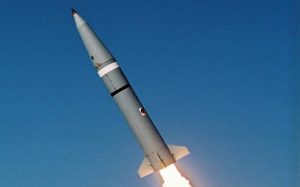
Germany successfully tested the LORA missile in the North Atlantic overnight, military officials said recently.
- The LORA (Long Range Artillery) is a short-range, road-mobile, ground- and sea-launched ballistic missile developed and operated by Israel.
- It is believed to have entered service in Israel in 2007.
- It is designed to strike high-value targets deep inside enemy territory.
- It is a single-stage, solid-propellant
- It can carry a payload of up to 600 kg and can deploy a single high explosive (HE) warhead or sub munitions.
- It has a range of 280 km.
- It uses Inertial Navigation System/Global Positioning System and TV for terminal guidance, with possible in-flight maneuvering capability.
Vitamin B6 : Study

Vitamin B6 poisoning is extremely rare, but cases have increased by about 40% in the last decade, according to reports from America’s Poison Centers.
- Vitamin B-6 (pyridoxine) is a water-soluble vitamin.
- Water-soluble vitamins dissolve in water so the body cannot store them.
- It is found naturally in many foods, as well as added to foods and supplements.
- It is important for normal brain development and for keeping the nervous system and immune system healthy.
- It helps the body to:
- Make antibodies. Antibodies are needed to fight many viruses, infections, and other diseases.
- Maintain normal nerve function.
- Make hemoglobin: Hemoglobin carries oxygen in the red blood cells to the tissues. A vitamin B6 deficiency can cause a form of anemia.
- Break down proteins: The more protein you eat, the more vitamin B6 you need.
- Keep blood sugar (glucose) in normal ranges.
- Food sources of vitamin B-6 include poultry, fish, potatoes, chickpeas, bananas, and fortified cereals.
- Vitamin B-6 can also be taken as a supplement, typically as an oral capsule, tablet, or liquid.
- People who have kidney disease or conditions that prevent the small intestine from absorbing nutrients from foods (malabsorption syndromes) are more likely to be vitamin B-6 deficient.
- Certain autoimmune disorders, some epilepsy medications and alcohol dependence also can lead to vitamin B-6 deficiency.
- This can cause a condition in which you don’t have enough healthy red blood cells to carry adequate oxygen to your body’s tissues.
- Deficiency of this vitamin can cause:
- Confusion
- Depression
- Irritability
- Mouth and tongue sores, also known as glossitis
- Peripheral neuropathy
- Large doses of vitamin B6 can cause:
- Difficulty coordinating movement
- Numbness
- Sensory changes



