
Consensus on Defining Lethal Autonomous Weapons Systems (LAWS):
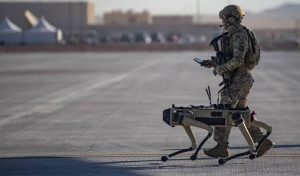
128 countries reached a consensus in Geneva under the UN Convention on Certain Conventional Weapons (CCW) on a text defining Lethal Autonomous Weapons Systems (LAWS), or “killer robots.” The non-binding agreement marks an important step towards developing international regulations or a future treaty on autonomous weapons.
- Defining “Killer Robots”: Autonomous military systems capable of detecting, selecting and engaging targets based on pre-programmed parameters without meaningful human intervention or approval for each individual attack.
- Ethical and Humanitarian Imperatives: The International Committee of the Red Cross (ICRC) emphasized that unregulated deployment of autonomous weapons violates fundamental tenets of International Humanitarian Law (IHL), creating profound ethical, legal, and accountability vacuums on the battlefield.
- Geopolitical Divide on Binding Norms:
- Opponents of a legally binding ban/treaty: Major powers including the United States, Russia, India, and Israel oppose restrictive treaties, favoring non-binding codes of conduct or relying on existing laws of armed conflict.
- Proponents of strict regulation: A coalition led by Brazil, Ireland, and Norway is pushing for a mandatory, legally binding instrument to restrict autonomous targeting.
- Concerns Over Text Dilution: Watchdogs such as the Stop Killer Robots coalition have criticized the consensus text for being substantially watered down, arguing that core protections for civilian populations and strict operational limits were weakened to accommodate major military powers.
- Convention on Certain Conventional Weapons (CCW)
- Adopted in Geneva in 1980 and entering into force in 1983, the CCW (also known as the Inhumane Weapons Convention) is a UN framework treaty.
- It seeks to prohibit or restrict the use of conventional weapons considered to cause unnecessary suffering to combatants or indiscriminate harm to civilians.
- The treaty consists of a framework convention containing general provisions and five annexed protocols containing specific prohibitions.
- Its flexible structure allows new weapons and emerging technologies to be addressed by adding new protocols.
- India is a state party to the CCW and actively participates in the Group of Governmental Experts (GGE) discussions on LAWS, favoring discussions within this existing framework rather than creating separate parallel forums.



