
Lord Howe Island:
A 16-year study from Lord Howe Island found record levels of plastic ingestion in fledgling sable shearwaters.
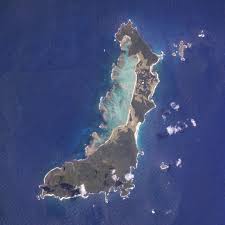
- Lord Howe Island is a crescent-shaped, volcanic island.
- It was discovered in 1788 and named for Admiral Lord Howe by Lieutenant Henry Lidgbird Ball of the British navy.
- About 47% of the island’s vascular plants are endemic, including the famous Kentia Palm (Howea forsteriana).
- It has endemic species like the Lord Howe Island Phasmid which is considered the world’s largest stick insect, and the flightless Lord Howe Woodhen (Gallirallis sylvestris).
- It hosts the world’s largest known population of sable shearwaters.
- The Lord Howe Island Group is a UNESCO World Heritage Site that boasts countless unique plants and animals, many of which are endemic to the region.