
Low Level Light Weight Radar:
The Ministry of Defence has signed a contract with Bharat Electronic Limited (BEL) to procure Improved Low Level Light Weight Radar (LLLR-I) at a cost of approximately ₹ 770 Cr.
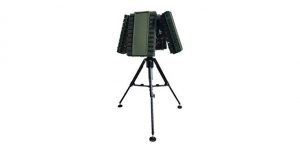
- Low Level Light Weight Radar is a next-generation, multi-mission radar designed to detect and track different types of aerial targets.
- The radar’s four antenna panels are mounted on tripods and are passively cooled.
- This system does not require mechanical movement or liquid cooling.
- It features a built-in self-test function to help identify technical issues.
- It operates via a control and display unit (CDU) which allows operators to remotely control radar modes and view the air situation through a human-machine interface.
- It uses four fixed phased-array antenna panels to provide complete 360-degree surveillance.
- Technology:
- Active Electronically Scanned Array (AESA) technology: The system uses Active Electronically Scanned Array (AESA) technology, which allows it to electronically direct radar beams rather than physically move the antenna.
- It also incorporates Gallium Nitride (GaN) amplifiers and digital beamforming technology to improve radar performance.
- Three-Dimensional Processing: It uses advanced three-dimensional processing capabilities to distinguish targets from unwanted radar returns and reduce the effects of multipath interference.
- It is crucial for detecting small drones and other low-RCS (low radar cross-section) targets.
- Tracking:
- It can automatically track targets while continuing to scan the surrounding airspace through its Track While Scan capability.
- It can also prioritise detected aerial targets, allowing the Army to identify threats that require attention.
- Its monopulse tracking technique provides accurate target tracking in elevation.
- It has ability to provide target information to weapon systems through wired or wireless communication links.
- Electronic Counter-countermeasure (ECCM) Capabilities: It also incorporates ECCM capabilities, designed to help maintain radar performance in the presence of electronic interference.
- Adoptability: It is light weight operable in plains, desert and high altitude terrain.
- It has the capability of detecting and tracking fighter size targets and mini/ micro drone and also has additional capability of prioritizing aerial targets.