
Biomarkers (Chemical Signatures) and Early Disease Detection:
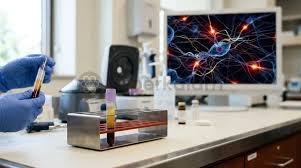
Scientists have emphasised the growing potential of chemical signatures (commonly known as biomarkers) in revolutionising early disease diagnosis, particularly for neurological conditions like Alzheimer’s and Parkinson’s.
- However, despite their promise, integrating these diagnostic tools into routine clinical practice remains hindered by significant hurdles related to accuracy, cost, and accessibility.
- Chemical Signature is a measurable biological indicator found in bodily fluids (like blood or cerebrospinal fluid) consisting of a unique pattern of specific proteins, molecules, elements, isotopes, or by-products.
- It objectively signifies what is happening inside the body, indicating a normal biological process, a pathogenic disease state, or a response to medical treatments.
- When a disease develops, it triggers changes at the molecular level long before physical symptoms appear.
- By measuring the presence, absence, or altered behaviour of specific proteins, doctors can identify underlying physiological shifts.
- Advanced analytical tools like spectrometers (which measure molecules by mass or light absorption) and chromatographs (which separate mixture components) are used to detect these minute chemical patterns.
State of Biomarkers in India:
- GenomeIndia Project: Launched in January 2020 and funded by the Department of Biotechnology (DBT), the project has completed the whole-genome sequencing of over 10,000 individuals representing diverse Indian populations.
- As one of the world’s largest genetic databases, Genome India Project serves as a critical foundation for discovering population-specific biomarkers and genetic risk factors tailored to South Asians.
- BHARAT Study: The Indian Institute of Science (IISc), under its Longevity India Programme, has launched the BHARAT (Biomarkers of Healthy Aging, Resilience, Adversity, and Transitions) Study to establish a “Bharat Baseline” tailored to the Indian population, reducing reliance on Western-derived biomarkers.
- Since ageing is influenced by molecular, cellular, environmental and socioeconomic factors, chronological age may not accurately reflect biological age. The study aims to develop biomarkers that better capture ageing patterns among Indians.