
Phuket Island:
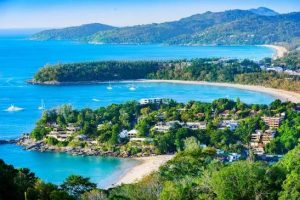
Flash floods recently inundated several areas of the island of Phuket in Thailand, one of the country’s major tourist destinations.
- Phuket Island is Thailand’s largest island and sits on the Andaman Sea, a marginal sea of the northeastern Indian Ocean.
- Located in southern Thailand, it lies off the country’s western coast.
- It is known as the “Pearl of the Andaman Sea”.
- It was settled as early as the 1st century BCE.
- Located on trading routes between India and China, Phuket was subjected to foreign influences long before many other parts of Thailand.
- Phuket first became part of a Thai state during the thirteenth century when Thai armies from Sukhothai wrestled control of the island from the Sirivijaya Empire based in Sumatra.
- Phuket is first mentioned as a major source of tin in the sixteenth century when the island became an important source of revenue for the Thai kingdom at Ayutthaya, as well as an important trading post.
- It was also during this period that the first Europeans arrived on Phuket.
- Due to Phuket’s abundant supply of tin and its importance as a trading port, the island’s economy continued to prosper.
- The British secured a tin mining concession and nearly claimed Phuket as part of the British Empire.
- The residents of Phuket comprise Thais who have migrated from the mainland, ethnic Chinese, Malays, and Chao Leh or ‘sea-gypsies’ who are the original inhabitants of Phuket.
- The island features a hilly and mountainous landscape, with forests and agricultural plantations covering parts of its interior.
- It is reached by bridge (Sarasin Bridge) from the mainland to the north across a narrow strait.
- Phuket city, located in the southeastern portion of the island, is a major port and commercial centre.
- The island has also become a major seaside resort.