
Today’s Current Affairs: 3rd Nov 2026 for UPSC IAS exams, State PSC exams, SSC CGL, State SSC, RRB, Railways, Banking Exam & IBPS, etc
Table of Contents
What is Psoriasis?
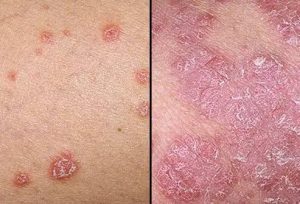
Patients with psoriasis have an increased risk for cataracts and cataract surgery, with the risks for these outcomes varying by treatment modality, according to a recent study.
- Psoriasis is a chronic autoimmune condition that causes the rapid buildup of skin cells.
- This buildup of cells causes scaling on your skin’s surface.
- It causes a rash with itchy, scaly patches, most commonly on the knees, elbows, trunk, and scalp.
- It can be painful, interfere with sleep, and make it hard to concentrate.
- The cause of psoriasis is not fully understood. It is believed to be caused by genetics, the immune system, and the environment.
- Psoriasis occurs because the overactive immune system speeds up skin cell growth.
- Normal skin cells completely grow and shed (fall off) in a month.
- With psoriasis, skin cells do this in only three or four days. Instead of shedding, the skin cells pile up on the surface of the skin.
- Treatment: It has no cure. Treatments aim to:
- reduce inflammation and scales;
- slow the growth of skin cells;
- remove plaques;
- Common psoriasis treatments include:
- Steroid creams.
- Moisturizers for dry skin.
- Medication to slow skin cell production (anthralin).
- Medicated lotions or shampoos.
- Vitamin D3 ointment.
- Vitamin A or retinoid creams.
What is Project 18A?

The Defence Acquisition Council (DAC), chaired by Defence, has recently accorded in-principle approval to the futuristic warships under Project 18A.
- Project 18A is the Indian Navy’s Next-Generation Destroyer (NGD) programme.
- The proposed programme aims to develop a new generation of stealth-guided missile destroyers.
- Conceived as a successor to the Visakhapatnam-class (P-15B) destroyers, the P-18 class destroyers are engineered to counter emerging threats — from anti-ship ballistic missiles to submarine warfare.
- It is overseen by the Indian Navy’s Warship Design Bureau (WDB) in collaboration with Mazagon Dock Shipbuilders Limited (MDL) and Garden Reach Shipbuilders & Engineers (GRSE).
- The P-18 will rank among the largest destroyers ever operated by the Indian Navy, significantly larger than the Visakhapatnam-class destroyers.
- Under international classification, warships above 10,000 tonnes fall into the cruiser category — a segment that India currently does not possess.
- Project 18 will mark India’s entry into this class of warships.
- The warships are expected to have nearly 75% indigenous content.
- It features Integrated Electric Propulsion (IEP).
- Cruising Range: 4,500 nautical miles at 18 knots; endurance 45+ days.
- One of the most notable features of the design is the planned incorporation of up to 144 vertical launch system (VLS) cells capable of firing a diverse range of missile systems, including
- the long-range BrahMos-NG (Next Generation) supersonic cruise missiles for anti-ship and land-attack roles,
- the Barak-8 ER (Extended Range) surface-to-air missiles with intercept capabilities beyond 150 km;
- and the upcoming LR-LACM (Long Range Land Attack Cruise Missile).
- For terminal defence, the ships will deploy four 30-mm rapid-fire CIWS and at least one high-energy laser-based directed-energy weapon for defeating UAV swarms and supersonic sea-skimming missiles.
- Anti-submarine warfare (ASW) capabilities include twin triple-torpedo launchers (Varunastra heavy torpedoes), rocket-assisted ASW mortars, and advanced towed-array sonar systems.
- Additionally, a 127-mm/62 caliber main gun (likely the Oto Melara or indigenous upgrade) provides naval gunfire support.
- The ships will be able to carry unmanned underwater vehicles and kamikaze drones, used for surveillance, detecting mines, and attacking submarines.
- It is also expected to feature an advanced sensor and radar architecture centred on long-range multi-domain tracking systems capable of detecting and tracking targets at distances of up to 500 kilometres.
- The stealth enhancements include an enclosed X-shaped mast, radar-absorbent materials, optimized hull form, and infrared signature suppression (IRSS) for exhaust systems.
Shey Phoksundo Lake:
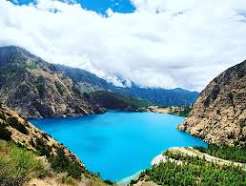
Six Indian tourists have gone missing during a trek to Nepal’s Shey-Phoksundo Lake recently, following heavy snowfall in the region.
- Shey Phoksundo Lake is an alpine freshwater oligotrophic lake located in the Dolpa district of Nepal.
- It sits at an altitude of 3,611 meters (11,849 feet) and covers an area of about 4.94 sq.km.
- The lake is believed to have been formed some 30,000–40,000 years ago.
- It is a landslide-dammed lake, formed when a massive mountain collapse blocked a river valley, resulting in the accumulation of water.
- It is the deepest lake in Nepal, with a reported maximum depth of approximately 145 metres.
- It has a distinctive Y-shaped appearance.
- The lake’s outlet forms Suligad Waterfall, also known as Phoksundo Waterfall, approximately 167 metres high, regarded as the highest waterfall in Nepal.
- Its clear, mineral-rich water glimmers in bright blue and turquoise, changing shades with the weather and time of day.
- It was designated a Ramsar site in 2007 and falls within Shey Phoksumdo National Park.
- The Dolpo people have lived around Shey Phoksundo Lake for generations and continue to practice the ancient Bon religion.
- Bon is one of the oldest spiritual traditions of Tibet, predating Buddhism for thousands of years.
- Ringmo village, with as many as 20 stupas and a Bon Gompa (temple) also named Ringmo, is located on the southern end of the lake.
- Both Bon and Tibetan Buddhism are practised in the region.
Gelephu Mindfulness City (GMC):

Bhutan’s King recently dedicated one of the 108 Buddhist stupas erected in a nine-hour construction feat to Prime Minister Narendra Modi as a mark of appreciation for India’s support for the country’s Gelephu Mindfulness City (GMC) project.
- Gelephu Mindfulness City (GMC) is a transformative project to create a new city in the foothills of the Himalayas in Bhutan.
- This visionary city aspires to redefine urban development by placing mindfulness, well-being, sustainability, and cultural integrity at its core.
- The GMC project has been envisioned by the King of Bhutan, Jigme Khesar Namgyel Wangchuck.
- Located in Bhutan’s southern plains bordering the State of Assam in India and spanning over 4,046 sq.km., or 10% of Bhutan, GMC was established by Royal Charter in February 2024 as a highly autonomous Special Administrative Region (SAR).
- Through this Royal mandate, GMC is accorded full executive and legislative powers, with an independent judiciary, to govern the SAR separate from the Royal Government of Bhutan.
- Under the direct guidance of the King, GMC will be run by global and local talents to build an advanced economy by adopting and adapting the best governing policies and business practices from around the world.
- The masterplan for “Gelephu Mindfulness City” shows a low- to-mid-rise metropolis built around a series of inhabitable bridges.
- Each of the bridges was designed to be combined with cultural, educational, recreational and infrastructure functions.
- Each bridge will “house” key features of the city: a new international airport, a university, a health-care facility for Eastern and Western medicine, a hydroponic greenhouse, a cultural center, a spiritual center, a market for local goods, and a hydroelectric dam, according to the plan.
- The planned city will have eleven “ribbonlike neighborhoods” that incorporate the area’s 35 rivers and streams.
- Neighborhoods will be designed like mandalas, with repeated patterns organized around a central public space.
- To protect against flooding, paddy fields will be built along the rivers, “forming urban terraces that cascade down from the hills to the valley,”. These will further function as biodiversity corridors for local flora and fauna.
- The GMC will have two protected areas – a national park and a wildlife sanctuary.
Exostoma nasibarbatum : New Species Catfish
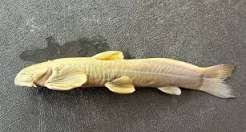
A new species of rare glyptosternine catfish, named Exostoma nasibarbatum, has been recently identified in Manipur.
- Exostoma nasibarbatum is a new species of catfish.
- It was discovered in Manipur, during a survey of the Bupal stream, a tributary of the Dujang River in the Chindwin river system along the Myanmar border.
- It inhabits fast-flowing, turbulent streams characterised by boulders and rocky substrates.
- The species has several morphological adaptations that enable it to survive in fast-flowing waters.
- These include a strongly flattened head and body, enlarged paired fins with adhesive striae, and flattened maxillary barbels that aid attachment to rocky substrates.
- The species has been named nasibarbatum in reference to its prominent nasal barbel, which extends beyond the posterior margin of the orbit.
- The name combines the Latin words nasus, meaning nose, and barba, meaning beard, referring to the elongated, tactile sensory organ located near the nostril.
- It belongs to the genus Exostoma.
- Exostoma is a genus of sisorid catfishes native to Asia.
- Sisorid catfishes are freshwater catfishes belonging to the family Sisoridae, under the order Siluriformes.
- 23 valid species are currently recognised within the genus, distributed across major river systems in Southeast Asia and the Indian subcontinent.
- Of these, seven are considered valid species in the Chindwin-Irrawaddy drainage.
Western Sahara : In News

The UN chief said that the 35-year-old UN peacekeeping mission in the Western Sahara region (MINURSO) will come to an end after the Security Council failed to renew its mandate.
- Western Sahara is a vast, sparsely-populated desert region in Northwest Africa.
- It is part of the Maghreb region of North and West Africa.
- It shares its land borders with Morocco and Algeria to the north and northeast respectively, and Mauritania to the east and south.
- It also has a long coast with the Atlantic Ocean in the West and Northwest.
- It is a region rich in phosphates and other minerals and has a lucrative fishing industry on its Atlantic coast.
United Nations Mission for the Referendum in Western Sahara (MINURSO):
- It was established in 1991 to support the settlement proposals and ceasefire reached by Morocco and Frente Polisario.
- Since the establishment of the Mission, MINURSO headquarters has been located in Laayoune, the main city in Western Sahara.
- It contributes to peace and stability in Western Sahara by monitoring, investigating and reporting on the ongoing situation, and working with the parties to reduce tensions as they arise.
Liberalised Remittance Scheme:

Outward remittances from India under the Reserve Bank of India’s (RBI) Liberalised Remittance Scheme (LRS) have crossed $20 billion during the first eight months of 2026.
- LRS is a scheme administered under the FEMA, 1999 framework and RBI directions.
- It was introduced on February 4, 2004.
- Remittance Limit: Under LRS, all resident individuals, including minors, are allowed to freely remit up to USD $250,000 per financial year (April–March).
- This can be for any permissible current or capital account transaction, or a combination of both.
- Only individual Indian residents, including minors, are permitted to remit funds under LRS.
- There is no restriction on the frequency or number of transactions during a financial year.
- Types of transactions permitted:
- Opening of a foreign currency account abroad with a bank;
- Acquisition of immovable property abroad, overseas direct investment (ODI), and overseas portfolio investment (OPI);
- Extending loans, including loans in Indian Rupees to non-resident Indians (NRIs) who are relatives as defined in the Companies Act, 2013;
- Private visits abroad (excluding Nepal and Bhutan);
- Maintenance of relatives abroad; Medical treatment abroad; Pursuing studies abroad;
- Types of transactions not permitted:
- Remittance for purposes specifically prohibited, such as buying lottery tickets or restricted items.
- Remittance for buying Foreign Currency Convertible Bonds (FCCBs) issued by Indian companies in the overseas secondary market.
- Sending money for trading in foreign exchange abroad.
- Sending money to individuals and entities identified as posing a significant risk of terrorism.
- Sending money to countries identified as “non-cooperative countries and territories” by the Financial Action Task Force (FATF).
National Programme for Dairy Development:

The Union Minister of Fisheries, Animal Husbandry and Dairying is set to inaugurate a microbiology laboratory for the Sikkim Milk Union under the National Programme for Dairy Development (NPDD).
- National Programme for Dairy Development is a Central Sector Scheme implemented by the Department of Animal Husbandry and Dairying (DAHD), Government of India.
- It was launched in 2014 and has been restructured/ realigned in July 2021 for implementation from 2021-22 to 2025-26 to strengthen dairy infrastructure and dairy cooperative systems.
- It aims to enhance quality of milk and milk products and increase share of organized procurement, processing, value addition and marketing.
- Nodal Ministry: Ministry of Fisheries, Animal Husbandry & Dairying
- Components of National Programme for Dairy Development
- Component A: It focuses on strengthening of infrastructure for quality milk testing equipment as well as primary chilling facilities for State Cooperative Dairy Federations/ District Cooperative Milk Producers’ Union/SHGs/Milk Producer Companies/Farmer Producer Organizations.
- Component ‘B’: It aims to increase sale of milk and dairy products by increasing farmer’s access to organized market, upgrading dairy processing facilities and marketing infrastructure and enhancing the capacity of producer owned institutions.
Tawang Monastery:

The sacred relics of Lord Buddha were accorded a traditional religious reception at the historic Gaden Namgyal Lhatse (Tawang Monastery).
- Tawang Monastery is located in the mountains of the eastern Himalayan range in Arunachal Pradesh.
- It is also known as Gaden Namgyal Lhatse which means “the divine paradise of complete victory”.
- It was founded in the 17th century by Merak Lama Lodre Gyatso.
- It is a magnificent example of Mahayana Buddhism and is the largest monastery in India.
- It is an important centre of monastic learning, religious practice and cultural continuity.
- The most imposing building of the monastery is the assembly hall known as Dukhang.
- The Dukhang is a three-storeyed assembly hall located on the northern side of the courtyard. It houses the temple and the Labrang, the establishment associated with the abbot.
- The inner walls of the Dukhang are painted with murals of various divinities and saints. The altar occupies the entire northern wall of the hall.
- On the left of the alter is the silver casket wrapped in silk containing the Thangkas of Goddess Sri Devi (Palden Lhamo) the principal deity of the monastery, which was given to Merak Lama by the 5th Dalai Lama.
- A colossal richly gilded statue of Lord Buddha occupies the middle of the northern side.
- It is seated on a lotus throne flanked by his two Principal attendants Maudgalyayana and Sariputra, each with a staff and begging bowl in hand.
Catch the Rain Campaign:

The Jal Sanchay Jan Bhagidari: Catch the Rain (JSJB: CTR) 2026 initiative has strengthened India’s community-led water conservation efforts, integrating rainwater harvesting, groundwater recharge and restoration of water bodies.
- The Jal Shakti Abhiyan: Catch the Rain (JSA: CTR) campaign was launched on 22nd March 2021, coinciding with World Water Day, under the theme “Catch the Rain, Where It Falls, When It Falls.”
- Builds upon the Jal Shakti Abhiyan, 2019, which covered 1,592 water-stressed blocks across 256 districts to promote water conservation and groundwater recharge.
- Promotes rainwater harvesting, groundwater recharge, rejuvenation of traditional water bodies, watershed development and afforestation through community participation.
- Objectives:
- Installation of rainwater harvesting systems, recharge pits and recharge shafts in residential, institutional and public spaces.
- Revival of traditional wells, baolis, ponds and abandoned borewells to strengthen groundwater recharge.
- Desilting of ponds and reservoirs to improve water storage capacity and monsoon water retention.
- Afforestation and catchment-area protection to enhance ecological resilience and water conservation.
- Promotes water conservation as a Jan Andolan (people’s movement) involving citizens, local governments, educational institutions and civil society organisations.
- Jal Shakti Kendras (JSKs): Function as district-level knowledge and facilitation centres, providing technical guidance and supporting local water conservation planning.
Jal Sanchay Jan Bhagidari:
- Jal Sanchay Jan Bhagidari 1.0 (2024) Implemented from April 2024 to May 2025, JSJB 1.0 promoted community-driven water conservation through locally appropriate groundwater recharge and water storage structures.
- Three Cs Approach: Based on Community, Corporate Social Responsibility (CSR) and Cost, encouraging public participation, private-sector contributions and low-cost interventions.
- Integrated resources from existing government schemes through a Whole-of-Government and Whole-of-Society approach.
- More than 10 lakh groundwater recharge structures were constructed, with over 27 lakh artificial recharge structures reported during the initiative.
- Jal Sanchay Jan Bhagidari 2.0 (2025)
- Launched on 1st June 2025, JSJB 2.0 expanded community-led water conservation efforts, particularly in over-exploited and critical groundwater districts.
- Emphasised low-cost, hyper-local groundwater recharge interventions, revival of water sources and community ownership.
- Outstanding contributions under JSJB 1.0 were recognised during the 6th National Water Awards in November 2025.
- Jal Sanchay Jan Bhagidari: Catch the Rain (2026)
- Launched on 1st June 2026, it integrates JSJB with the Jal Shakti Abhiyan: Catch the Rain campaign to strengthen water conservation and climate resilience.
- Mobilises resources from programmes such as VB-G RAM G, PM Krishi Sinchayee Yojana (PMKSY), CAMPA, Finance Commission Grants and State Government schemes.
- Local Participation: Involves Panchayati Raj Institutions, Urban Local Bodies, women’s groups, youth, educational institutions and civil society organisations in planning and implementation.
- Uses the JSJB: CTR Portal and mobile application to support transparency, progress monitoring and public feedback.
- Jal Shakti Abhiyan: Catch the Rain (JSA: CTR)
-
- Building on JSA 2019: The campaign builds on Jal Shakti Abhiyan 2019, which covered 1,592 water-stressed blocks across 256 districts and promoted water conservation and rainwater harvesting.
- It promotes rainwater harvesting, groundwater recharge, watershed development, rejuvenation of water bodies, afforestation and community participation through a Jan Andolan approach.
- The campaign has been implemented annually, with its themes and focus areas evolving over time.
India Poverty and Equity Brief (October 2026) : World Bank
The World Bank released the India Poverty and Equity Brief (October 2026), highlighting that India has achieved one of the fastest poverty reduction rates globally.
- However, while absolute monetary poverty has declined, critical macroeconomic vulnerabilities and structural inequalities threaten to undermine this progress.
- India has made significant progress, with 496 million people lifted out of poverty between 2011 and 2023, driven by economic growth, rising employment and social welfare schemes.
- Inequality, unemployment, agrarian distress and social exclusion continue to hinder poverty eradication, requiring inclusive growth, better human capital and equitable wealth distribution.
Key Findings of the India Poverty and Equity Brief:
- Between 2011 and 2023, the share of the population below the Lower Middle-Income poverty line ( USD 4.20/day) fell drastically from 57.7% to 16.1%, successfully lifting an estimated 496 million people out of poverty.
- Poverty decline is expected to slow down, with projections indicating a drop from 14.2% in 2026 to 12.1% by 2028 (at the USD 4.20 line).
- Extreme poverty (measured at USD 3.00/day) plummeted from 27.1% to 2.6%, leaving roughly 75.2 million people in extreme poverty by 2023.
- According to the Oxford Poverty and Human Development Initiative (OPHI), India’s Multidimensional Poverty Index (MPI) poverty rate declined from 53.8% (2005–06) to 16.4% (2019–21).
- The World Bank’s MPI estimated it at 15.5% in 2022–23.
- A contiguous belt of states stretching from Uttar Pradesh to West Bengal accounts for about 57% of India’s remaining poor.
- National poverty eradication heavily depends on generating productive employment in this specific region.
- Most of the poor remain in rural areas, where poverty sits at 19.3% compared to 8.6% in urban areas, largely due to a lack of non-farm job opportunities and low productivity.
- Poverty is highest among children aged 0–14 (21.8%), followed by females (16.6%).
- Poverty affects 21.3% of those with no education, but only 7.4% of those with tertiary education.
- The report highlights a stark wage disparity, with the median earnings of the top 10% of workers being 13 times that of the bottom 10%. The Gini index stands at 23.0 (2023).
- Progress was primarily driven by strong domestic consumption growth, rising employment (particularly among rural women), and expanded government social transfers like food subsidies.
2 Years of Ayushman Vay Vandana Initiative:
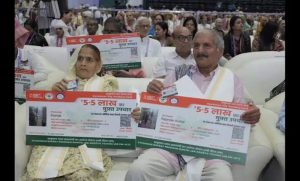
The Ayushman Vay Vandana initiative completed two years, recording 23.46 lakh authorised hospital admissions worth ₹5,668.80 crore as of October 2026.
- The Ayushman Vay Vandana initiative, launched on 29th October 2024, extends the benefits of Ayushman Bharat–Pradhan Mantri Jan Arogya Yojana (AB PM-JAY) to all senior citizens aged 70 years and above, irrespective of their socio-economic status.
- Implemented by the National Health Authority (NHA) under the Ministry of Health and Family Welfare, aiming to strengthen healthcare access and financial protection for the elderly.
- Provides health coverage of up to ₹5 lakh per family annually for secondary and tertiary care hospitalisation, benefiting approximately 6 crore senior citizens across 4.5 crore families.
- Senior citizens aged 70 years and above belonging to families already covered under AB PM-JAY receive an additional ₹5 lakh annual top-up cover, exclusively for themselves, separate from the existing family coverage.
- Ayushman Vay Vandana Card: Eligible senior citizens receive a distinct Ayushman Vay Vandana Card, with Aadhaar-based e-KYC mandatory for enrolment.
- Registration is available through the Ayushman App and the AB PM-JAY beneficiary portal.
- Existing Health Insurance: Senior citizens covered under government schemes such as CGHS, ECHS and CAPF can choose between their existing scheme and AB PM-JAY.
- Those with private health insurance or Employees’ State Insurance (ESI) are also eligible.
- Promotes inclusive and cashless healthcare, reduces out-of-pocket hospitalisation expenses and strengthens financial security and dignity among elderly citizens.