
Today’s Current Affairs: 19th Nov 2026 for UPSC IAS exams, State PSC exams, SSC CGL, State SSC, RRB, Railways, Banking Exam & IBPS, etc
Table of Contents
Paradip Port:
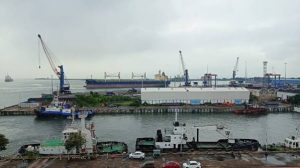
Paradip Port Authority (PPA) successfully carried out a maritime assistance and salvage operation involving the distressed vessel MV Vishva Uday, carrying 27 crew members, approximately 50 nautical miles off Paradip Port.
- Paradip Port is situated in Paradip, Jagatsinghpur district, Odisha,
- It is one of the major ports of India and the only major port in the State of Odisha.
- It was designated as a “Mega Port” under the Indian Ports Act, 2025, making it the only Mega Port on India’s eastern coast among the four ports notified.
- It is situated on the Bay of Bengal on the delta of the Mahanadi River at the mouth of one of its branches.
- Paradip port enjoys the advantages of soft underwater soil, so that it can be deepened to any depth depending upon the need.
- It is strategically situated so as to serve a vast hinterland spreading over the states of Odisha, Jharkhand, Chhattisgarh, Madhya Pradesh, Uttar Pradesh, Bihar, and West Bengal.
- It handles various dry and liquid bulk cargo, steel products, project cargo, and containers.
- It is managed by the Paradip Port Authority (PPA), an autonomous body under the Ministry of Ports, Shipping & Waterways.
- It has a dedicated railway siding that connects it with the main railway network of India.
- It has handled its highest ever Annual Traffic throughput of 45 MMT in 2025-26. It has become 2nd Major Port among all Major ports in terms of cargo volume.
LineShine Supercomputer:

China’s LineShine supercomputer retained its top spot in the list of the world’s most powerful supercomputers, whose latest edition was released at the SC26 conference in Chicago recently.
- LineShine Supercomputer is a Chinese supercomputer installed at the National Supercomputing Center in Shenzhen, South China’s Guangdong Province.
- It was developed by the Shenzhen Cloud Computing Center.
- It is the world’s fastest supercomputer.
- It has topped the latest TOP500 rankings, outperforming its closest rival in the United States.
- It first took the top spot in June, when China returned to number one after a nine-year gap.
- Released twice a year, the TOP500 ranks the world’s most powerful supercomputers using the Linpack benchmark, which measures how quickly they solve complex mathematical calculations.
- LineShine achieved more than 2.19 exaflops, or over two quintillion calculations every second, about 21% faster than the runner-up, the United States’ El Capitan.
- It is based on China’s indigenous LingKun computing platform.
- Unlike most modern supercomputers, LineShine does not rely on separate graphics processing units (GPUs), which have become essential for artificial intelligence workloads.
- Instead, the Chinese system combines traditional computing and AI capabilities within the same architecture using nearly 14 million processing cores and specialised computing units.
- LineShine draws approximately 42.2 megawatts of power, for an efficiency of 52.07 Gigaflops/Watt.
What is Voyager 1?
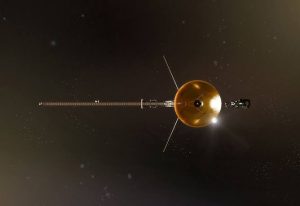
NASA’s Voyager 1 is set to cross a historic threshold in space exploration as it is about to become humanity’s first object to reach one light-day from Earth.
- Voyager 1 is a space probe launched by NASA in 1977.
- Objective is to explore the outer planets in our solar system.
- It is the first spacecraft to travel beyond the solar system and reach interstellar space.
- It is currently the most distant human-made object from Earth.
- Voyager 1’s mission has included flybys of Jupiter and Saturn, with the goal of studying their moons, rings, and magnetic fields.
- Instruments of Voyager 1: Cosmic Ray Subsystem, Plasma Wave Subsystem, Infrared Interferometer Spectrometer and Radiometer (IRIS), etc.
- Voyager 1 continues to communicate with NASA using its radio transmitter and the agency’s Deep Space Network.
- The network uses powerful radio antennas located in California, Spain and Australia to communicate with distant spacecraft.
- Voyager 1’s power supply is gradually declining. It relies on radioisotope thermoelectric generators, which produce electricity using heat released by the radioactive decay of plutonium-238.
- Key Achievements:
- It discovered a thin ring around Jupiter and two new Jovian moons: Thebe and Metis.
- It also found five new moons and a new ring called the G-ring at Saturn.
- Its discoveries included active volcanic eruptions on Jupiter’s moon Io, providing the first evidence of active volcanism beyond Earth.
- After completing its planetary exploration, the spacecraft continued travelling towards interstellar space.
- It was the first spacecraft to cross the heliosphere, the boundary where the influences outside our solar system are stronger than those from our Sun.
- It crossed into interstellar space in August 2012, making it the first human-made object to venture out of the solar system.
- It continues to travel through interstellar space, collecting scientific measurements and transmitting valuable information to Earth.
Rooppur Nuclear Power Plant: In News

Bangladesh’s Rooppur Nuclear Power Plant recently began supplying electricity on a trial basis after successfully completing synchronisation with the national grid.
- Rooppur Nuclear Power Plant is a 4-gigawatt power plant located in Rooppur on the east side of the river Padma, near Ishwardi in the Pabna district of Bangladesh.
- Being built with Russian support, it is the first nuclear power plant in Bangladesh.
- The project is being implemented by the Bangladesh Atomic Energy Commission (BAEC).
- This plant uses the process of nuclear fission to generate electricity.
- It features two third-generation VVER-1200 reactors being built by the Russian State Atomic Energy Corporation, Rosatom, whose construction began in November 2017.
- VVER-1200 is a Russian-designed pressurized-water reactor.
- The construction is largely funded by a loan from Russia, to be paid back over 20 years.
- Indian companies are also participating in the construction of the plant.
- It will meet around 10–12 percent of Bangladesh’s power demand.
Salvadora Alii:

Forest scientists have recorded the presence of a third species, ‘Salvadora Alii’, in the state for the first time.
- Salvadora Alii is an evergreen, highly versatile tree, prized for its delicious, juicy fruits.
- It is known locally as ‘Meetha Jaal’ and ‘Khari Jaal in Rajasthan.
- It is known as pilu or khabbar (and sometimes called the white-berry toothbrush tree).
- It is a species of flowering plant in the family Salvadoraceae.
- It thrives in arid and semi-arid regions, often found in dry bushland, rocky slopes, and open woodlands.
- The plant is well-adapted to survive in areas with low rainfall and high temperatures.
- It is distinguished by its white, juicy, ripe fruits, whereas the two previously known species in Rajasthan bear pinkish-red fruits.
- It was has previously been documented in Gujarat, Madhya Pradesh, Maharashtra and Uttar Pradesh.
Andaman Cobra:
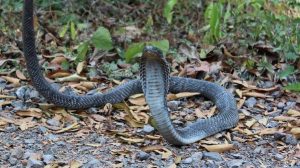
The Andaman cobra is highly venomous and, on top of that, is capable of spitting venom as a defence mechanism, raising the probability of people killing it out of fear.
- The Andaman cobra, also known as the Andaman spitting cobra, is a venomous snake native to India.
- It is one of the rarest and least-studied cobra species in the world.
- Scientific Name: Naja sagittifera
- It is endemic to the Andaman and Little Andaman Islands of India.
- It is mainly seen in dense rainforests and undisturbed forest areas.
- Conservation Status:
- IUCN Red List: Endangered
Exercise JAIMEX:
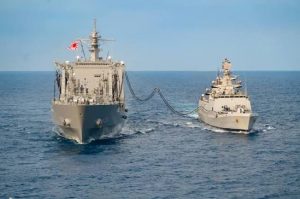
Indian Naval Ship Sahyadri participated in the bilateral naval exercise JAIMEX 2026.
- Exercise JAIMEX is a bilateral naval exercise conducted between India and Japan.
- It provided an opportunity for both navies to undertake coordinated maritime engagements and strengthen operational cooperation.
- Participated by: INS Sahyadri alongside JMSDF Ship JS Ise
- It involved communication drills and cross-deck landings, providing valuable opportunities for both navies to practise coordinated operations and enhance their understanding of each other’s procedures and capabilities.
- The engagements focused on strengthening operational coordination and interoperability, improving fostering mutual understanding between the participating units.
- The exercise also provided an opportunity to exchange professional experiences and reinforce established Navy-to-Navy cooperation.
- It contributes to strengthening mutual trust, enhancing operational familiarity and advancing cooperation in the maritime domain.
- Other bilateral exercises between India and Japan: Malabar exercise (Naval Exercise), ‘Veer Guardian’ (Air Force), and Dharma Guardian (Army).
UN Water Conference, 2026:

The Embassy of the UAE in New Delhi recently convened the UAE-India Water Roundtable ahead of the 2026 UN Water Conference.
- UN Water Conference, 2026 will take place from 8 to 10 December 2026 in Abu Dhabi, United Arab Emirates (UAE).
- It will be co-hosted by the Republic of Senegal and the
- It aims to accelerate implementation of Sustainable Development Goal 6 (SDG 6) on water and sanitation, strengthen global water governance, and further elevate water-related issues on the international agenda.
- It will build on momentum from the UN 2023 Water Conference in New York, which was the first UN conference dedicated to water in nearly 50 years.
- It is expected to bring together governments, the UN system, and stakeholders from across sectors to advance action on water and sanitation.
- The theme for 2026 is “Delivering the Water Action Agenda: From Commitments to Action”, with a focus on scalable, measurable, and concrete solutions.
- The 2026 UN Water Conference will feature plenary sessions and six interactive dialogues on the following themes:
- Water for People
- Water for Prosperity
- Water for Planet
- Water for Cooperation
- Water for Multilateral processes
- Investments for water
Revised Maritime Flag Rules:
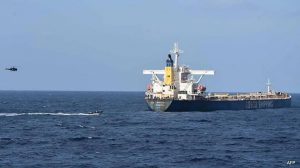
India recently introduced a new set of rules governing the flags flown by Indian ships at sea, replacing a notification that had remained in force for more than six decades.
- The new rules have been notified under Section 37(1) of the Merchant Shipping Act, 2025.
- With the new notification, the Centre has replaced the maritime flag framework that had governed Indian vessels since 1961.
- The new rules establish separate flag requirements for merchant ships, government-owned vessels, and ships operating exclusively for the Ministry of Defence.
- However, actions already taken under the earlier notification will continue to remain valid.
- Revised Rules for Indian Merchant Ships:
- All Indian merchant vessels registered under the Merchant Shipping Act, 2025, will be required to fly the Red Ensign.
- The flag will be red, with the Indian National Flag placed in the upper canton, the area closest to the flagstaff.
- Its length will be one and a half times its width, in accordance with the Flag Code of India, 2002.
- Revised Rules for Government-Owned Vessels:
- They will fly the Blue Ensign, irrespective of whether they are registered under the Merchant Shipping Act, 2025.
- These vessels will carry the official badge of the government department, authority, or organisation that owns them.
- However, the provision specifically excludes ships belonging to the Indian Navy and the Indian Coast Guard.
- The government has also laid down rules for the use of official badges on the Blue Ensign.
- Any new badge will require prior approval from the Centre, with applications routed through the Director General of Maritime Administration.
- Organisations already using an approved badge will be allowed to continue with it.
- Revised Rules for Merchant Vessels Operating Exclusively for the Defence Ministry:
- A separate category has been created for Indian merchant vessels that receive financial assistance from the Ministry of Defence and operate exclusively for the ministry.
- These vessels will also be required to fly the Blue Ensign instead of the Red Ensign.
- However, their badges will need to be authorised through a Warrant issued by the Chief of the Naval Staff.
- Applications for such approval will have to be submitted directly to the Naval Chief.
- Specifications for the Blue Ensign:
- The flag will have a royal blue background, with the Indian National Flag positioned in the upper canton.
- The badge, in light golden colour, will be placed at the centre of the fly half of the flag, the portion farthest from the flagstaff.
- The badge must fit within a circular area whose diameter cannot exceed 13/30th of the flag’s width.
Section 37 of the Merchant Shipping Act, 2025:
- Section 37 of the Merchant Shipping Act, 2025, empowers the Central Government to notify the appropriate national colours for Indian vessels and government-owned ships, including different flags for different categories of vessels.
- The provision also requires registered Indian vessels to hoist their prescribed national colours when signalled by an Indian Navy or Coast Guard vessel, as well as when entering or leaving a port.
- It further authorises commissioned Navy officers, Coast Guard officers, surveyors and Indian ambassadors to board vessels flying colours in violation of the Act and seize such flags, which can be forfeited to the government.
- The law also prohibits foreign vessels from using Indian national colours to falsely present themselves as Indian ships, except in specific circumstances involving escape from capture during hostilities.
RudraM-II Missile:
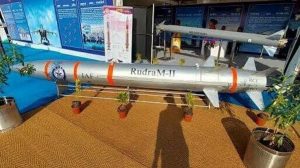
Adani Defence and Aerospace (a production partner) recently said that the RudraM-II, an indigenous air-to-surface missile developed by the DRDO, is nearing production clearance and will soon be prepared for the export market.
- It is an indigenously-developed solid-propelled air-to-surface missile system.
- It has been indigenously developed by Research Centre Imarat, Hyderabad as the nodal DRDO laboratory in collaboration with other sister labs.
- It is designed primarily for Suppression of Enemy Air Defences (SEAD) and Destruction of Enemy Air Defences (DEAD) missions.
- It can reach a peak speed of Mach 5.5.
- It is capable of striking targets at a distance of approximately 300 km.
- It can be deployed from aircraft like Sukhois flying at altitudes ranging from 3 to 15 km.
- It acts as a key force multiplier and intends to eventually replace the older Russian-origin Kh-31 anti-radiation missiles.
- It uses a hybrid navigation system combining an inertial navigation system, GPS and a sophisticated passive homing head that detects radio frequency emissions across a wide frequency band.
Macromitrium Nelliampathyanum:
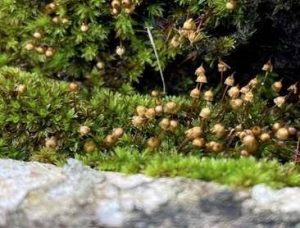
An international team of botanists has discovered a brand-new species of moss and named it as Macromitrium nelliampathyanum.
- Macromitrium Nelliampathyanum is a new moss species discovered in Keralam.
- It belongs to the genus Macromitrium, a diverse family of mosses typically found draping trees and rocks across tropical regions.
- The species has been named Macromitrium nelliampathyanum directly in honour of its type locality, the Nelliampathy Hills.
- When dried out, its narrow leaves curl and twist dramatically along their midribs.
- When reproducing, the moss produces a tiny, globe-like spore capsule topped with a pleated hood that bears a few hairs at its tip.
- It also demonstrates true anisospory, meaning a single capsule produces spores in two distinctly different size classes.
International Coconut Community:
India is hosting the 62nd Session and Ministerial Meeting of the International Coconut Community (ICC) at Kochi, Kerala.
- International Coconut Community was established in 1969 under the aegis of the United Nations Economic and Social Commission for Asia and the Pacific (UN-ESCAP).
- It is an inter-governmental organisation comprising of coconut-producing countries.
- It provides a common platform for member countries to deliberate on issues concerning the development of the global coconut sector, promote cooperation and partnerships, and explore opportunities for the sustainable growth of the coconut industry.
- It facilitates measures to increase global coconut production and productivity.
- It collaborates with existing international bodies to reduce trade barriers and restrictions.
- It facilitates training of member countries on relevant aspects of coconut development.
- It harmonizes quality standards for coconut products and assist members to meet these standards.
- It assists member countries mobilize resources by linking them with potential donor institutions as needed.
- It currently has 21 coconut producing member countries accounting for over 90 percent of world coconut production and exports of coconut products.
- India is also a member country of this organization
- The ICC Secretariat is located in Jakarta, Indonesia.