
Today’s Current Affairs: 18th Nov 2026 for UPSC IAS exams, State PSC exams, SSC CGL, State SSC, RRB, Railways, Banking Exam & IBPS, etc
Table of Contents
Adi Vaani: In News

Adi Vaani has established an initial digital foundation for tribal languages through translation tools, educational resources and community-generated language data.
- Adi Vaani is India’s first AI-powered translator for tribal languages.
- It is designed to bridge communication gaps between tribal and non-tribal communities, while safeguarding endangered tribal languages using advanced Artificial Intelligence (AI).
- It was developed by a national consortium led by IIT Delhi, along with BITS Pilani, IIIT Hyderabad, IIIT Nava Raipur and the Tribal Research Institutes (TRIs) of Jharkhand, Odisha, Madhya Pradesh, Chhattisgarh and Meghalaya.
- AI Language Models: Refined deployment of models such as No Language Left Behind (NLLB) and IndicTrans2 for low-resource tribal languages.
- It aims to:
- Enable real-time translation (text and speech) between Hindi/English and tribal languages.
- Provide interactive language learning for students and early learners.
- Digitally preserve folklore, oral traditions, and cultural heritage.
- Support digital literacy, healthcare communication, and civic inclusion in tribal communities.
- Awareness of the government schemes and important speeches
- Features:
- Audio files to Text: It transcribes live speech or audio files into text and translates into indigenous languages instantly.
- Speech to speech Translation: Speak or upload speech in English or Hindi and listen to real-time voice translation in Santali, Mundari, or Bhili.
- Text-to-text translation: Translation between supported tribal languages and languages such as Hindi and English.
- Speech-to-text: Converts spoken words into text, supporting oral-language documentation.
- Speech-to-speech translation: Translates speech by linking speech recognition, translation and speech synthesis.
- Optical Character Recognition (OCR): Extracts text from images and scanned documents for translation.
- Video subtitling: Supports translation of video content and public information into tribal languages.
- Digital dictionaries and primers: Provide vocabulary, meanings and basic learning resources.
Climate Change Performance Index 2027:
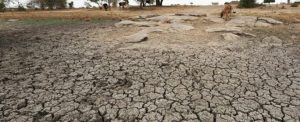
India has been ranked 28th in the recent Climate Change Performance Index 2027.
Climate Change Performance Index:
- It tracks the progress of the world’s largest emitters in terms of emissions, renewables, and climate policy.
- It was first published in 2005.
- CCPI 2027 covers 64 countries and the EU, which together produce over 90% of global greenhouse gas emissions.
- Uses 14 indicators in four categories: Greenhouse Gas Emissions, Renewable Energy, Energy Use and Climate Policy. Around 500 climate and energy experts contribute to the policy assessment.
- Main objective is it Identifies countries making progress and those falling behind, and checks whether national actions align with the Paris Agreement goal of limiting warming to 1.5°C.
- It is published by think tanks German watch, New Climate Institute, and Climate Action Network International.
Key Highlights of Climate Change Performance Index 2027
- Top three ranks vacant: No country achieved a ‘Very High’ rating, showing that even the best performers are not meeting Paris Agreement goals.
Denmark (4th, 84.05 points): Top-ranked for the sixth consecutive year, driven by emission cuts and renewable energy progress. - G20 performance: The UK is the only G20 country with a ‘High’ rating, while ten G20 countries are rated ‘Very Low’.
- India (28th, ‘Medium’): Down five places from 23rd (CCPI 2026) and 10th (CCPI 2025).
- European Union (19th, ‘Medium’): Up one place. France (20th) and Germany (25th) are also in the medium category.
- Lowest ranked: Iran (68th), USA (67th), Russia (66th), Saudi Arabia (65th), UAE (64th), all due to fossil fuel dependence.
12th Session of the India–Belarus Inter-Governmental Commission:
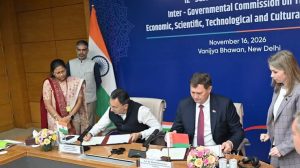
The 12th Session of the India–Belarus Inter-Governmental Commission on Trade, Economic, Scientific, Technological and Cultural Cooperation was held in New Delhi.
- It is a landlocked country located in Eastern Europe.
- It is bordered by Russia in the north and east; by Ukraine in the south; by Poland in the west; by Lithuania and Latvia in the northwest.
- Capital City: Minsk
- Geographical Features of Belarus:
- Terrain: Much of the country consists of flat lowlands separated by low level-topped hills and uplands. About 40% of the country is forested.
- Climate: It has a cool continental climate moderated by maritime influences from the Atlantic Ocean.
- Rivers: It is mainly drained by the river Dnieper and Mukhavyets, a tributary of the Bug (Buh) River, which forms part of the border with Poland and flows to the Baltic Sea.
What is Geran-5?
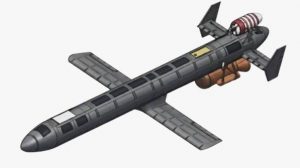
Russia began using a variant of its Geran-5 drone known as the K5-K to attack Ukrainian cities, the GUR, Kyiv’s military intelligence agency, said recently.
- Geran-5 is a Russian jet-powered one-way attack drone built in the shape of a small cruise missile.
- It is powered by a turbojet engine and has a conventional aircraft configuration.
- It has a cruising speed of 450–600 km/h, a range of about 950 kilometers and can reach an altitude of up to 6 kilometers.
- It features an autonomous optical navigation system and a modified fuselage design.
- It is equipped with an electro-optical correction system that allows it to navigate using images of the ground surface.
23rd ASEAN-India Summit and 21st East Asia Summit:
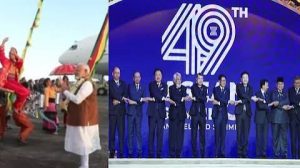
The Prime Minister of India visited Manila, Philippines, to participate in the 23rd ASEAN-India Summit and the 21st East Asia Summit (EAS). The visit highlighted India’s strategic commitment to the region, reinforcing the centrality of the Association of Southeast Asian Nations (ASEAN) in India’s Act East Policy and its broader Indo-Pacific vision.
Key Highlights of the ASEAN Summits:
- 23rd ASEAN-India Summit , India emphasized that the ASEAN Community Vision 2045 and India’s Viksit Bharat 2047 framework are deeply aligned to meet the shared aspirations of the region.
- Reaffirming support for ASEAN’s unity and centrality, India advocated for a free, open, inclusive, and rules-based Indo-Pacific, emphasizing that the region’s future depends on “cooperation, and not competition.”
- The summit witnessed the adoption of the ASEAN-India Joint Statement on Disaster Preparedness and Management 2026, a crucial step toward enhancing regional resilience.
- Cooperation will involve the ASEAN Committee on Disaster Management (ACDM), ASEAN Coordinating Centre for Humanitarian Assistance on Disaster Management (AHA Centre) and India’s National Disaster Management Authority (NDMA).
- India and ASEAN announced a long-term Maritime Cooperation Plan covering maritime connectivity, scientific research, disaster management, Coast Guard cooperation, maritime domain awareness and seafarers’ safety.
- A Joint Cyber Forensics Training Programme and ASEAN–India Nuclear Energy Technical Exchanges were announced to strengthen cybersecurity capabilities and technical cooperation.
- An ASEAN–India Space Hackathon was announced to promote space innovation, alongside cooperation in mining and critical minerals to strengthen supply-chain resilience.
- The ASEAN–India Youth Connect initiative will include a Youth Summit, young parliamentarian exchanges and start-up hackathons, alongside enhanced scholarships for ASEAN students at Nalanda University.
- An ASEAN–India Creative Partnership Pavilion will be established at WAVES 2027 to strengthen creative and cultural exchanges.
- India has proposed granting free electronic tourist visas (e-Visas) to citizens of all 11 ASEAN member states to strengthen tourism and regional ties.
- 21st East Asia Summit (EAS)
- The 21st East Asia Summit (EAS) Declaration, adopted in Manila, Philippines, underscores a collective commitment to reinforcing ASEAN centrality, upholding multilateralism based on international law to ensure regional peace and prosperity.
- ASEAN Centrality & Rule of Law: Reaffirms ASEAN as the anchor of the regional architecture through the ASEAN Outlook on the Indo-Pacific (AOIP), mandating the peaceful settlement of disputes governed by the UN Charter and the Treaty of Amity and Cooperation (TAC).
- Maritime Security & Economic Resilience: Upholds the freedom of navigation and lawful commerce under UNCLOS, while prioritizing the protection of critical marine infrastructure and the resilience of regional supply chains (especially critical minerals and energy corridors).
- Digital Economy & AI Governance: Highlights the need for secure technological advancements via the ASEAN AI Safety Network and guidelines on Generative AI Governance, actively combatting transnational cybercrimes like online scams and human trafficking.
- Inclusive Development & Disaster Resilience: Focuses on narrowing regional development gaps via the Initiative for ASEAN Integration (IAI) Work Plan V (2026-2030), protecting the rights of migrant workers, and deploying multi-hazard early warning systems for climate and disaster risk reduction.
- ASEAN’s Denunciation: Condemned military violence against civilians in Myanmar and urged implementation of the 2021 Five-Point Consensus, calling for cessation of violence, inclusive dialogue and unhindered humanitarian assistance.
- India supports democratic transition and ASEAN’s Five-Point Consensus while maintaining engagement with the junta to safeguard border security and counter adversarial influence.
- India at 21st East Asia Summit (EAS): India articulated a vision for the Indo-Pacific rooted in Peace, Prosperity, and Predictability.
- Four Key Initiatives Announced: To strengthen institutional cooperation across the EAS platform, India proposed:
- Seafarers’ Safety Initiative: For joint training and emergency response.
- EAS Cyber Crime Conference: To be held at the National Forensic Sciences University, focusing on cross-border digital threats.
- EAS Maritime Heritage Festival: To be organised at Lothal, Gujarat, where the National Maritime Heritage Complex (NMHC) is being developed, to highlight the region’s shared maritime history.
- EAS University Heads Conclave: India will host the conclave at Nalanda in 2027 to strengthen academic cooperation and institutional research partnerships.
Relocation of the ‘Dancing Girl’ to Yuge Yugeen Bharat Museum:
The iconic 4,500-year-old bronze ‘Dancing Girl’ of Mohenjo-daro along with the Nizam’s jewels, Taxila jewellery and Gandhara sculptures, is set to be relocated from the National Museum to the upcoming Yuge Yugeen Bharat Museum in New Delhi.’Dancing Girl’ of Mohenjo-Daro: It is one of the highly celebrated artifacts of the Indus Valley Civilization (IVC), showcasing the socio-cultural life and metallurgical brilliance of the era.The sculpture was excavated in 1926 by British archaeologist Ernest Mackay in the “HR area” of Mohenjo-daro (present-day Pakistan).It dates back to approximately 2500 BCE (Mature Harappan Phase).It is a diminutive bronze figurine, measuring merely 10.5 cm in height.It was crafted using the Lost-Wax Casting technique (also known as Cire Perdue).This complex metallurgical process involves making a wax model, covering it with clay, heating it to melt the wax, and pouring molten bronze into the hollow clay mold.The figurine is entirely nude except for her jewelry. Her left arm is entirely covered with bangles (made of bone, ivory, or metal), and wears a necklace with four pendant-like ornaments and has elaborately styled hair.It challenges the notion that Harappan society was purely utilitarian.The figurine provides evidence of the Harappans’ artistic skills, jewellery traditions and aesthetic sensibilities. Its posture has traditionally been interpreted as suggestive of dance, although its precise identity and purpose remain uncertain.
8th India–Myanmar Naval Exercise (IMNEX-26):
The 8th edition of the India–Myanmar Naval Exercise (IMNEX-26) was conducted at Visakhapatnam, Andhra Pradesh, concluding successfully after the completion of its Harbour and Sea Phases.Harbour Phase: Included Subject Matter Expert Exchanges (SMEEs), cross-deck visits, professional interactions and sporting activities to promote operational knowledge-sharing.Sea Phase: Conducted in the Bay of Bengal, involving coordinated maritime manoeuvres and operational drills to improve tactical coordination.Primary Objectives: Strengthen naval interoperability, operational coordination, mutual understanding and familiarity with maritime procedures.
Bilateral Cooperation: Reinforces India–Myanmar naval engagement and promotes maritime cooperation in the strategically important Bay of Bengal region.
Strategic Alignment: The exercise supports India’s Neighbourhood First Policy and MAHASAGAR vision (Mutual and Holistic Advancement for Security and Growth Across Regions).
Participating Naval Ships:
- Indian Navy: INS Rana and INS Sumedha.
- Myanmar Navy: UMS King Sin Phyu Shin.