
Cassava Brown Streak Disease:
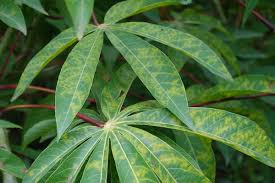
A study warns that more than a third of Africa is at risk of Cassava Brown Streak Disease.
- It is a devastating disease that causes loss of cassava root (tuber) production and quality.
- It is caused by two types of virus, Cassava Brown Streak Virus (CBSV) and Ugandan Cassava Brown Streak Virus (UCBSV).
- It was first identified in Africa in the coastal region of East Africa close to the mid-20th century.
- Its presence has now been confirmed in several eastern, central and southern African countries, including Tanzania, Uganda, Kenya, Rwanda, Burundi, Congo, the DRC, South Sudan, Malawi and now Zambia.
- It is primarily spread by the whitefly Bemisia tabaci, a pest that exists as a complex of genetically distinct groups.
- It spreads through particular whitefly populations in sub-Saharan Africa, known as Sub-Saharan Africa 1 and 2, are highly efficient at transmitting the virus.
- Symptoms of Cassava Brown Streak Disease:
- Symptoms of Cassava brown streak disease can be observed on leaves, stems and cassava roots
- Typical CBSD symptoms are leaf chlorosis, brown streaks on stems and dry hard rot in roots which affects both the quality and quantity of edible storage roots.
- The disease causes necrosis in the roots of infected plants, often leading to total crop loss.
- It is observed that weak clean-seed systems, whitefly transmission and climate pressures accelerating spread of Cassava Brown Streak Disease.
- Management of CBSD: Planting of clean cassava cuttings is the main way of controlling CBSD.
- Use of resistant varieties is the most sustainable way of controlling CBSD.



