
Eyespots in Marine Animals:
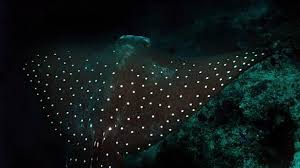
A recent study published in the journal Nature explains the evolutionary reasons behind the presence of “eyespots” in marine animals like skates and rays, used as a defence against predators.
- Eyespots are conspicuous, eye-like circular markings found on some animals that act as a visual defence mechanism by confusing, intimidating, or deterring predators.
- Eyespots are predominantly found in species lacking strong physical defences (like venom or electric organs) and are more common in smaller marine species inhabiting shallow, well-lit waters (less than 200 m depth).
- They are commonly seen in butterflies, birds, and certain marine species.
- Evolutionarily, they develop gradually from simple markings into complex concentric-ring patterns, indicating adaptive progression over time.
- Eyespots are part of the evolutionary arms race between predator and prey and represent one of many defence strategies alongside mechanical, chemical, behavioural, and visual adaptations.
- Their effectiveness depends on ecological conditions, particularly visibility in bright, shallow environments where visual signals are more impactful.
- Skates and rays belong to the superorder Batoidea, a group of cartilaginous fishes with over 600 described species, closely related to sharks and often sharing coastal and shelf habitats with them and with marine mammals.