
GPS Tracking of Elephants in Assam:
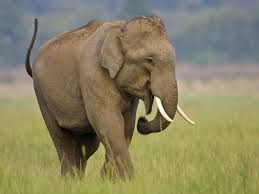
The Assam Forest Department and World Wide Fund for Nature–India (WWF-India) released Tracking the Giants: Movement and Habitat-Use Patterns of GPS-Collared Elephants in Assam during the 72nd Wildlife Week.
- The study underscores the need to strengthen conservation of the Asian elephant amid rising habitat fragmentation and human-elephant conflict.
- Asian Elephants
- India is home to more than 60% of the global wild Asian elephant population.
- Over half of India’s elephants reside in the Western Ghats. State-wise, Karnataka has the highest elephant population, followed by Assam and Tamil Nadu.
- India released its scientific baseline DNA-based All India Elephant Estimation (SAIEE), marking a major shift from traditional visual counts.
- Asian elephants receive Schedule I protection under the Wild Life (Protection) Act, 1972.
- The mainland Asian elephant was added to Appendix I of the Convention on Migratory Species (CMS) at the CMS COP13 summit in Gandhinagar, India.
- Conservation Projects & Frameworks
- Project Elephant: Launched in 1992 to conserve elephants, habitats and corridors and mitigate human-elephant conflict (HEC).
- Elephant Reserves: India has 33 notified Elephant Reserves across 14 states, including Singhbhum (first), Terai and Agasthyamalai.
- MIKE Programme: A CITES-linked monitoring system tracking illegal elephant killings and population trends.
- Gajraj: Refers to an AI-based railway safety system for detecting elephants near railway tracks.
- Elephants modify habitats, disperse seeds, create water sources and open dense vegetation, supporting wider ecosystem health



