
Guggal Plant:
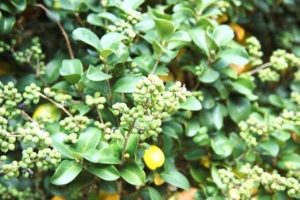
A Kutch-based non-profit is planting Khara and Mitha Guggal across five villages to restore native medicinal heritage and biodiversity on community grazing lands.
- Guggal Plant is a spiny shrub or small tree belongs to Burseraceae family.
- It is native to India, Arabia and Pakistan.
- In India, it is found in the arid, rocky tracts of Rajasthan, Gujarat, Madhya Pradesh and Karnataka in India.
- The plant prefers arid and semi-arid climates and is tolerant of poor soil.
- It grows well in sandy to silt loam soils, which are poor in organic matter and rich in other matters and also considered as drought and salinity resistant plant.
- Gum guggul is used as incense, to make lacquers, varnishes, and ointments, as a fixative in perfumes, and in medicine.
- Modern therapeutic uses of guggul include nervous diseases, hemiplegia, leprosy, marasmus, musclespasms, neuralgia rtc.
- Guggal-gum extract targets the Farnesoid X Receptor (FXR) that regulates cholestrol and checks bile acids produced from cholestrol by the liver.
- The resin from the Guggal tree, known as guggul, is valued in Ayurvedic medicine for treating various ailments.



