
Hanging Glaciers:
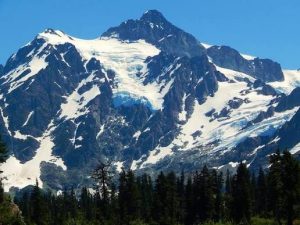
Recent study published in Nature magazine has found that there are as many as 219 hanging glaciers in the Alaknanda basin of the Garhwal Himalayas.
- Hanging glaciers are ice masses perched on steep slopes that can detach and trigger massive avalanches.
- They occur when a major valley glacier system retreats and thins, leaving the tributary glaciers in smaller valleys high above the shrunken central glacier surface.
- If the entire system has melted and disappeared, the empty high valleys are called hanging valleys.
- Impact of Hanging Glaciers:
- Hanging glaciers pose a significant risk of break-offs.
- The break-offs from hanging glaciers can also trigger secondary hazards such as glacial lake outburst floods (GLOFs).
- Glaciers in high-elevation alpine environments are highly sensitive to climate variability and warming.
- This sensitivity is particularly pronounced in the Himalaya, where warming over the past two decades has exceeded the global average, resulting in accelerated glacier retreat.



