
India-China Border Management:
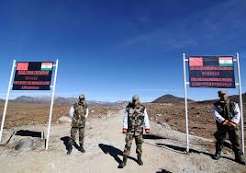
India and China held their first Corps Commander-level talks in the Eastern Sector at the Wacha-Damai Border Personnel Meeting (BPM) Point in Arunachal Pradesh, against the backdrop of increased People’s Liberation Army (PLA) patrol activity and localised stand-offs in Taksing, Upper Subansiri district of Arunachal Pradesh.
- This marks an expansion of the military dialogue mechanism beyond its earlier focus on Ladakh, bringing India-China border management and the broader Line of Actual Control (LAC) dispute into the spotlight.
- India-China border management is shifting toward institutionalised deterrence and dialogue, with new Eastern Sector military talks, strengthened infrastructure, forward deployment, and mechanisms such as BPMs, hotlines and SR-level dialogue to prevent escalation along the LAC.
- Persistent disputes over the LAC, Arunachal Pradesh and Aksai Chin remain unresolved, requiring India to combine border infrastructure, demographic consolidation through VVP, calibrated economic de-risking and strategic partnerships with sustained diplomatic engagement for long-term stability.
- Special Representatives (SR) on the Boundary Question: Established in 2003, it is the highest political-level mechanism to seek a final political settlement to the 3,488-km boundary dispute.
- Working Mechanism for Consultation and Coordination (WMCC): A diplomatic and military channel set up in 2012 to coordinate on incidents along the LAC and maintain peace, though it lacks the mandate to settle the boundary itself.
- Corps Commander-Level Meetings: High-level military negotiations utilized to achieve tactical disengagement, de-escalation, and buffer zone creation during intense border stand-offs.
- Border Personnel Meeting (BPM) Points: Designated geographical locations along the LAC where local military commanders from both sides meet to resolve ground-level friction.
- Institutional Hotlines: Direct communication channels between regional military commands to quickly defuse misunderstandings before they escalate up the chain of command.
- Foundational Treaties and Protocols: The 1993 Maintenance of Peace and Tranquillity Agreement (recognised the LAC and committed both sides to maintaining peace), 1996 Confidence-Building Measures Agreement (restricted military activities and use of weapons near the LAC), 2005 CBM Protocol (laid down procedures for handling face-to-face troop encounters), and 2013 Border Defence Cooperation Agreement (BDCA) (strengthened communication and coordination between border forces).



