
India’s ‘Peacock Diplomacy’ at the United Nations:
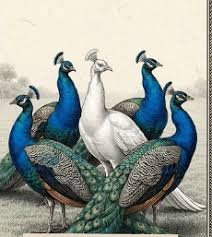
India donated five Indian male peafowls to the United Nations Office at Geneva highlighting India’s biodiversity heritage and its commitment to multilateralism and international cooperation.
- The group includes four blue peafowls and one white-feathered male, symbolically reflecting the blue and white colours of the UN.
- This marks the second instance of such a diplomatic gift from India to the UNOG. In 1981, then Prime Minister Indira Gandhi sent a breeding pair of peafowls from the Delhi Zoo to Geneva.
- Ariana Park: The 46-hectare park surrounding UN Geneva has hosted peacocks for over a century.
- The park was originally the estate of Swiss art collector Gustave Revilliod, who bequeathed it to Geneva in 1890.
- This donation acts as a potent tool of soft power (often dubbed “Peacock Diplomacy,” akin to China’s “Panda Diplomacy”), reinforcing India’s image as a committed, peaceful stakeholder in the UN system.
- The Indian peacock is India’s National Bird, symbolising grace, beauty and resilience, and its presence at UN Geneva represents India’s natural and cultural heritage.
- The gesture highlights India’s commitment to biodiversity conservation and environmental stewardship.
Indian Peafowl
- The Indian Peafowl (Pavo cristatus) belongs to the Phasianidae family, which includes pheasants and partridges. The male is called a peacock, while the female is called a peahen.
- Physical Characteristics: The species shows prominent sexual dimorphism.
- Males have metallic blue plumage and an elongated train with colourful eyespots (ocelli) used in courtship, while females have muted brown plumage that provides camouflage during ground nesting.
- The Indian Peafowl is native to the Indian subcontinent and is highly adaptable, inhabiting dry deciduous forests, scrublands, semi-desert areas, agricultural landscapes and human-dominated habitats.
- It is mainly ground-dwelling during the day and roosts in trees at night.
- The Indian Peafowl is omnivorous, feeding on seeds, fruits, insects, small mammals and reptiles, including small snakes.
- It therefore also contributes to natural pest control in agricultural ecosystems.
- Conservation Status:
- IUCN: Least Concern (LC).
- Wildlife (Protection) Act, 1972: Schedule I.
- CITES: Appendix III.