
Kashmir Saffron:
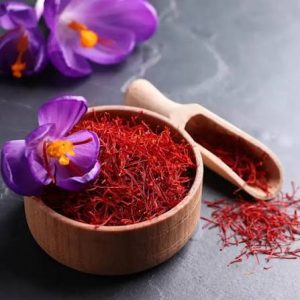
The ongoing crisis in West Asia, coupled with a sharp decline in saffron output from Iran has resulted in the demand for Kashmiri saffron.
- Kashmir Saffron is often called “red gold” for its distinctive aroma, flavour, and natural colouring properties.
- It is primarily cultivated in Pampore and nearby regions of South Kashmir.
- It has secured Geographical Indication (GI) tagin 2020.
- The saffron plant produces purple flowers with bright orange to red stigmas, which are carefully dried to obtain the highly valued spice.
- The saffron available in Kashmir is of three types: Lachha Saffron, Mongra Saffron and Guchhi Saffron
- It grows at an elevation of 1,500-2,000 m above mean sea level.
- Saffron cultivation requires explicit climatic conditions with temperatures ranging from not more than 35 degree Celsius or 40 degree Celsius in the summer to about -15 degree Celsius or -20 degree Celsius in the winter.
- It can be grown in dry, moderate and continental climate types.
- It thrives on loamy, sandy, and calcareous soils.
- Saffron grows best on acidic soil. It thrives well when the soil pH is 5.5 to 8.5.
- In India around 90% of saffron production comes from Kashmir, where it has been grown for centuries.



