
Kh-101 Missile:
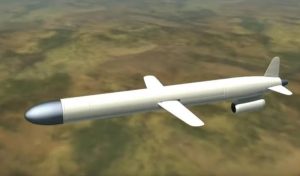
A suspected Russian Kh-101 missile landed in eastern Poland recently, creating security tensions on NATO’s eastern flank.
- The Kh-101 (NATO: AS-23A Kodiak) is a Russian-made advanced stealthy long-range subsonic cruise missile that is launched from a strategic bomber.
- The missile was developed in the late 1990s by Russia’s Tactical Missile Armament Corporation (KTRV).
- It is designed to destroy ground targets such as buildings, bunkers, and military installations.
- The Kh-101 is primarily carried by Russia’s strategic bombers, such as the Tu-95MS, Tu-160, and Tu-22M3, as well as the Tu-142 maritime surveillance aircraft.
- The missile has a streamlined airframe, which is optimized for low observability and minimal radar cross-section.
- It has a length of approximately 7.5 m and a wingspan of about 4.4 m.
- The missile is powered by a turbofan engine and is capable of flying at a maximum speed of Mach 0.76.
- It has a range of 2,500 km to 3,000 km.
- It can carry a variety of conventional warheads, including high explosive, penetrator, and cluster munitions.
- The Kh-101 features advanced guidance and control systems, including inertial navigation, satellite navigation, and terrain mapping, which enable it to navigate and strike targets with high precision.
- Over the years, the Kh-101 has undergone several upgrades and modifications to improve its performance and capabilities.
- For example, a newer version, the Kh-102, was introduced in 2015, which reportedly has a longer range and improved accuracy compared to the Kh-101. It is the nuclear-capable version of Kh-101.