
LIGO-India’s 1st Gravitational Wave Observatory:
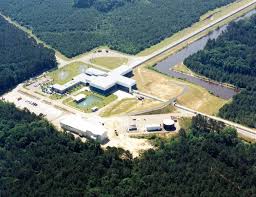
India’s ambitious Laser Interferometer Gravitational Wave Observatory (LIGO) project in Hingoli district, Maharashtra, is facing significant implementation delays, raising concerns over its timeline despite official assurances that it will be completed by 2030.
- LIGO-India is India’s first major gravitational-wave observatory and represents the country’s contribution to the global gravitational-wave detection network.
- The Indian observatory will feature an advanced LIGO-style interferometer, becoming the 5th node in the global network alongside the US facilities at Hanford and Livingston, Virgo in Italy, and KAGRA in Japan.
- It is jointly led by the Department of Atomic Energy (DAE) and Department of Science and Technology (DST), in collaboration with the US LIGO Laboratory, and other premier Indian institutions like Inter-University Centre for Astronomy and Astrophysics (IUCAA), Pune.
- As a “mega-science” project, it aims to enhance sky coverage, improve source localization (particularly in the southern hemisphere), and boost detection sensitivity for the international gravitational-wave network.
- LIGO observatories have two 4-km-long arms built at 90-degrees to each other. These are vacuum chambers with reflective mirrors at their ends. Beams of lasers are reflected off these mirrors and are used to detect gravitational waves.
- The first such wave was detected in 2015, which was caused by the merger of two black holes 1.3 billion light-years away.