
Measles:
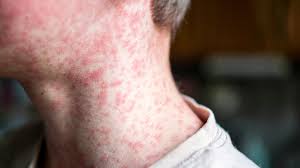
Bangladesh launched an emergency vaccination campaign targeting more than a million children as a fast-spreading measles outbreak sweeps across the country.
- Measles is a highly contagious, serious airborne disease caused by a virus.
- It is caused by a virus in the paramyxovirus family.
- It spreads by contact with infected nasal or throat secretions (coughing or sneezing) or breathing the air that was breathed by someone with measles.
- The virus remains active and contagious in the air or on infected surfaces for up to two hours.
- The virus infects the respiratory tract, then spreads throughout the body, causing severe disease, complications, and even death.
- The first sign of measles is usually high fever, beginning about 10 to 14 days after exposure to the virus and lasting four to seven days.
- A runny nose, cough, red and watery eyes, and small white spots inside the cheeks can develop in the initial stage.
- A rash erupts after several days, usually on the face and upper neck.
- Any non-immune person (not vaccinated or vaccinated but did not develop immunity) can become infected.
- Unvaccinated young children and pregnant persons are at the highest risk of severe measles complications.
- No specific antiviral treatment exists for measles.
- It can be prevented with a safe and effective measles-rubella (MR) vaccine that gives long-term immunity.



