
Microlensing:
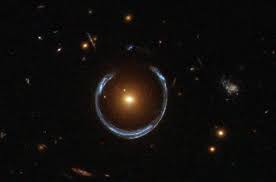
A study recently used microlensing to weigh a rogue planet, i.e. not orbiting a star.
- It is a fascinating phenomenon where the light of a background star is deflected by the gravity of a foreground object towards an observer, temporarily magnifying the star as the foreground object crosses the observer’s line of sight.
- It occurs due to gravitational lensing, predicted by Einstein’s General Theory of Relativity.
- The intervening object acts as a gravitational lens, bending the background light.
- This makes it a great way to find objects that are too far away to be visible, like distant planets, brown dwarfs, and neutron stars, and even those that are entirely invisible, like isolated black holes.
- Microlensing events are transient and generally
- Some events last for just 1 day, while others can continue for months or even years, and they can result in very sudden and dramatic changes in brightness.
- Most exoplanet-hunting techniques either find planets really close to their star (like the transit and radial-velocity methods), or very big, young planets far away from their star (the direct-imaging method).
- Microlensing is really helpful for catching the planets in the middle – planets that are similar to Jupiter – and smaller planets much further out, including free-floating ones.
- It’s even quite effective at detecting Earth-like planets.
- Other methods require many years to detect such planets. Instead, microlensing relies on the blind luck of the planet passing in front of a star.



