
New Nematode Species:
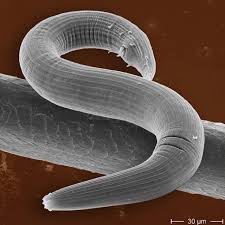
Researchers from the Zoological Survey of India (ZSI) have identified two new species of free-living marine nematodes off the coast of Tamil Nadu and named them as Corononema dhriti and Epacanthion indica.
New Nematode Species:
Corononema dhriti:
- It is a free-living marine nematode found off the coast of Tamil Nadu.
- It is only the fourth known species of this genus globally.
- It was previously documented only in Australia, Thailand, and Vietnam.
Epacanthion indica:
- It stands out due to its complex anatomy.
- Unlike many nematodes that feed on microbes, indica possesses specialized mandibles and “teeth,” positioning it as a microscopic predator within the benthic food web.
Significance of marine nematodes:
- Nutrient Cycling: Breaking down organic waste and recycling essential nutrients back into the ocean.
- Sediment Health: Maintaining the stability and productivity of coastal sediments.
- Bio-Indicators: Serving as vital markers for environmental health and climate change impact.
Nematodes:
- These are any worm of the phylum Nematoda.
- They occur as parasites in animals and plants or as free-living forms in soil, fresh water, and marine environments.
- Nematodes are bilaterally symmetrical, elongate, and usually tapered at both ends.
- Some species possess a pseudocoel, a fluid-filled body cavity between the digestive tract and the body wall.
- They have been reported from every continent on earth and occur in deserts, swamps, the oceans, the tropics and Antarctica..



