
Oleum:
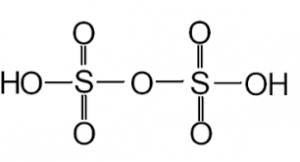
A major leak of hazardous oleum gas at a chemical unit in Maharashtra’s Palghar district recently led to the evacuation of over 2,600 people.
- Oleum is a powerful chemical solution composed of sulfur trioxide (SO₃) dissolved in sulfuric acid (H₂SO₄).
- Though oleum and sulfuric acid are closely related, they differ significantly in composition and reactivity.
- Sulfuric acid (H₂SO₄) is a powerful acid in its own right, but oleum is even more reactive due to the additional dissolved SO₃.
- The Contact Process is the primary industrial method for producing sulfuric acid, and by extension, oleum.
- Oleum is available in different concentrations, with the SO₃ content varying to suit industrial needs.
- It’s often referred to as “fuming sulfuric acid” due to its tendency to release SO₃ fumes upon exposure to air.
- In terms of appearance, oleum ranges from colorless to pale yellow, with an oily consistency.
- Oleum’s high reactivity makes it a vital component for producing highly concentrated sulfuric acid and in synthesizing crucial chemicals like explosives, dyes, and pharmaceuticals.
- Oleum’s high viscosity contributes to its “oily” appearance and influences its handling requirements in industrial applications.
- It is also an efficient dehydrating agent and can strip water from organic compounds, which is essential in certain industrial reactions.
- It is highly corrosive, meaning it can burn and damage skin, eyes, and other materials very quickly.
- Because it releases toxic fumes, it can also be harmful if inhaled.



