
Param Vir Chakra:
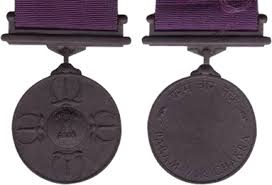
Portraits of all 21 Param Vir Chakra awardees are now on display at Rashtrapati Bhavan, replacing the previously displayed portraits of 96 British Aide-de-Camps (ADCs).
- It is India’s highest military decoration, awarded for displaying the most exceptional acts of valour, courage, and self-sacrifice during war.
- It was introduced on January 26, 1950, on the first Republic Day with retrospective effect from 15 August 1947.
- Param Vir Chakra means ‘Wheel (or Cross) of the Ultimate Brave’.
- It can be awarded to officers, men, and women of all ranks of the Army, the Navy, and the Air Force; of any of the Reserve Forces, of the Territorial
- Army Militia; and of any other lawfully constituted Armed Forces.
- It can be, and often has been, awarded posthumously.
- It is similar to the British Victoria Cross, the US Medal of Honor, the French Legion of Honor, or the Russian Cross of St. George.
- The medal was designed by Mrs. Savitri Khanolkar.
- The medal is cast in bronze and circular in shape.
- In the centre, on a raised circle, is the state emblem, surrounded by four replicas of Indra’s Vajra, flanked by the sword of Shivaji.
- On its reverse, it has embossed Param Vir Chakra both in Hindi and English with lotus flowers.
- First winner: Major Somanth Sharma, from the Kumaon regiment.
- Till now, only 21 people had been given the Param Vir Chakra award, of which 14 are posthumous.
Gallantry Awards:
- They have been instituted by the Government of India to honour the acts of bravery and sacrifice of the officers/personnel of the Armed Forces, other lawfully constituted forces, and civilians.
- They are announced twice in a year – first on the occasion of the Republic Day and then on the occasion of the Independence Day.



