
Prosopis juliflora:
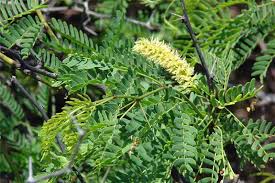
Kandla (Deendayal) Port in Gujarat is launching a pilot project to convert Prosopis juliflora, an invasive weed, into bio-methanol to produce clean maritime fuel.
- Prosopis juliflora is a hardy, deciduous, thorny shrub or small tree belonging to the Fabaceae family. While originally introduced to combat desertification and provide fuelwood, it has since become one of the most aggressive invasive alien species in arid and semi-arid regions of India.
- It was introduced by the British in the late 19th century (specifically in 1877) to the arid regions of Rajasthan and Gujarat to provide green cover and fuel in desert landscapes.
- It thrives in arid andsemi-arid environments with low rainfall and poor soil quality.
- It is highly salt-tolerant, making it common in coastal areas, salt pans (like the Rann of Kutch), and degraded pasture lands.
- In Gujarat, it has taken over large stretches of the Banni grasslands and areas surrounding the Kandla port.
- It produces a massive quantity of seeds that are dispersed by livestock (cattle and goats) through their droppings.
- Its roots can penetrate up to 50 meters deep to reach groundwater, allowing it to survive extreme droughts.
- The plant releases chemicals into the soil that inhibit the growth of other nearby plants, effectively crowding out native vegetation.
- It possesses sharp, sturdy thorns that protect it from overgrazing.
Implications:
Negative Impacts:
- It destroys biodiversity by replacing indigenous grasses and trees, which reduces the fodder available for local livestock.
- Its deep-reaching roots significantly deplete groundwater levels in already water-stressed regions.
- It turns fertile pastures into impenetrable green deserts where nothing else can grow.
Positive Impacts:
- It is an excellent source of biomass for conversion into syngas and bio-methanol due to its high calorific value.
- Collecting the shrub for industrial use provides income for local communities.
- It has historically been a primary source of cheap fuel and high-quality charcoal for rural households.



