
Rove beetle:
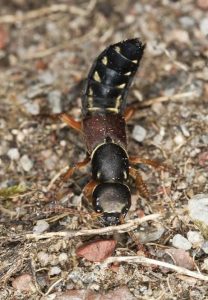
An Indo-German research team has discovered 15 species of rove beetles in the waterfalls and forests of Arunachal Pradesh.
- Rove beetles (family Staphylinidae) are one of the largest beetle families.
- They are typically elongate, fast-moving beetles with shortened wing covers (elytra) that expose flexible abdominal segments.
- Many species of these beetles can raise the abdomen in a scorpion-like defensive posture (not a true sting).
- It is mainly found in sub-tropical, cold tolerant climate.
- Typical microhabitats include leaf litter, soil surface, under bark, fungi, shorelines, dung, carrion, compost, and nests of social insects;
- These are usually found around decaying animal and vegetable matter, preying on carrion-feeding insects.
- Rove beetles occupy almost all moist environments throughout the world.
- Features:
- Some large species are a brightly coloured black and yellow, thus resembling wasps; other rove beetles mimic soldier ants in both appearance and behaviour.
- These predatory beetles are beneficial to farmers and gardeners, because they can reduce pest populations, also referred to as biological control
- Lifespan is variable: Adults may live ~2 weeks to ~12 months; total life cycle often ~1-24 months depending on climate and species.
- It has chemical defenses from abdominal glands; secretions can deter predators and may include irritants or antimicrobial compounds.



