
Sal Heartwood Borer:
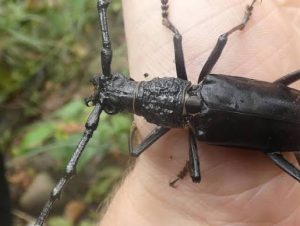
The Sal trees in Dindori forests of Madhya Pradesh are witnessing a major infestation of the sal heartwood borer this year, compelling the government and local communities to undertake a mega exercise to tackle the pest.
- Sal Heartwood Borer is a beetle of the order- Coleoptera, family-Cerambycydae.
- Hoplocerambyx spinicornis, commonly known as the sal heartwood borer, is a destructive pest first recorded as a threat to the trees in 1897.
- It looks dark brown in color and is about the size of a human finger.
- It is the most devastating insect pest responsible for catastrophic damage of sal forests of the country.
- It causes extensive damage to sal trees both in standing as well as freshly felled timbers.
- The attack of the borer is considered epidemic when the sal trees affected are more than 1% of the total number of trees.
- Sal Tree(Shorea robusta) is among the dominant tree species of central India’s dry deciduous forests.
- It is found naturally in Uttarakhand, Terai region of Uttar Pradesh, Jharkhand, Odisha, Madhya Pradesh, Chhattisgarh and West Bengal.
- It can tolerate temperatures as high as 40-45°Celcius in summers and as low as 5°Celcius in winters.
- It can be grown in the plains, provided there is light loamy soil with good drainage and the area receives approximately 1000 mm – 3000 mm of annual rainfall.
- It requires a warm and humid climate and can thrive at altitudes up to 1500 metres above the sea level.
- Sal timber has historically been prized for construction and for railway sleepers because of its strength and resistance to decay.
- Its seed pressed for oil and used in cooking and in the soap and confectionery industries;
- Sal leaves, stitched into plates and bowls sold across local markets; and resin tapped from the trunk, used as dhoop in religious offerings.



