
Staphylococcus aureus:
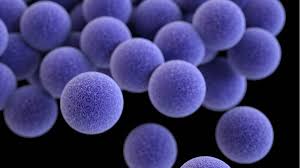
An institute of the Department of Science and Technology (DST) based in North East India has synthesised a novel biosurfactant which has been found to act effectively against bacterium Staphylococcus aureus.
- It is a type of bacteria belongs to the family Staphylococcaceae.
- It stains Gram positive and is non-moving small round shaped or non-motile cocci.
- It is found in grape-like (staphylo-) clusters.
- It may occur commonly in the environment.
- It affects all known mammalian species, including humans.
- Further due to its ability to affect a wide range of species, S. aureus can be readily transmitted from one species to another.
- aureus is transmitted through air droplets or aerosol. When an infected person coughs or sneezes.
- It can also transmit through direct contact with objects that are contaminated by the bacteria or by bites from infected persons or animals.
- It causes Minor skin infections, such as pimples, impetigo etc.
- It may cause boils (furuncles), cellulitis folliculitis, carbuncles
- It is the cause of scalded skin syndrome and abscesses
- It may lead to lung infections or pneumonia
- Treatment: Healthcare providers can treat most staph infections with antibiotics.