
Transforming India’s Nuclear Power Landscape:
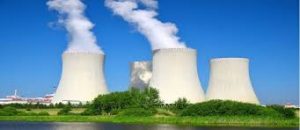
The Government of India introduced and rapidly passed the SHANTI (Sustainable Harnessing and Advancement of Nuclear Energy for Transforming India) Bill in December 2025.
- This transformative legislation repeals the Atomic Energy Act of 1962, allowing private companies to build, own, and operate nuclear plants to achieve a target of 100 GW of nuclear capacity by 2047.
- The transformation involves a fundamental shift from a state-monopoly under the Department of Atomic Energy (DAE) to a liberalized, multi-stakeholder ecosystem.
- It aims to integrate nuclear energy as a primary baseload power source alongside renewables to achieve Viksit Bharat (Developed India) by 2047 and Net-Zero emissions by 2070.
- Data/Stats on India’s Nuclear Landscape:
- Current Capacity: India’s installed nuclear capacity stands at 8,180 MW (approx. 8.8 GW), contributing only 3% of total electricity generation despite representing 1.8% of generating capacity.
- Generation Disparity: In 2024, India’s per capita electricity generation was 1,418 kWh, significantly lower than China (7,097 kWh) and the U.S. (12,701 kWh).
- Operational Base: The Nuclear Power Corporation (NPCIL) manages 24 reactors; the majority are indigenous Pressurised Heavy Water Reactors (PHWRs).
- Cost Efficiency: India’s indigenous 700 MW PHWR construction cost is million per MW, which is among the lowest globally.



