
US Midterm Elections:
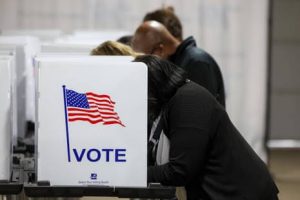
In the recently concluded November 2026 US midterm elections, the Democratic Party secured control of both chambers of the US Congress. This sweeping shift in Washington’s political landscape introduces strong legislative checks on the Executive branch and carries significant strategic, economic, and diplomatic implications for India.
- The United States midterm elections are general elections held near the midpoint of a president’s four-year term in office.
- They take place on the Tuesday following the first Monday in November of even-numbered years that do not feature a presidential election (e.g., 2018, 2022, 2026).
- The US Congress: The national legislature is collectively known as the US Congress (comprising both the House and the Senate).
- The US follows a de facto two-party system, dominated by the Republican and Democratic Parties across all three levels of government.
- House of Representatives (Similar to India’s Lok Sabha): This is the lower house of Congress. All 435 voting seats are up for election during midterms.
- Representatives serve two-year terms, meaning their entire tenure is tied to either a presidential or a midterm election cycle.
- Just like the Lok Sabha, its members are directly elected by the public to represent specific population-based constituencies (districts).
- The Senate (Similar to India’s Rajya Sabha): This is the upper house of Congress. Roughly one-third of the 100 Senate seats are contested.
- Senators serve staggered six-year terms, so they do not all face election at the same time. Similar to the Rajya Sabha, it acts as a continuing chamber representing the states.
- However, unlike India’s Rajya Sabha (where seats depend on population), every US state gets exactly two Senators, and they are directly elected by the voters of that state.