
Venus Flytrap:
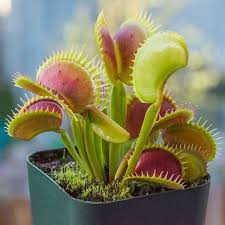
Scientists have found the physical mechanism behind the snapping action of Venus flytrap.
- Venus flytrap is a small perennial carnivorous plant of the sundew family.
- It is native to a limited region of North Carolina and South Carolina in the United States.
- The plant grows in moist, acidic soil.
- It grows in nutrient-poor environments and supplements its nutrition by capturing and digesting insects.
- The “trap” is made of two hinged lobes at the end of each leaf.
- It uses specialized trigger hairs called trichomes located on the inner surface of the trap.
- When an insect touches these hairs twice within a short period of time, the trap closes. Closure can occur in as little as one tenth of a second.
- After the plant absorbs the nutrient-rich liquid produced by the digestive processes, the trap reopens, with the insect’s empty exoskeleton left behind.
- This type of movement is called thigmonasty—a nondirectional plant response to being touched.
- Findings of the new Study:
- The research says that when the trap is stimulated, the cell walls of the outer epidermal layer rapidly soften by roughly 30 to 40%, and cell wall becomes more flexible.
- This releases internal stresses stored in the tissue and causes the trap to bend and close.
- When the trap snaps shut, the insect is sealed inside for digestion.



